Should Real Estate Investors Wait for Rate Cuts?
Originally published on November 25, 2026
“Available capital and cheap capital are very different things.” – Kyle Paxton, CPA
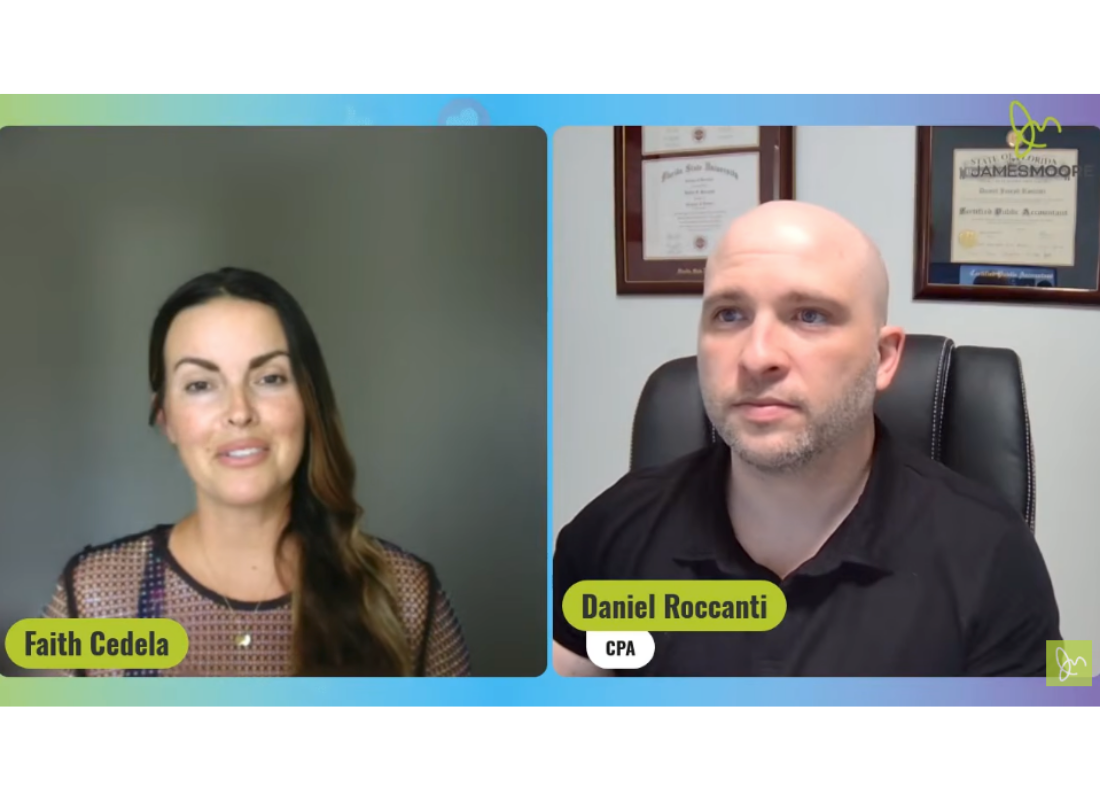
In this episode of Your CPA’s Take on Real Estate, hosts Daniel Roccanti, CPA and Kyle Paxton, CPA break down the Q4 2026 commercial real estate market. Transactions are up and capital is available, but interest rates are still high. Daniel and Kyle explain what that means for investors planning for 2027.
The market isn’t frozen anymore, but it isn’t a return to easy money either. Daniel and Kyle walk through the Fed’s September rate increase, where the 10-year Treasury stands, how owners are handling the refinancing wall and which property types are attracting capital.
They also cover what investors should do before year-end, from re-underwriting every major asset to keeping tax considerations in perspective.
Resources
- Your CPA’s Take on Real Estate
- Your CPA’s Take on Real Estate YouTube Channel
- Should Real Estate Investors Wait for Rate Cuts?
Transcript
[00:03] Daniel Roccanti: Welcome to Your CPA’s Take on Real Estate. I’m your host, Daniel Roccanti, back with my co-host Kyle Paxton for another great episode. Today is one that everyone in real estate loves, and that is what’s going on in the current market.
[00:20] Daniel Roccanti: It’s been crazy the past couple years, so what does it look like right now as we’re entering Q4 of 2026? Where’s the real estate market? I think we can sum this up as: it’s not frozen anymore. We’ve turned into more of a highly selective market when it comes to real estate. Transaction volume’s up, lending has improved and I think sellers and buyers are finding more common ground.
[00:46] Daniel Roccanti: Capital is available, but interest rates are still really high. So what does that look like in our market today?
[00:46] Kyle Paxton: Daniel, I want to frame this as a recovery of activity rather than a return to easy money conditions. In every conversation I have with my real estate investors, it’s, “Ooh, the last couple years have been a little bit ho-hum,” at a high level across the board. There are deals getting done, but every deal doesn’t suddenly pencil. You and I have talked about how this really tightens the underwriting process and separates who’s doing this right.
[01:31] Kyle Paxton: So, Daniel, what did you see in September? Can you take us through the September shift?
[01:31] Daniel Roccanti: Yeah, absolutely. I think it’s important to note that commercial real estate is up about 21% year over year right now. But it looks a little different when you start looking at it from the actual buyer’s perspective.
[01:53] Daniel Roccanti: Where do they go first? They go right to the interest rates, every time. That’s the talk of the town. You hear people say interest rates are too high. So what does it actually look like? If we look at September, the Fed decided, “Hey, let’s raise the rate,” up another 25 basis points, unfortunately.
[02:11] Daniel Roccanti: So in September it went from 3.75% to 4%. It shows that the Fed is still citing elevated inflation, and they’re not afraid to increase interest rates if they feel they need to because of inflation.
[02:11] Kyle Paxton: And we can separate the federal rate from the rate most CRE investors are watching when sizing long-term debt. The 10-year Treasury was 5.17% on September 25th, versus roughly 4.8% earlier in the month.
[02:40] Kyle Paxton: One of the key things we should talk about here is that lower credit spreads have helped, but higher benchmarks can offset that benefit. CBRE reported Q2 commercial mortgage spreads averaged 204 basis points, 21 basis points tighter year over year. Multifamily spreads averaged 162 basis points, 15 tighter. At the same time, lenders remain disciplined on leverage, with average commercial LTV around 59.6%.
[03:07] Daniel Roccanti: I think what’s important when we’re talking about the interest rate is how this is going to affect the refinancing wall.
[03:27] Daniel Roccanti: We’re talking about transactions being up, but the past couple years transactions have been fairly low. So a lot of people have been pushing this refinancing wall out, whether it’s bridge loans or something like that. Now they’re at the point where, “Hey, we can’t do another bridge loan,” or, “We can’t push off our refinancing any longer.”
[03:47] Daniel Roccanti: It has to be done in today’s environment. Financing is still happening. It’s just that today’s decision isn’t about what interest rate I can get. We’ve got to be a little more creative in our refinancing if we’re used to a much lower interest rate than what we have now.
[04:09] Daniel Roccanti: When we’re doing a refinancing, we need to look at what cash is actually required when we refinance or close. What are our amortizations? Do we have any kind of leverage there? Can we spread it out longer, or will they require a shorter amortization?
[04:30] Daniel Roccanti: What’s our debt service coverage ratio? It always goes back to a great operating property. If you have a great operating property, then you probably have the cash flow to finance this debt. Then there’s the conversation no one ever wants: do we have to do partner calls? Do we have to go the preferred equity route to get some equity into it so that we don’t have to rely so much on debt?
[05:02] Daniel Roccanti: The financing world is where a lot of this lies, because real estate fundamentals are so closely tied to debt. If you’re just looking at the interest rate, it can scare you, but you probably shouldn’t be as scared as you think you are.
[05:02] Kyle Paxton: I think we should note here that available capital and cheap capital are very different things. That distinction matters enormously when you’re underwriting an acquisition or deciding whether to put more equity into an existing asset. We talked about financing being available, but it’s still expensive. I think we come back to buyers and sellers actually meeting on price.
[05:39] Kyle Paxton: So let’s talk about the deal flow and pricing we’re seeing here, Daniel.
[05:39] Daniel Roccanti: You’re right. It’s really coming back to whether buyers and sellers are actually coming into agreement on price. Debt’s been expensive for a while, but what hasn’t happened is buyers and sellers agreeing.
[06:03] Daniel Roccanti: Sellers still want the price they thought they could get three years ago, and they’re not able to get it. But the longer we sit in our current environment, the more everyone comes to, “All right, this isn’t going anywhere.” And that’s where you should be right now as an investor. The numbers we’re seeing are going back to more realistic values for these properties, which is increasing the value.
[06:30] Daniel Roccanti: But they’re being very selective. We are seeing transactions increase by about 21% year over year in the commercial real estate space, but it’s resembling more of what we call a stock picker’s market, not a broad-based recovery. It’s selective.
[06:51] Daniel Roccanti: We’re not just buying real estate to buy real estate. We’re buying good deals when we find them, and that’s because investors are changing their buying philosophy from, “What was a good deal three, four years ago?” to, “What’s a good deal today, in today’s market, with today’s pricing and today’s interest rates?” Once you start doing that, you find there are still deals that have a pretty good return and you can make it happen. I think that’s a big reason why transactions are starting to increase.
[07:21] Kyle Paxton: We’ve seen that owners spent several years adjusting expectations, the financing markets have become more functional and investors have more confidence around current operating fundamentals. So let’s get into specific property types. We’re going to leverage Q2 and first half of the year data as we talk about this.
[07:45] Kyle Paxton: Let’s start with multifamily. The fundamentals are absorbing the large construction pipeline, but pricing has still been pretty selective. In Q2, investment volume was down 2.7% year over year, even as absorption exceeded completions. On the industrial side, this is still an area that’s attracting capital.
[08:08] Kyle Paxton: But investors have been differentiating more carefully by market, vintage and rent assumptions. In retail, limited new supply continues to support well-located assets, so this comes back to the old “location, location.” Office is starting to see visible improvements, particularly in higher-quality buildings, but the gap between strong assets and challenged assets is still wide.
[08:36] Kyle Paxton: CBRE reported in Q2 that office vacancy rates fell 30 basis points, with prime vacancy at 12.3%. And to touch on net lease, Q2 volume was up 13% year over year to $12.8 billion, with industrial representing 63% of that. That’s a strong number.
[08:36] Daniel Roccanti: I think today’s market isn’t necessarily a better acquisition environment than a few years ago. It’s a different one, and it has actual pros and cons. It’s not that assets are cheap right now, but you can buy assets with less competition, and that’s an important thing right now. You don’t have to use aggressive assumptions.
[09:12] Daniel Roccanti: A few years ago, people were just buying, and they couldn’t even do their due diligence.
[09:28] Daniel Roccanti: They couldn’t do anything because everything was flying off the shelf too fast. Now you can find an asset, look into it and ask whether it’s really a great deal for us. I love not having a ton of competition. I can really dig into the deal and take my time. And then you go back to what Kyle was talking about with these property types.
[09:49] Daniel Roccanti: Just because one industry is down and one is up doesn’t mean it’s a bad deal. It’s still a selective market. You can find a good deal in any property type, but some property types are doing better, and you can have much higher cap rates in industrial than multifamily right now. I think everyone knows that.
[10:10] Daniel Roccanti: But at some point multifamily will come back, so if it’s a good deal with the numbers right, you still want to make sure you’re looking into it. That brings us to maybe the most useful question for investors, which is: where’s the money actually going?
[10:10] Kyle Paxton: Where’s the money? Show me the money.
[10:26] Kyle Paxton: I don’t think capital availability is the main constraint. I’m seeing investors of all types able to raise capital, some of them in creative ways. According to CBRE, alternative lenders captured 38% of non-agency CRE loan closings in Q2, up 4% from the prior year, with debt funds carrying the increase.
[10:49] Kyle Paxton: We’re definitely seeing capital appear more comfortable with strong operating assets with a compelling basis: multifamily with credible supply normalization, industrial with durable tenant demand, necessity-oriented and well-placed retail, medical, outpatient and high-quality office. A lot of times it’s also geographic, in situations where sponsors feel they can contribute meaningful equity.
[11:20] Kyle Paxton: On the cautious side, investments banking on substantial rent growth just to reach target returns have pulled back quite a bit, along with aggressive refinancing assumptions. Commodity office deals with unresolved CapEx are a huge pause. And highly leveraged capital stacks that depend on near-term rate cuts have slowed down across the board.
[11:20] Daniel Roccanti: Right. Thanks, Kyle. What I’m seeing is that people have been on the sideline a little too long.
[11:55] Kyle Paxton: Getting antsy.
[11:55] Daniel Roccanti: Getting a little antsy. The economy is not changing, and it’s probably not expected to change significantly. Those interest rates are not coming down.
[12:11] Daniel Roccanti: Like I said, the Fed has decided they’ll keep increasing rates if that’s what’s needed. When that happens, people get more comfortable in the current environment. It goes back to the fundamentals: am I buying a good asset that cash flows and operates as a good deal? What we’re seeing today with the best buyers is that they’re really the patient ones.
[12:28] Daniel Roccanti: You’re still able to get capital. Debt, while it’s higher and more expensive, is still reasonably easy to get, whether you go the alternative route or the traditional route. So patient buyers with realistic leverage have considerably more flexibility than buyers who are waiting on rapid cap rate compression.
[12:56] Daniel Roccanti: If you’re waiting for that to happen, you might be sitting on the sideline too long and missing some potentially really good deals. So what should owners or investors actually do with this information before the calendar flips to 2027, Kyle? Where do we go?
[12:56] Kyle Paxton: All right. Let’s talk about what this means for Q1 2027 and where we’re at.
[13:15] Kyle Paxton: It’s year-end time, my friend. We’re in October at the time of filming. It’s time to get after it. We’ve talked about this in the last several videos, but if you haven’t already, we gotta re-underwrite every major asset using today’s financing environment.
[13:33] Kyle Paxton: We can’t assume that 2027 refinance will occur at a lower all-in rate. Model the base case, the higher-for-longer case and the equity required under each. Then it’s a good time to take a pause and identify the assets that actually deserve additional capital and the ones that don’t.
[13:53] Kyle Paxton: That means really separating that temporary financing pressure from a deteriorating investment thesis. An otherwise strong property with a bad maturity date presents a different problem from an asset whose NOI, location or competitive position has weakened. I still find investors fixate on tax considerations a lot in some of these decisions. We have to account for it, since it’s part of the after-tax returns we’re modeling.
[14:33] Kyle Paxton: But I think it’s important to evaluate value, remaining basis and expected gain or loss before making tax strategy the driver of the economic decision, and certainly the debt portions of it.
[14:59] Kyle Paxton: I always think a tax is like the side car, to some degree. We bring that in later. We have so many strategies in the real estate world to help mitigate tax, so I would try not to fixate on the tax implications as we work through these things. As for 2027, cap rates are likely to stay relatively stable through the end of 2026, with incremental compression in ‘27.
[15:26] Kyle Paxton: I think you start building the 2027 acquisition pipeline now around that forecast and those assumptions. It’s still not a conversation about when rates are going to fall. It’s whether the deals we’re seeing still work if they don’t.
[15:51] Daniel Roccanti: Kyle, I recently went to the CRADA Florida conference, and their economist gave a pretty opportun…
[15:51] Kyle Paxton: Words are hard, my friend.
[15:51] Daniel Roccanti: …opportunistic look at real estate and where he thinks it’s going, so I was very encouraged.
[16:17] Daniel Roccanti: That doesn’t mean we’re going back to the buying and selling market we thought we had. But the reality is that it’s on the uptick. There are concerns, but I think 2027 is a good year we can build off of.
[16:36] Daniel Roccanti: Like you were saying, I don’t think interest rates are falling, but there are still a lot of opportunities. We need to go back to the basics: “Is this a good deal? Give me some good numbers.” The financing needs to work, but it really comes down to whether this is a cash flowing asset that’s going to produce a good NOI. If that’s the case, I don’t really need to worry about the value of the asset because I’m planning on holding it for many years anyway. Eventually the economy will get better, and then I’ll have more options if I want to flip a property.
[17:09] Daniel Roccanti: So what are the closing takeaways here? Let’s bring this conversation back to our conclusions. Transactions are coming back. Real estate has been a down topic to talk about, but it is coming back. Debt is also available. I know it’s expensive, but it’s available if you want it.
[17:39] Daniel Roccanti: Lenders still want to lend you money. They’re out there. They’re everywhere. Capital’s been sitting on the sideline, and it’s ready to be back, but it’s being very selective. It’s not just going anywhere. 2027 planning should be built around today’s economy. You’re not waiting for a dramatic rate rescue or anything like that.
[18:01] Daniel Roccanti: The numbers can still work in today’s economy. So make sure you’re not just sitting on the sideline waiting for the future when there are good deals happening around you all the time. Thanks for listening to today’s video. I hope this was a good takeaway on today’s current market, and I hope the one thing our listeners take away is, “Hey, it’s getting better, so let’s get off the sidelines and get back into making deals.”
[18:33] Daniel Roccanti: They’re still out there, but you miss every deal you don’t look at. We’ll see you next time. Take care.
[18:33] Announcer: To learn more about James Moore & Company’s real estate accounting and business solutions, go to jmco.com. And don’t forget to subscribe to our Real Estate Industry Update series to receive updates when new videos are released.
[18:55] Announcer: If you’d like to be a guest or if there’s a topic you’d like to see covered on a future episode, contact us through our website or email us at info@jmco.com. You can also follow us on social media for more news as the landscape of real estate continues to rapidly evolve.
Get Off the Sidelines
Deals are getting done, and the investors closing them are the ones planning around today’s rates. Watch the full episode to hear Daniel and Kyle’s complete take on the commercial real estate market heading into 2027. Then subscribe to Your CPA’s Take on Real Estate for new episodes.
All content provided in this article is for informational purposes only. Matters discussed in this article are subject to change. For up-to-date information on this subject please contact a James Moore professional. James Moore will not be held responsible for any claim, loss, damage or inconvenience caused as a result of any information within these pages or any information accessed through this site.