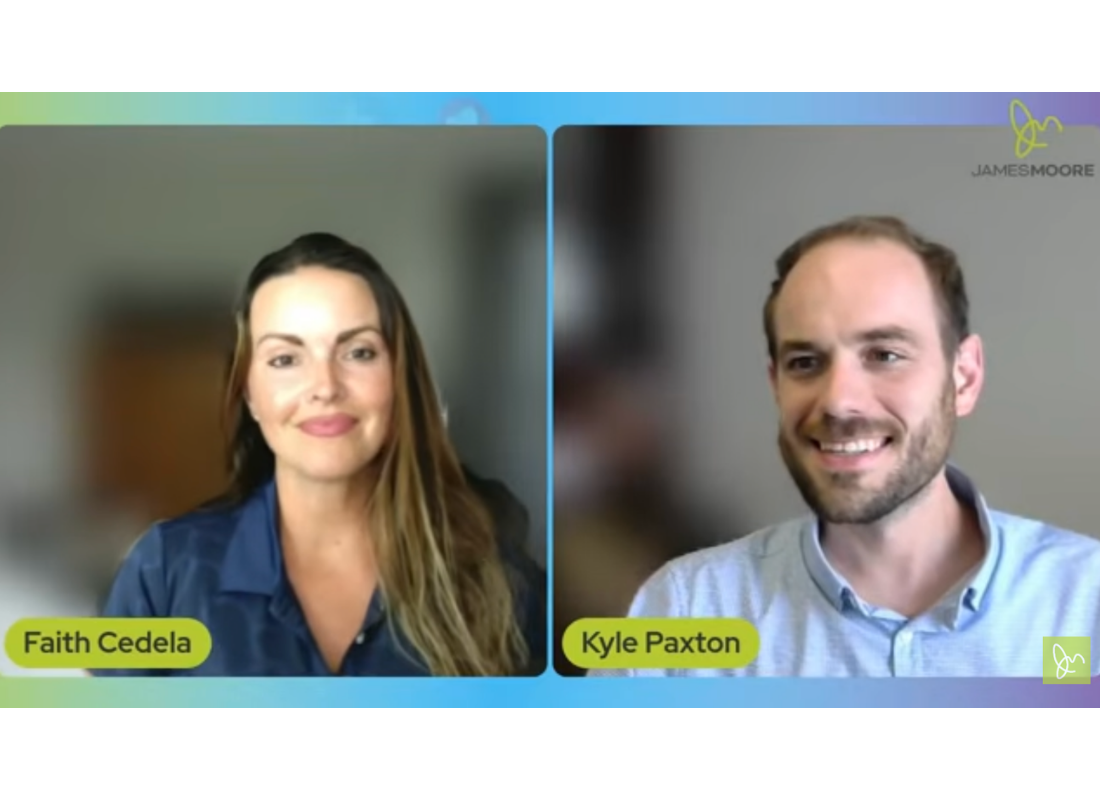
The New Wealth Playbook: AI, Tax Strategy and Investing for Business Owners
Originally published on October 7, 2026
“The tax strategy is really more where we’re building the wealth, helping your business continue to succeed and grow.” – Kyle Paxton
In part two of the new wealth playbook conversation, Kyle Paxton joins this episode of Your CPA’s Take on Real Estate to talk about how business owners and investors can adapt as AI changes the way wealth is created. The discussion covers tax strategy, investing, automation and the habits that help people stay ahead.
Kyle starts with how to judge capital investments like equipment, software and automation: what capacity they create, whether they ease labor pressure and whether they improve quality or speed. From there, he explains why forward-looking tax strategy matters more than tax preparation alone, why real-time financial data is separating businesses that adapt from those that don’t and why financial literacy has become a competitive advantage.
He closes with practical habits for building wealth, including planning early, understanding cash flow, staying flexible and setting regular check-ins on your goals.
Resources
Your CPA’s Take on Real Estate
Real Estate YouTube Channel
Watch This Episode
Transcript
[00:02] Host: Hi everyone, and welcome to the James Moore channel. Today I am here with Kyle Paxton. Hi Kyle, how are you?
[00:02] Kyle Paxton: Hi. I’m doing lovely, thanks. Good to see you.
[00:02] Host: Good to see you too. So today we’re going off of what we talked about last week, which was the new wealth playbook and tax strategy, investing and business growth in the AI era. I know this can be kind of confusing for a lot of people, or exciting in some ways if you trust the right advisors.
[00:30] Host: So the first question is, if AI is changing the way wealth is created, what should business owners and investors be thinking about differently today?
[00:30] Kyle Paxton: Ooh, I like where we’re starting here. This is good stuff. I think this really all comes down to capital investments and automation, really getting into all facets of the business. We’ve talked about this a lot in these sessions, but it’s really getting down to making sure we have a good understanding of whether this investment improves the economics of the business, whatever that word investment means, right?
[01:05] Kyle Paxton: So from a business owner’s perspective, when you’re evaluating all facets of your business, when you’re looking at equipment, software, robotics, automation, whatever those things might be, I think the questions we’re asking are: What capacity does this create? Will this reduce some of my labor pressure? I got out of an event earlier this morning where we were talking about how staffing costs are super high, and staffing in general is a struggle so many companies face. How can we implement these tools to help alleviate some of our staffing load? I’m not talking about replacing jobs or anything like that, but just making the labor load easier and making it so we can maximize the utility of our labor force.
[01:55] Kyle Paxton: And then it’s getting down to what tools or what framework we can implement that improves quality or speed. This environment right now, I think it’s all about… I’m dancing around one overarching theme here, which is how to take your idea, no matter how far baked it is in the grand scheme of your business cycle. How do we implement this within our teams and get the most out of our teams? I think that’s really what I’m seeing business owners should be prioritizing and keying in on most right now.
[02:18] Host: I love that. So why is tax strategy becoming more valuable than traditional tax preparation, and how can business owners take advantage of that shift?
[02:43] Kyle Paxton: Oh, yes. Tax preparation for me is backwards looking, right? As a tax-preparing CPA, I live a year or two in the past, always. The hurricane extensions got squirrelly and I was all kinds of twisted, thinking I was still in 2023 and 2025. Things have moved on. Life is good in 2026. With our compliance work, we’re properly working on 2025, as it should be.
[03:05] Kyle Paxton: But we’ve talked a lot about how data accessibility in the world of AI is giving you real-time data now, right? So tax preparation doesn’t add future value other than determining what your cash flow figure is, whether you have to pay tax or you get some money back based on last year’s results. That’s not a planning tool really, other than understanding your tax picture to project forward, right? As I see it, to some degree tax preparation is becoming more of a commodity. I still add a lot of value in the tax preparation space. I want to be clear on that.
[03:38] Kyle Paxton: However, my role as a CPA and business advisor, the highest and best use of my time and where I add the most value, is looking forward and helping my clients understand how that tax compliance work fits into their overall strategy.
[04:04] Kyle Paxton: The real value is in questions like: Should I be making this investment? Should it go in this entity I have, or should I create a new one? What will this purchase actually do to my cash flow? I talk about bonus depreciation all the time in the real estate space. So the compliance is a need. You have to do it.
[04:22] Kyle Paxton: Tax preparation, there’s no other way around it. You’ve got to do it. But to some degree, that’s checking a box. And then the tax strategy is really more where we’re building the wealth, helping your business continue to succeed and grow and all that good stuff. I think you can tell from my inflection here, that’s what excites me about my gig and what I enjoy working on most with clients, as opposed to just looking backwards and checking some boxes.
[04:51] Host: Yeah, absolutely. What opportunities do you see emerging in real estate investing as AI continues to reshape the economy? This one is actually a really interesting question.
[04:51] Kyle Paxton: Yeah, it’s a good question. I think we continue to see a separation. I should back up. We’re seeing a separation, and I expect that to continue.
[05:15] Kyle Paxton: What I mean by that is, again, I’ve already mentioned the current availability of data, right? So you have the tax preparation-focused folks who are waiting until that 2025 tax return is complete to understand what last year’s performance was. They have that back-of-the-napkin calculation, whatever it is.
[05:37] Kyle Paxton: They look at their bank account, there’s still cash in there, so business is great. But then there are people who are going so much deeper than that right now in business, right? You’re not six months behind anymore. You’re looking at yesterday’s data. I’ve been looking at reports all day today of yesterday’s data in my accounting firm, right? I am up to date through yesterday.
[05:55] Kyle Paxton: And that allows me to make much more educated decisions on the now than trying to analyze performance a year ago and how it impacts something I’m trying to do in the future, right? So in the AI-driven economy, it’s taking all that information and distilling it into better decisions.
[06:16] Kyle Paxton: And then just being able to get to the why much quicker. And also, if strategy isn’t working, you identify it quicker, and you have opportunities to fix it quicker. So I think we’ll continue to see separation between the people who are implementing those systems correctly and the people who are still relying on last year’s tax compliance work to drive decisions.
[06:40] Host: Yeah. Why is financial literacy becoming such an important competitive advantage in today’s economy?
[06:40] Kyle Paxton: It gets back to the last question to some degree, right? Every business owner doesn’t need to be a CPA. Every business doesn’t need a CPA, right? [laughs] But you do, as a business owner, need to understand the numbers well enough to ask better questions and recognize when something doesn’t make sense.
[07:12] Kyle Paxton: Really understanding the difference between revenue, profit and cash flow, why taxable income doesn’t equal cash in the bank and what that means, what drives your margin and how debt impacts your risk. Things like that are all super important. And again, as AI makes information faster and more reliable, this becomes more and more important.
[07:34] Kyle Paxton: I like to harp on this all the time, but talking about that compliance work, I know that’s just a piece in the cog, and a lot of times we’re doing a lot of planning engagements and things like that. But I love when my clients stop and want to understand that tax return and don’t just sign it and send me the form and ride off into the sunset.
[07:50] Host: Yeah.
[07:50] Kyle Paxton: Because there’s a lot of information to be gathered there. Those debrief sessions are where a lot of our best ideas on planning go forward. So I guess what I want to reframe here is using that compliance work, the tax preparation, not just to check the box, but implementing it into our otherwise existing tax planning infrastructure. That’s awesome, where we’re saying, here’s the plan we’ve set up from a tax planning perspective. Okay, we start seeing results come in. Is this working? And then what do we need to shift?
[08:25] Kyle Paxton: We can do that throughout the year. We can do that without real-time data. But at the end of the day, we have to see what the bottom line ends up being. Sometimes clients will tell me about big assumptions, things like that.
[08:41] Kyle Paxton: So this is all the financial literacy part. It’s a two-way conversation, and just sitting down and talking through these things helps me better understand the business owner’s situation to help be a better advisor to the business owner. And in reverse, a business owner asking the right questions unlocks things in me that I may not be offering otherwise, just because I don’t always see the full picture of business owners day to day, right?
[09:07] Host: Do you have a list of questions that new clients should prepare to ask you? Maybe we can type something up and you can have it, because I think that’s intimidating too, asking and then walking away like, “I should have asked.” You know what I mean?
[09:23] Kyle Paxton: Definitely. I do. We work with a lot of different clients of a lot of different shapes and sizes, so it’s hard to do one-size-fits-all. And you and I joke that I’m a little bit on the vibe side, right? I don’t always have the most structure in how I conduct those conversations. But I have my standard process for what I’m walking through with a prospect, and I do know the questions I get asked most in those ramp-up conversations.
[09:55] Kyle Paxton: But a lot of times, step one for me is just digging in. Generally speaking, if I’m having a new conversation with somebody who is seeking a new CPA, there’s pain there of some capacity, unless they’re really proactive and they’re just starting their business. But I guess the pain then is you just don’t know things.
[10:17] Kyle Paxton: But there’s typically pain there. So in those first conversations, for the most part, I’m just absorbing everything I can to understand the full framework of the business, so I can go back and give you good business advisory going forward. And a lot of that is really just digging into what the pain is.
[10:37] Host: Absolutely. So I think the last question here is, what habits, strategies or mindsets separate future wealth creators from those who may struggle to adapt?
[10:37] Kyle Paxton: Okay. I think this is discipline, right? And it’s structure. I joked that I don’t always have the most structure, but that’s in conversation, right? It’s planning early and having that understanding of cash flow.
[11:07] Kyle Paxton: A point I want to come back to that’s important here is staying flexible and understanding that your inputs may not work in a week, a month, a year, whatever it is, and being willing and able to adapt to that quickly. So it’s obtaining better information, understanding how to implement it and making pivots quickly.
[11:26] Kyle Paxton: And then I think having that structured, regular check-in on those things is important. A monthly cadence, weekly cadence, whatever it is, sitting down, looking at yesterday’s data and figuring out what you need to change. I had a conversation the other day around goal setting, and it’s so simple, but if you set goals, actually set a calendar reminder every two weeks to ask, “Am I reaching my goal?” And I’m talking, of course, about a year, five years, whatever the goal is.
[11:57] Kyle Paxton: But for me, putting those firm walls in, those full stops, really helps. That’s part of the reason why I like the tax gig. You have these built-in deadlines that force you to stop and say, “Okay, did tax season go well? Yes or no? Why?” I’m getting a little long-winded here, but just having that real data, being able to pivot and having the framework to be proactive, I think those are all the key inputs in those conversations.
[12:31] Host: Right. And I think that’s profound. You think, like, discipline and goals…
[12:31] Kyle Paxton: What a concept. Simple stuff, right? Nothing groundbreaking there, but a reminder sometimes.
[12:31] Host: That applies towards everything in life, especially when we’re talking about building wealth and the AI generation or whatever. Well, this was a great conversation, Kyle. Thank you again for coming. I appreciate it. And hopefully we’ll talk again in the next week or two for another episode.
[12:50] Kyle Paxton: Always a pleasure. Thank you.
Watch the Full Episode
Want to hear the full conversation? Watch the complete episode above to hear Kyle’s take on tax strategy, investing and building wealth in an AI-driven economy. Then subscribe to the Your CPA’s Take on Real Estate channel so you don’t miss the next one.
All content provided in this article is for informational purposes only. Matters discussed in this article are subject to change. For up-to-date information on this subject please contact a James Moore professional. James Moore will not be held responsible for any claim, loss, damage or inconvenience caused as a result of any information within these pages or any information accessed through this site.