Commercial Real Estate Operating Costs Are Quietly Killing Your NOI
Originally published on October 6, 2026
Commercial real estate operating costs are climbing fast, and most owners don’t notice until the damage is already done. Rents might be up 4%, but if expenses climbed 7%, that “growth” is actually a loss.
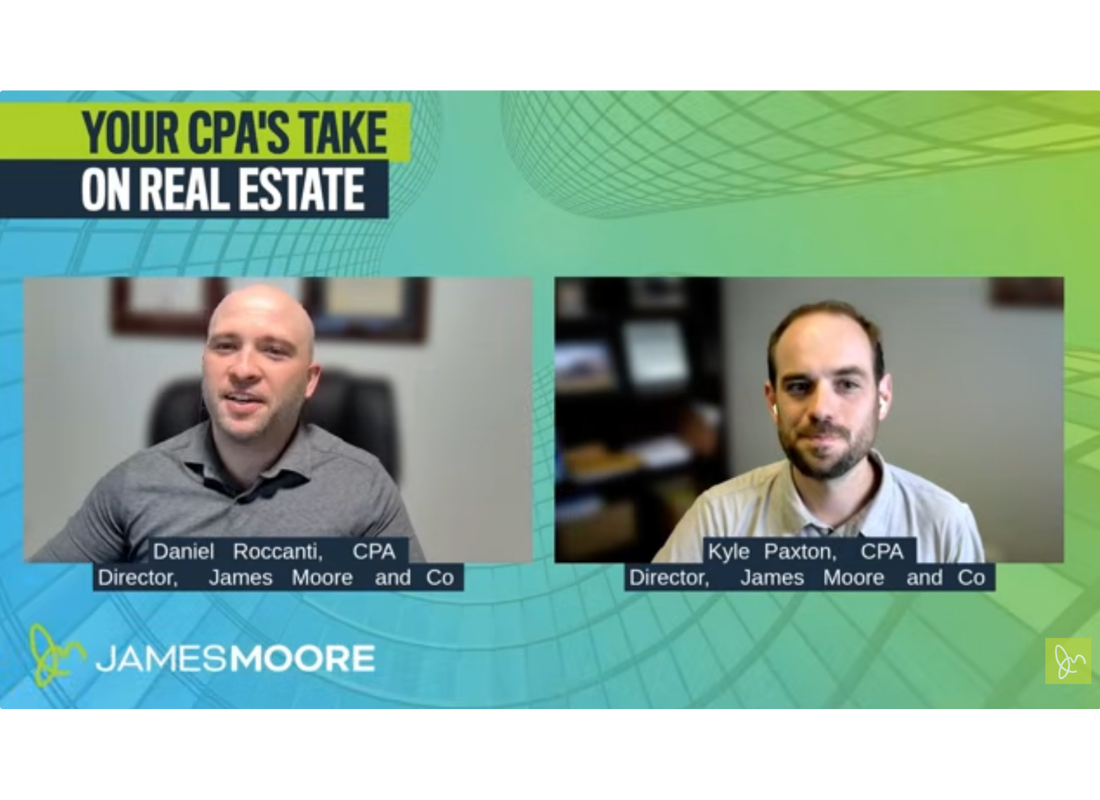
During a recent episode of Your CPA’s Take on Real Estate, CPAs Daniel Roccanti and Kyle Paxton sat down to unpack the operating costs that quietly erode net operating income even when nothing else in the deal has changed. Rent is holding steady, occupancy looks fine, and the property still ends up making less money than expected, because nobody was watching the expense side closely enough.
Why Owners Miss This Until It’s Too Late
Rent growth, occupancy and cap rates get most of the attention in a typical deal conversation. Expenses tend to get an assumed 3% bump in the budget and not much more scrutiny than that. Kyle pointed out why: the industry naturally gravitates toward revenue, because revenue is the exciting number, the one people want to talk about.
That mindset creates a real blind spot. Daniel put the risk plainly: an owner can grow revenue and still make less money, because expenses today are increasing fast enough to eat up the gain entirely. An owner celebrating a 4% rent increase might be looking at a P&L showing expenses up 7%, and the net result is a worse cash flow position than the year before.
Insurance Premiums Aren’t Just Getting More Expensive, They’re Getting More Complicated
Insurance came up first, and for good reason. Premiums are rising because replacement costs, construction labor, geographic risk (hurricanes in Florida, wildfires out west) and property characteristics like building age and roof condition are all moving in the wrong direction at once.
But premium isn’t the whole story. Owners also need to weigh deductibles, coverage limits and exclusions before assuming they’re stuck with whatever renewal number shows up. Daniel walked through a real example: deciding whether it makes more financial sense to replace an aging roof now for a lower premium, rather than holding off and paying a higher one indefinitely.
The Property Tax Trap That Hits After You’ve Already Closed
Property taxes are where a lot of buyers get caught off guard, and it happens after the deal is done, when it’s hardest to unwind. Kyle didn’t mince words on this one: historical property taxes are, in his view, totally misleading when underwriting an acquisition.
The issue is that a sale almost always triggers a reassessment, and the new assessed value is typically based on what the property just sold for, not the seller’s old (and often undervalued) number. Owners who underwrite off the trailing tax bill instead of the post-sale reassessment risk a nasty surprise in year one, and Daniel noted he’s seen increases well beyond the standard 3% assumption, sometimes into the double digits.
Labor, Vendors and Death by a Thousand Cuts
Beyond insurance and taxes, Kyle described what he called death by a thousand cuts: labor, maintenance, repairs, utilities and vendor contracts each creeping a few points over budget. None of it looks alarming on its own, but added together it moves the needle in a meaningful way.
Daniel’s advice on vendors was direct: every vendor has raised its prices, that’s simply the environment right now, and the answer isn’t to accept whatever renewal comes across the desk. Owners who never rebid major contracts (security, landscaping, cleaning) are usually paying more than they need to.
Building a Rolling Forecast Instead of Getting Surprised
The strategy Daniel and Kyle kept returning to was simple: stop waiting until year end to find out what changed. Daniel described the need for a rolling operating forecast, updated monthly or quarterly, that tracks actual costs against budget, against prior year, against the original underwriting and against lender covenants.
The goal isn’t to scrutinize every dollar. It’s to find the biggest variances first, since that’s where the real financial impact lives, and to keep asking what changed, why it changed, and whether it’s likely to continue.
What This Means for Commercial Real Estate Owners
Revenue growth still matters, but it isn’t the full picture. Insurance, property taxes, and labor and vendor costs are rising faster than the standard 3% assumption most owners still budget for, and the gap between assumed and actual expense growth is exactly where NOI gets quietly eaten away.
Watch the full episode of Your CPA’s Take on Real Estate above for the complete conversation, including the specific questions to ask before your next insurance renewal and how to know if a property tax appeal is worth pursuing.
All content provided in this article is for informational purposes only. Matters discussed in this article are subject to change. For up-to-date information on this subject please contact a James Moore professional. James Moore will not be held responsible for any claim, loss, damage or inconvenience caused as a result of any information within these pages or any information accessed through this site.