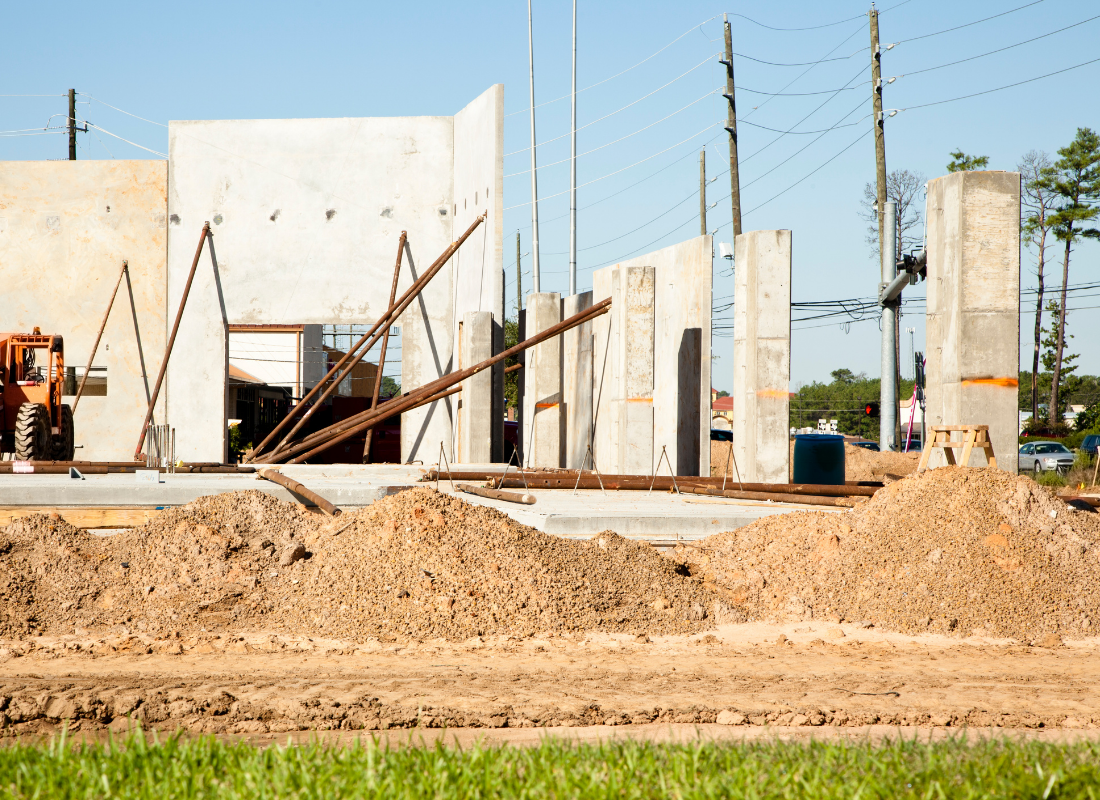
New Construction vs. Existing Property: Why Builders Are Winning the Pricing Battle
Originally published on October 7, 2026
“I would consider buying new construction if the builder gives you economics you can’t replicate in the resale market.” – Kyle Paxton
The new construction vs. existing property debate looks different for investors right now. In this episode of Your CPA’s Take on Real Estate, Kyle Paxton joins Faith to talk about why builders are getting more aggressive on price and what investors should look at beyond the sticker price.
Builders are sitting on more inventory than the resale market, with about 9.3 months of supply for new homes compared to 4.6 months for existing homes. That pressure is pushing builders to cut prices, buy down rates, cover closing costs and offer upgrades that many existing homeowners can’t match.
The conversation also covers the full cost of a deal, when tax benefits can justify a higher price, how depreciation and cost segregation fit into the picture and what Kyle would do with $500,000 to invest today.
Resources
Transcript
[00:02] Faith: Hi everyone and welcome. Today I am here with Kyle Paxton. Hi Kyle, how are you?
[00:02] Kyle Paxton: Hello. Doing lovely, thanks. Happy to be here.
[00:02] Faith: Good. Almost happy weekend.
[00:02] Kyle Paxton: Happy almost weekend. We were just talking about this week. I’m like, what day is it? I don’t know. But yes, happy almost weekend. Here we are.
[00:20] Faith: I know. Second week of school for us. So my kids are finally zombies in the morning. They’re kind of getting with the program and I’m like, “Oh, so this isn’t going to be so traumatizing.” Okay, back to school.
[00:20] Kyle Paxton: My four-year-old comes home with all that pent up energy that she’s been holding in all day. So, she’s a bulldog when she comes through that door. But it’s a good time.
[00:38] Faith: Let’s go take a walk. Let’s go play on the playground. Yes.
[00:38] Kyle Paxton: I throw her right in the pool when I get home and let her burn that energy off. So, there you go.
[00:38] Faith: Perfect. I love that. So today we’re talking about why new construction is winning in the pricing battle. The first question is, if you were advising an investor today, would you buy new construction, an existing property or wait?
[00:56] Kyle Paxton: Yeah. So I think this is a totally different conversation if we’re talking about your personal residence or if you’re looking to expand your real estate portfolio, right? And a lot of times I think people fixate on new construction as a lower quality build that uses cheaper materials than “in my day” or whatever. But I want to root this in the economics. Builders currently have more inventory pressure than the existing home market. I pulled up some data to prepare for this and there’s about 9.3 months of supply for new homes currently versus 4.6 for existing homes.
[01:45] Kyle Paxton: So builders inherently are going to be more aggressive here, right? And they have a lot of options. They can reduce the price. You see a lot of them buy down the rate. They pay closing costs, offer upgrades. That looks awful enticing compared to your average single family residence that’s an existing property that maybe can’t offer all of those things. And so in looking at this, it really just comes back to what’s the property going to earn on the capital I put in, right? This is basic real estate investing. I’m more concerned about what the rent is, where it’s at, what the financing looks like, what my operating costs are and then what capex, the capital expenditures, I might have to make, which should look very different on an existing property than a new build.
[02:28] Kyle Paxton: So factoring all that into the pro forma and our projections is important. I would consider buying new construction if the builder gives you economics you can’t replicate in the resale market, kind of regardless of the rest, right? But a lot of times the better location can come from existing properties. Of course, location is kind of king here. But in the grand scheme of things right now on buy new, buy existing or wait, I’m pretty comfortable with all three, Faith, if I’m being honest. So it’s just what works for you, really.
[03:03] Faith: Absolutely. What should investors calculate beyond the purchase price?
[03:03] Kyle Paxton: Yeah. It’s a nice trap often. So we need to look at the entire capital stack here. Of course, the obvious stuff. It’s not just the purchase price, it’s the closing costs, financing costs, that immediate capex we were talking about and then what cash reserves you may need to hold. And then you back out any economic concessions you’re getting from the seller or the builder. That’s really our starting point. And then it’s operating results.
[03:33] Kyle Paxton: We just recorded a video on this on our YouTube channel about what it means to really project our operating results. So being realistic about rents. What does vacancy actually mean? What level of vacancy are we going to expect? Do you run a risk? Faith, we’re both in Florida. Insurance and property taxes are a huge creep problem for our operating expenditures here, where as you maintain the property, your property tax a couple years down the line looks very different than where you started, and potentially the same with insurance, HOA, management, repairs, so on and so forth. So I think it really is looking through just the purchase price into what all of the rest of that looks like.
[04:19] Faith: Absolutely. When can tax benefits make a higher priced property the better investment?
[04:19] Kyle Paxton: They sure can. But this is one I want to be careful with. I think you and I have talked about this a lot, but I find some clients get rooted in paying that extra dollar simply because you get a tax deduction on that dollar. But if that extra dollar is a 30-40 cent savings in tax, you got to make sure the economics of the thing work, right?
[04:54] Kyle Paxton: But a higher priced property can be a better investment if it means the overall economics are stronger. Maybe, going back to our new construction, I’m paying a little bit more, but whether through the builder or elsewhere, you’re getting better financing. That’s an easy one. You’re expecting lower maintenance in the first several years. That’s kind of the beauty of a new build. I said before a lot of people don’t believe that’s actually true. And then of course maybe you have stronger rents, you have a greater depreciable basis. We beat bonus depreciation to death. But you can get more cost recovery through depreciation expense if you meet criteria to allow it. And so this is getting back to the taxes should really enhance a good investment and not be used to justify a bad investment or just pad the numbers to get the tax benefit.
[06:01] Faith: Absolutely. How should investors think about depreciation, bonus depreciation and cost segregation?
[06:01] Kyle Paxton: Like I just said, we beat this thing to death these days, don’t we? So talking about the economics come first, but depreciation is a huge driver and one of the big tax advantages of owning rental real estate and can really drive economics here. So much of the real estate game, from a tax perspective, is a time value of money. You are incentivized to accelerate deductions. So you free up cash that you can deploy in additional investments. You keep the snowball rolling, kind of the traditional real estate build.
[06:25] Kyle Paxton: By default, portions of your investment property that you are using either in a trade or business or as a rental property, you’re entitled to a cost recovery on that over time. For a nonresidential building, by default, that’s 39 years. Or cost segregation can help break that into smaller components where you can potentially get those smaller pieces in year one. This number can be huge depending on the property. Sometimes it’s 30 or 40% of the basis of the building that you get as a tax deduction in year one. So you can see how that can potentially significantly reduce your year one tax, and then you use that as part of your full economic picture again to keep the snowball rolling, free up additional cash and enter new deals or deploy your cash elsewhere.
[07:32] Kyle Paxton: The big catch here is that it’s a timing difference, as I alluded to before. And so if you’re taking that depreciation now and you go and sell down the line and don’t employ a couple strategies in that time, you get hit with the recapture on the back end and pay additional tax. So that’s something, the trap there.
[07:52] Faith: Yeah. Are investors too focused on purchase price instead of after-tax return?
[07:52] Kyle Paxton: I think so. We touched on this a little bit before, but I think you have the purchase price, the sticker price, but really what we need to focus on is the economic price, and financing is a big driver here. I’m seeing financing processes take a lot longer, specifically as you’re going through a refinancing process. There’s more scrutiny around that, so you have to hedge your bets a little bit. We’ve talked about, Faith, how rates are right now nice and high. And so in charting out your after-tax economic result, these are all things we need to take into account.
[08:53] Kyle Paxton: I want to make sure that we stay on top of our operating costs and really understand what’s driving our operating costs, looking at the big ones of property tax and insurance. Are they reasonable? Can we shop them around? You can’t shop around property taxes, but can you shop around insurance? Can you do anything with property taxes to help reduce this operating income? So I would say yes, at times. I do feel like investors are too rooted on purchase price and not the broader economics around a deal.
[09:14] Faith: Yeah, absolutely. Okay, so our last question, which I’m excited to hear your answer to, because I’m getting free advice right now. If you had $500,000, half a million, to invest today, where would you put it and why?
[09:37] Kyle Paxton: You may not like my answer. You set that up a lot and it’s the old “it depends,” right? So I think for me this is more a conversation about asset class and location, and it’s really hard to just give a blanket “you should invest in X right now,” right? I think we’re still seeing a lot of areas where people are entering different asset classes and having a lot of success.
[10:13] Kyle Paxton: In talking about this new versus existing, I think when looking at new construction, you really need to key in on whether there’s a motivated builder that you can negotiate with across a bunch of different dimensions, kind of tying up what we talked about. You have the price, but also financing, closing costs and other concessions. And then of course you have the existing value-add type properties. And so I think in today’s market, with financing and everything else, if you’re sitting on $500,000, I don’t think you blow the $500,000 on the purchase price. I think you put 150 or 200 in a high quality deal. Maybe you bring in a friend and start a partnership, but then have sufficient reserves either to start another opportunity or to add value to that exact opportunity you entered with the 150 or 200,000.
[11:07] Kyle Paxton: I didn’t give you, I don’t think you’re as excited about my answer as you set it up, but I think having capital freed up right now is important.
[11:07] Faith: Yeah. And I also think that this question can be a bit misleading because where we live, $500,000 does not get you a lot.
[11:28] Kyle Paxton: It sure doesn’t. So you are correct.
[11:28] Faith: Yeah.
[11:28] Kyle Paxton: And so that gets back to what I’m seeing more and more right now. I’ve said like three times in this conversation that it’s a great time to own real estate for tax purposes. And this is where, in talking about the 150 or 200,000, it’s a really good time to own a slice of a multifamily property. It’s a really good time to buy a small office building with a partner. There’s a lot of different ways we can slice this and you don’t need all the capital on day one. Almost every real estate deal I see is leveraged. And so that’s kind of the playbook, right? There’s a lot of flexibility there. It’s just finding the right place at the right time.
[12:11] Faith: Yeah. And it’s ever changing. I mean, think about it. We’re just finishing with summer and going into the fall.
[12:11] Kyle Paxton: I feel like every week I talk to you there’s a new update in the real estate investing world. It’s changing.
[12:31] Faith: Yeah. So I think these conversations we’re having are really important.
[12:31] Kyle Paxton: Absolutely. And I always enjoy them.
[12:31] Faith: Thanks. It was great talking to you today, Kyle. And we will talk again soon for this ever changing market. It’s wild.
[12:31] Kyle Paxton: Buckle up. It’s gonna get more wild.
[12:31] Faith: I’m buckled. Here we go.
[12:31] Kyle Paxton: All right. Thanks, Faith.
[12:49] Faith: Bye.
Get the Full Picture Before Your Next Deal
Builder incentives, financing, operating costs and tax benefits all shape what a property really costs. Watch the full episode to hear the whole conversation, and subscribe to Your CPA’s Take on Real Estate for new episodes.
All content provided in this article is for informational purposes only. Matters discussed in this article are subject to change. For up-to-date information on this subject please contact a James Moore professional. James Moore will not be held responsible for any claim, loss, damage or inconvenience caused as a result of any information within these pages or any information accessed through this site.