Why Nobody Is Funding Deals Right Now
Originally published on August 13, 2026
“A high return maybe just gets an investor through the door. It’s definitely not going to close the deal.” — Daniel Roccanti
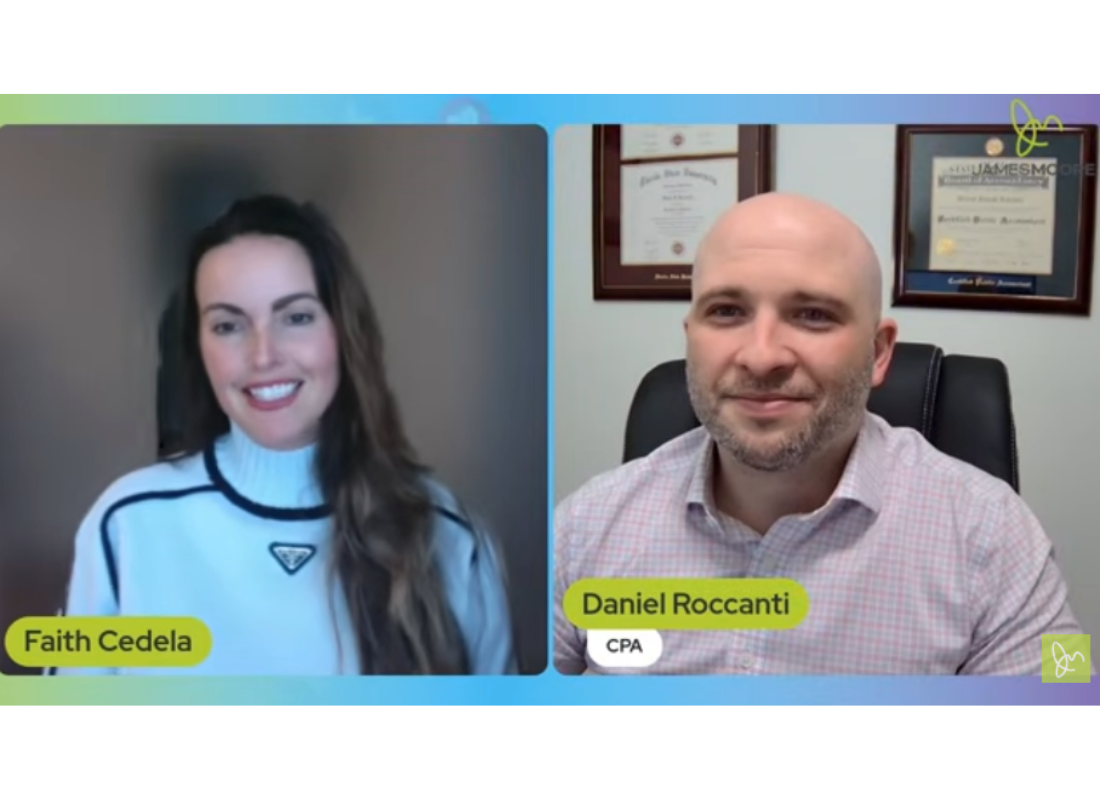
In this episode of Your CPA’s Take on Real Estate, hosts Daniel Roccanti and Kyle Paxton dig into why funding real estate deals right now takes more than a strong projected return. Private real estate fundraising is down significantly year over year, and investors have gotten more selective about where they put their money.
Roccanti and Paxton walk through what limited partners are evaluating in 2026, from downside protection and capital structure to sponsor transparency and track record. They close the conversation with a five question framework sponsors can use to test whether their deal is ready to present to investors.
Resources
- James Moore Real Estate Industry Page
- Your CPA’s Take on Real Estate on YouTube
- Watch the Full Episode
Full Transcript
[00:02] Daniel Roccanti: Welcome to Your CPA’s Take on Real Estate. We’re your hosts, Daniel Roccanti and Kyle Paxton, back for another video. Today’s topic, we’re going to talk about how to actually raise funds and make investors say yes. The first half of 2026 has been pretty interesting. The amount of private real estate
[00:24] Daniel Roccanti: fundraising is actually down. It’s at an all-time low, about the lowest since 2017, and it’s about 38% lower this time than it was last year. So real estate all together is in a bit of a slump, and investors are noticing and putting less of their money into deals. So if you have a deal now, it’s going to be a bit more difficult based on the current environment to get investors.
[00:47] Daniel Roccanti: But that doesn’t mean they’re saying no. You just need to know how do we get them to say yes? And in today’s environment, what are investors looking for?
Kyle Paxton: Oh, yes, Daniel, this is one of my favorite topics. I love talking about this. I love the investor relationships component of real estate, bringing them into deals and making sure they stay happy through the life of the deal.
[01:11] Kyle Paxton: We kind of go through these cycles where, to your point, in 2025 we saw a bit of real estate investment in these types of deals. The last several years have kind of been this way. We get law changes that drum up that bonus depreciation buzzword that drives capital to real estate for tax savings perspectives.
[01:28] Kyle Paxton: I think real estate’s a tool we talk about a lot as a good investment period across the economy. One of my favorite topics to talk through with our real estate operators and syndicators is this investor relationship piece. I think it’s huge.
[01:47] Kyle Paxton: So let’s talk about, take us a little into, all right, so to get me in the door, I need to see a high projected return, right? That’s step number one, but that’s kind of low-hanging fruit. Let’s get into what makes our investors happy.
Daniel Roccanti: Yeah, I think there’s a lot of misconception here in the space.
[02:06] Daniel Roccanti: Yes, investors want higher returns, but a high return maybe just gets an investor through the door. Maybe starts getting you talking. It’s definitely not going to close the deal, okay? And sometimes even if it’s unbelievable, it might not even do that.
[02:25] Daniel Roccanti: So I really challenge the idea that, all right, I’m getting a high rate of return, a high ROI. Maybe that gets me a conversation in the door, but really investors have moved beyond that point, and that’s really not going to be it. You really have to look into what are investors making their decisions around. It’s more than just the deal and what the return is. It’s going to be more about the sponsors, you and your team, and your relationship.
[02:57] Daniel Roccanti: So LPs are looking for, in 2026, more durable returns than these presentation-driven returns. It doesn’t even need to be a shiny deck necessarily, it’s just got to be foolproof.
[03:19] Daniel Roccanti: Investors today are more realistic. They’re not saying, “Okay, the 30% return over a year sounds nice in theory, but it’s probably unbelievable, show me the numbers at that point.” They’re really looking at where the cash flow is going to be, whether the rent growth is really supported by markets and the evidence in the market, where the operational improvements are. If you think you’re going to get this much return, there has to be a reason why.
[03:45] Daniel Roccanti: There needs to be some kind of improvement, because if there’s no improvement, there’s no way you’re getting that based on the market. Where is your advantage? And with debt and everything going on, where’s the debt pay down? What does this look like, and what is a realistic exit? I’ve seen more unrealistic exits, and while that might be great on the sales side, investors are finally catching on.
[04:09] Daniel Roccanti: If you sold someone on selling it at X in seven years, and here’s seven years, and we’re not getting that anymore, that can really hurt investors, especially recurring ones.
Kyle Paxton: Yeah, and a lot of this comes down to, I’m finding that investors either want to be more educated in the real estate investment they’re getting into, talking about the LP perspective. There feels like there’s less blindly throwing money around.
[04:38] Kyle Paxton: In the age of AI and ChatGPT, you can get a quick elementary education on what you’re doing quickly. So I’ve seen more interest in really understanding the inner workings of the deal. What is driving the return? When should I expect the return, and in what form, distributions or payments through the life cycle of the deal, and does that better align with what actually happens? That’s where the trust component comes into play, and there’s clear communication around that.
[05:09] Kyle Paxton: We’re still in a tighter real estate market. The biggest thing is downside protection. Daniel, you and I have talked about this several times in this video series, the last handful of years, maybe anybody could get into a multifamily property and make a return.
[05:32] Kyle Paxton: As the market’s gotten tighter and squeezed, we’ve seen some separation between the operators who are doing this correctly and the operators having a hard time. Investors are diving deeper into your leverage and debt service coverage. Interest rate exposure is a huge one.
[05:50] Kyle Paxton: We just talked about this with refinancing and having to get creative on potentially additional capital raises. Capital expenditures and operating reserves are always huge in real estate, and in some asset classes more than others, really scrutinizing that break-even occupancy and understanding the rental income.
[06:14] Kyle Paxton: Now we’re not just projecting what our rental income could be, but what’s realistic to fill, and that’s been a big shift. Making sure we’re thinking through the effects of slower leasing, delayed rents, delayed sale, those types of things.
[06:40] Kyle Paxton: I want to jump into how this control comes up a lot with investors. This kind of gets back to the trust of the operators, and the education piece. LPs maybe want direct ownership, but there’s a broader preference for visibility, influence, strategy-specific exposure, being part of the team rather than blindly sending money.
[07:14] Daniel Roccanti: Yeah, what I’m seeing here today is historically investors in real estate are aggressive people. They’re not just trying to buy stock and match the stock market. They want something where they can get higher returns and greater control.
[07:31] Daniel Roccanti: There’s a lot of great things with real estate, and that’s usually why it leans toward more aggressive people. But today’s market is making everyone a little more risk averse. Even the most aggressive people have pulled back a little. They’re really wanting to understand, “I don’t want to lose my money.”
[07:50] Daniel Roccanti: That’s the worst thing you can do with an investor. Even if you have to sacrifice a little return, they will do that, as long as they don’t lose their entire amount. Everything else doesn’t matter if you lose the investor’s money.
Kyle Paxton: Correct. They’re never coming back at that point.
[08:06] Daniel Roccanti: You lost them, and you might even get yourself in some court cases and dealing with getting sued. So you really don’t want to do that. Investors right now are really protecting that downside, so you need to make sure you’re doing the same.
[08:22] Daniel Roccanti: When you’re conveying, “Here’s my new deal,” you really need to be looking at worst case scenarios. Do I have a plan for everything? Not making crazy assumptions, especially with refinancing, that the best market and the best refinance rate are going to happen exactly when you need it.
[08:39] Daniel Roccanti: That’s just not the case, and investors have probably gotten burned dealing with this. The better ones want more visibility, and they want you to demonstrate that you know what you’re doing and can pivot if the market gets worse.
[08:56] Daniel Roccanti: More than anything, transparency has now become part of these investments. Before, maybe you could get away with, “Here’s your money back, here’s a great return,” and they’d say, “Cool, don’t know anything, I’m 100% passive.” That’s not what we’re seeing now. We’re seeing more transparency.
[09:22] Daniel Roccanti: When you’re dealing with investor relationships, you need to understand that you need to be transparent upfront, and continue that transparency throughout the investment all the way to close.
Kyle Paxton: Daniel, I want to talk a little more on the upfront piece, because right now with deal modeling, I feel like everyone I talk to is implementing AI in their deal modeling process.
[09:41] Kyle Paxton: It’s allowing operators to get much more information on a deal quickly and concisely. You can use it in many different ways. But the important piece is being able to turn that into education for the LPs on how AI was implemented into the system, and how you’ve foolproof checked that.
[10:12] Kyle Paxton: I’ve downside protected against these assumptions that are kicked out with all the software we have available. I think this is more prevalent than ever, with the increase in inputs coming in. It’s really helpful to lay that out clearly on the front end of the deal.
[10:31] Kyle Paxton: As the deal goes on, are you communicating consistently with your investors? If there are variances to the model, get out in front of that. I deal with it frequently where investors are blindsided by the K-1 they get, or they didn’t get the distributions they were expecting in a given year.
[10:54] Kyle Paxton: Typically, cash is what causes pain points in this process, so getting out in front of cash flow issues goes a long way. Daniel, do you have anything else to add on transparency before we dive into track record versus deal quality?
Daniel Roccanti: Yeah, I just think transparency helps that relationship a lot.
[11:17] Daniel Roccanti: Even the most reasonable investors understand it’s never going to go 100% to plan. Do you have a plan in place? Are you giving worst case scenarios, and do you have a plan for when that happens? If you’re using assumptions, we all have to use assumptions.
[11:35] Daniel Roccanti: Where do they come from? Do they come from credible sources, or did you just throw a random number on a page? Are you modeling these things correctly? And like Kyle was saying, cash is king, so anytime distributions don’t meet expectations, there needs to be transparency, a reason why, and a plan to get them back on track.
[12:06] Daniel Roccanti: If there is some downside, why is this happening? Were we expecting it? What’s our plan going forward? That’s really what it is with investors, when something changes, I’m getting out in front of it, letting them know, and there’s a plan in place to correct it.
[12:28] Daniel Roccanti: Transparency is great, but what we really want to see with a lot of our sponsors is, how do I get that relationship? How do I get that credibility? That comes back to your track record.
[12:55] Daniel Roccanti: A deal can be great, but if you don’t have a great track record, investors might still not want to deal with you.
Kyle Paxton: But how do you get a track record? It’s the chicken before the egg kind of thing.
[13:13] Kyle Paxton: You have to start somewhere, and they all play different roles here. That’s what we want with all our investors, to get to the point where we say, I have a great track record. Because if you give an investor a great deal that meets exactly what they were expecting, they’re significantly more likely to invest with you next time, because they know from their track record, or they tell their friends.
[13:32] Kyle Paxton: It’s really important, especially for new sponsors, to do everything right at first to gain traction and get that track record, and then everything becomes easier. That doesn’t mean the deal doesn’t matter anymore, you still have to have good deals, but that track record gives everyone else a sense of security that you’ll take care of their money and do everything you can to get them the best return.
[13:57] Daniel Roccanti: Two comments on this. On the track record piece, repeat investors say a lot. Understanding a deal, how many of those investors are in this new deal who have invested with the group before, is a big sign of track record and trust.
[14:26] Daniel Roccanti: On the flip side, for a newer operator with less track record trying to raise capital, what I see work is having everything aligned from the start. Having the right mentor in place, someone older and more experienced.
[14:45] Daniel Roccanti: Real estate is a mentor business. It’s relatively easy to find a mentor, people like to talk about their successes and failures and pass that on. Having the right support around you, and surrounding yourself with a team, whether internal or outsourced.
[15:04] Daniel Roccanti: Having the right attorneys, CPAs, property managers if that applies, all aligned on the front end before you go do the heavy lifting of a capital raise, really helps sell it. Picking people in those positions who have done this before helps increase your credibility and adds that peace of mind.
[15:29] Daniel Roccanti: Track record is super important, but in 2026 it’s all about the deal right now. Really scrutinizing the deal itself and not lending all the weight to track record is important, but both go hand in hand.
[15:56] Kyle Paxton: If you have an outfit that has a repeatable investment strategy that works time and time again, it’s hard to say no to that.
[16:19] Daniel Roccanti: Track record will open the door, but it does not rescue a weak deal. But if it’s a complex or complicated deal, a strong sponsor with a great track record might at least get some ears, where a weak sponsor without one will not.
[16:49] Daniel Roccanti: A strong track record starts by doing things right, creating transparency, and gaining the trust of the investor throughout the whole process. The more you do that, the more likely they’re willing to come back and listen to the next deal.
[17:12] Kyle Paxton: Even in a tougher environment, there are still people putting money into deals, they’re just being a lot more strict with it.
[17:42] Daniel Roccanti: Once track records get broken, it can be really hard to climb out of that hole. Make sure you’re always doing everything right, and if a deal does go bad, there needs to be transparency and effort to try to get everything back for investors so you don’t tarnish your track record over one bad deal.
Kyle Paxton: Daniel, working with a lot of real estate operators and syndicators, the ones I appreciate most are the ones who are almost loud about their mistakes and own them, and communicate them to investors, even as part of a new deal proposal.
[18:01] Kyle Paxton: You can pull up any website for a real estate syndicator and there’s a hundred success stories. I really appreciate when the successes are still advertised, but the lessons learned from the things that didn’t go well are baked in too, and why this deal is different.
[18:20] Kyle Paxton: I think that’s huge for establishing trust. Nobody’s perfect, I’m not perfect as an accountant, but if you own those mistakes and use them to get better, that’s part of your transparency, and it’s big for credibility and getting into that repeat investor mindset, even if a specific deal doesn’t go well.
[18:39] Kyle Paxton: Let’s dive into red flags. I think not having a credible downside case is a red flag. If you’re an established real estate operator and don’t have mistakes you’ve made to share, I’m skeptical.
[19:01] Kyle Paxton: There are a lot of deals, and things don’t always go to plan, so I’m immediately questioning things. Red flags we dig into: are these returns we’ve modeled dependent on market rescue, aggressive cap rate compression, projecting above-market rent growth, refinancing terms at materially better rates. We’ve talked about how tight that side of things is right now.
[19:41] Kyle Paxton: And sale timing being too aggressive, that can trigger some red flags with investors.
Daniel Roccanti: I always say, if the deal sounds too good to be true, it probably is.
[20:01] Daniel Roccanti: You really need to sell me on how this is realistic. Right now I see too many times where it’s this optimized scenario where the market gets better and saves the deal, and I don’t know if that’s going to happen. Maybe, but I wouldn’t count on it or put my money on it. Show me realistic, what does a realistic rent growth schedule look like?
[20:27] Daniel Roccanti: If it’s too high, too aggressive, what are you doing on refinancing? Refinancing right now is a huge issue with a lot of real estate. If you’re just expecting a great refi at the market’s best rate when needed, that’s a huge issue.
[20:49] Daniel Roccanti: We need to make sure we’re giving accurate numbers, maybe even leaning conservative, and not trying to sell the best-case scenario. We’re really trying to sell a solid deal with a good plan that is flexible when the market changes but still successful even in a downturn.
[20:49] Kyle Paxton: Another thing that’s lower-hanging fruit in the investor red flag arena is when returns are too high based on one of these inflated factors.
[21:14] Kyle Paxton: One area that maybe doesn’t get enough scrutiny from investors but is so important is the capital structure. What is the funding plan? What options are on the table if the funding plan doesn’t pan out? If an extension or refi is needed, what does that plan look like? Do you have floating rate exposure without adequate protection?
[21:47] Kyle Paxton: What is my expected timing on distributions and actually getting a return on my cash? Does that align with a realistic expectation of whether the asset is operating and stable enough to have free cash to distribute? Investors tend to fixate on the cash and when it hits their bank account, but the broader, more important conversation is digging deeper into the holistic capital structure. I’m not sure investors do that to the extent they should when vetting deals.
[22:50] Kyle Paxton: Some of this is a little obvious, but communicating inconsistent information is a red flag. Does your slide deck and modeling actually align with expectations? Are the communications around differences well executed? As an organization, do you have the proper infrastructure to actually manage the deal? How many active projects does the organization have? Do you have a concise strategy firm-wide, or are you shotgunning different types of investments?
[23:18] Kyle Paxton: What’s the dependence on one key individual? Does that individual have the right team or advisors to properly support and transition if something were to happen? Whether internal or outsourced, are there dedicated accounting, asset management, and investor relations capacity available? For newer sponsors, do you have the right professionals around you to demonstrate the proper infrastructure to scale?
[23:47] Daniel Roccanti: Some other red flags I look at are, if everything I hear is amazing, if there’s no “this one investment didn’t do quite as well, but they were on top of it,” that’s like Google reviews where you only see five-star reviews.
[24:28] Daniel Roccanti: If there’s no reviews below five stars, that’s a little too good to be true. There’s no successful person who hasn’t had challenges, and a lot of lessons learned come from how you respond when a challenge happens. So you can also swing the other way and be skeptical if there are too many perfect reviews.
[24:51] Daniel Roccanti: We just want to make sure that whatever you’re doing right now, the organization is able to handle it. If I see a sponsor with a thousand deals out there, I’m going to question whether you’ll have enough time to actually care about my deal.
[25:37] Daniel Roccanti: Are you all-in on multifamily, or doing something across every industry? It’s hard to have a niche and know exactly what to do in multifamily when you’re also doing industrial, retail, and data centers. I’m also looking at your company, is there high or tight employee turnover, reliance on one or two key individuals?
[25:53] Daniel Roccanti: Investors may question whether your organization is going to fail this deal because it’s spreading itself too thin, or whether there’s something going on internally.
[26:22] Kyle Paxton: Daniel, let’s tie this up with the credibility piece. For newer sponsors, I like to think through this as a three-layer system, like a funnel.
[26:47] Kyle Paxton: Layer one is proof of the deal. Can you show the work that demonstrates your key assumptions, explain the basis and how you got there, present debt and reserve strategy, talk through the variables that identify the downside, and what the exit scenarios look like.
[27:13] Kyle Paxton: Layer two is proof of the team. How did you get this deal, who sourced it, how will you service it, what professionals are involved in managing accounting and investor reporting if you’re not doing that internally, who steps in if a key person is unavailable.
[27:37] Kyle Paxton: Layer three is proof of the institution. What is the overall company’s policies, what does the reporting calendar look like, how is the company administered, and how does that relate to the investor. To close the loop on credibility, there are three behaviors that lend themselves to establishing it: disclosing weaknesses before they’re asked, getting out in front of it, offering solutions before they’re asked for.
[28:15] Kyle Paxton: Are you answering diligence questions directly rather than defensively? It’s easy when your model is breaking down to get defensive, but that’s not helpful for anybody. Trying to level set and be clear is important.
[29:03] Kyle Paxton: In the proof of the institution layer, going into a specific deal, are you promising a level of reporting or access the organization can’t maintain as part of the broader institution?
[29:25] Daniel Roccanti: Absolutely, Kyle. Let’s wrap it up. Usually when I’m thinking about investors, I’m thinking of five questions in my head.
[29:47] Daniel Roccanti: First, do I understand why this deal should work? You need to be creating value creation plans that are specific and economically supported.
[30:07] Daniel Roccanti: Second, do I understand how it could fail? There needs to be a fail situation, investors need to understand there’s always risk involved, and the investor should be able to identify the primary risk and how you’re protecting against it.
[30:25] Daniel Roccanti: Third, do I trust the assumptions and the supporting information? The investor needs to trust the assumption, understand this is an assumption and this is the data used to come up with it. The numbers should be consistent, sourced, and clearly defined.
[30:57] Daniel Roccanti: Fourth, does this team have the relevant ability and capacity to execute? Not only does the sponsor need to be credible and experienced, but their team too, is the organization able to deliver on this deal and plan?
[30:57] Daniel Roccanti: Fifth, do I know how I will be treated after the capital is committed? This goes back to transparency, we need reporting, communication, governance, and candor throughout the investment.
[31:23] Daniel Roccanti: If you can answer those five questions and make investors feel comfortable with your deal, in today’s environment you can still get investors, it’s just going to be a bit more difficult. You just can’t throw big numbers in front of them and hope they’ll commit off high numbers alone.
Kyle Paxton: Great conversation today.
Daniel Roccanti: It was. Thanks for stopping by, and we’ll see you next time.
Want More Insights Like This?
Watch the full episode of Your CPA’s Take on Real Estate above for the complete breakdown on funding real estate deals right now, including the specific red flags investors are watching for in 2026.
All content provided in this article is for informational purposes only. Matters discussed in this article are subject to change. For up-to-date information on this subject please contact a James Moore professional. James Moore will not be held responsible for any claim, loss, damage or inconvenience caused as a result of any information within these pages or any information accessed through this site.