Real Estate Succession Planning: Why Your Estate Plan Isn’t Enough
Originally published on October 14, 2026
Many real estate owners spend decades building a portfolio and comparatively little time preparing someone else to run it. That gap is the problem real estate succession planning is meant to solve. If it stays open, a well-built estate plan can still leave the next generation holding properties they don’t know how to manage.
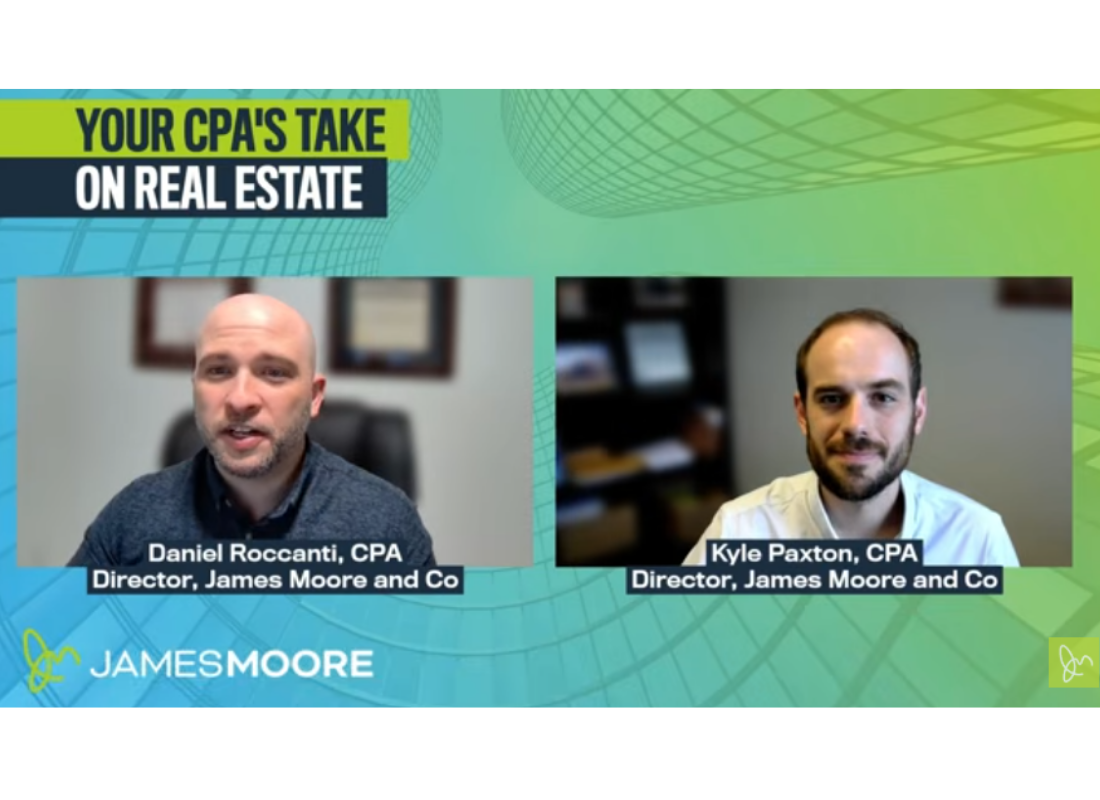
During a recent episode of Your CPA’s Take on Real Estate, Daniel Roccanti, CPA and Kyle Paxton, CPA shared valuable insights on passing down the day-to-day operation of a real estate portfolio. The discussion was a follow-up to their earlier episode on estate planning. It highlighted the importance of transferring knowledge and decision-making authority, not just ownership.
Estate Planning and Succession Planning Answer Different Questions
Estate planning decides where your assets go and how to limit the tax hit along the way. Succession planning answers a more practical question. As Daniel put it, “If the owner disappeared tomorrow, who could keep the portfolio operating without them?”
The two don’t move at the same speed. “Ownership can transfer to an estate plan relatively quickly, but that management knowledge, it doesn’t transfer as quickly,” Daniel said.
Kyle pointed out that a real estate portfolio “feels very passive,” but owners are constantly handling tenant relationships, property managers, financing, capital projects and banking relationships. If those responsibilities haven’t been handed off, the next owner inherits the assets without the know-how to run them.
Start With What the Owner Actually Does
The first step is an honest inventory of the owner’s role. Who approves major repairs? Who negotiates financing? Who reviews financial statements for underperforming properties? Who makes acquisition and disposal decisions? Who handles the relationships with the CPA and the attorney? Daniel noted that some of these tasks belong to the owner and others belong to a manager. In a succession plan, those may end up being two different people.
Get It Out of Your Head and Onto Paper
Daniel stressed centralized documentation. Family members often know the portfolio exists and roughly what it’s worth. “They don’t know who the lender is. They don’t know who your insurance broker is,” he said. The same documentation helps during a vacation or a hospital stay, not just after a death.
The goal, in Daniel’s words, is that “we should be transferring this knowledge and not just the property.” Kyle added that the time to act is now: “start transitioning those responsibilities before that succession becomes necessary.”
Decide Who Should Own, Manage or Benefit
Daniel described three roles in real estate: owner, manager and beneficiary. One person can hold all three or just one. “We don’t want to just assume that all children just want or even qualify to operate your portfolio,” he said.
Have the conversation early. Find out who wants to be involved, who has the skills and financial responsibility, and who can work with siblings or outside investors. Then bring the successor in gradually. That means reviewing financial statements, sitting in on lender meetings and learning the entity structure well before they’re in charge.
The Right Successor May Not Be Family
Kyle shared a client example. The client realized that people had stopped bringing him the issues they used to and were going to a key employee instead. That’s a natural opening for a transition plan. Kyle’s advice was to hold off on promising that person anything until you’ve talked with your professional advisors. A transition can be shaped many ways, from equity interests to profits interests.
Fair Doesn’t Always Mean Equal
Splitting a portfolio evenly among three children can feel fair. However, Daniel warned that “equal ownership without clearly defining management authority can actually create conflict.” A succession plan should spell out who approves sales and refinancing, who sets distributions and who chooses the property manager.
Kyle explained that entity structures can separate economics from control through voting and non-voting interests, manager-managed entities, trusts or boards. In his conversations with clients, he settles the economics and control first and then looks at how to fine-tune the tax picture.
Settle the Hard Rules Before There’s a Dispute
A buy-sell provision sets the rules for when an owner wants or needs out. It covers what triggers a sale, how the interest is valued, how the buyout is funded and whether ownership can leave the family. Liquidity matters too, since a building worth millions doesn’t always come with the cash to buy out a sibling.
Kyle has seen close families come apart after a parent dies. Daniel was blunt: “the worst time to negotiate these rules is after the family is already in dispute.” Operating agreements also need regular updates, because when a conflict arises, the documents decide the outcome, not your intentions.

Who Takes Over If You Can’t Make the Call Tomorrow?
Kyle closed with the question every owner should be able to answer: who would take over and would they know what to do? He said practical succession planning brings together a CPA, an estate planning attorney, a business attorney, financial advisors and eventually the next generation. Daniel’s advice was to not “treat succession planning as something that happens at the end of your real estate career.” The strongest plans are built while the current owner is still available to hand off relationships and decision-making experience.
Watch the full episode of Your CPA’s Take on Real Estate to hear Daniel and Kyle walk through each step. If you’re ready to start building a plan for your portfolio, contact a James Moore professional.
All content provided in this article is for informational purposes only. Matters discussed in this article are subject to change. For up-to-date information on this subject please contact a James Moore professional. James Moore will not be held responsible for any claim, loss, damage or inconvenience caused as a result of any information within these pages or any information accessed through this site.