Real Estate Investor Tax Strategy: Why Planning Matters More Than Ever
Originally published on October 5, 2026
“I never want tax to drive strategy and I want to make sure we’re grounded in economics.” – Kyle Paxton
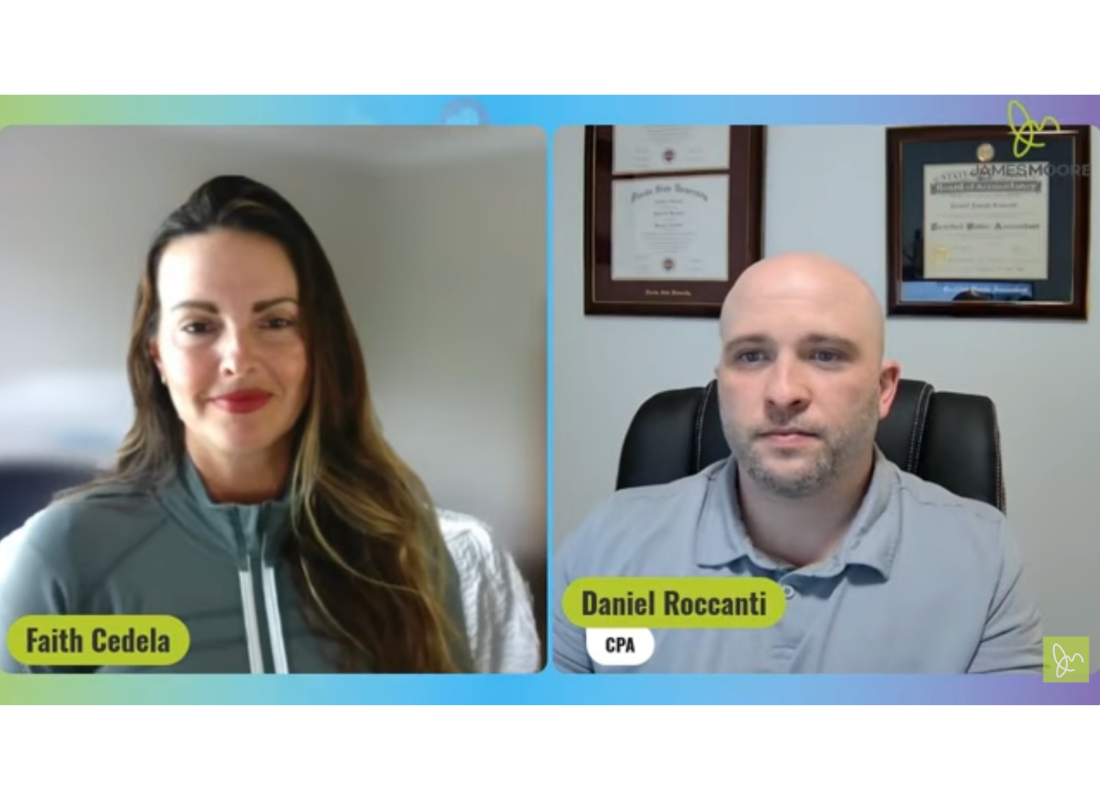
In this episode of Your CPA’s Take on Real Estate, host Faith sits down with Kyle Paxton to talk about real estate investor tax strategy when rates, legislation and property values are all changing. They cover the biggest mistakes investors are making, how cost segregation and bonus depreciation fit into planning and when it makes sense to revisit your entity structure.
Tighter margins have made tax planning a bigger factor in real estate returns. Kyle explains why reactive investors feel the pain first, why taxable losses on a K-1 don’t always mean a deal is losing money and how a sell-and-reinvest cycle can use bonus depreciation to offset gains.
The conversation also covers smart scaling, including when to bring in a CPA, why entity structure deserves an annual check-in and how access to current data is setting well-managed investments apart.
Resources
Transcript
[00:02] Faith: Hi everyone and welcome to episode two of the JMCO channel. I am here with Kyle Paxton. Hi Kyle.
[00:02] Kyle Paxton: Hello.
[00:02] Faith: I know you’re busy, so thank you for being here.
[00:02] Kyle Paxton: Always a pleasure.
[00:02] Faith: We were just talking about how busy you are, especially this time of year. So I’m happy to have you on to pick your brain about some things.
[00:21] Faith: Today we’re talking about tax planning in a shifting market and what real estate investors need to know now. I’m going to go through and ask you a few questions and get your expertise on these things.
[00:21] Kyle Paxton: That should be fun. You’re the one person in my world right now who’s not asking where a tax return is. So I’m very happy to have this conversation.
[00:39] Faith: Okay. We actually like talking right now.
[00:39] Kyle Paxton: Yeah, I do. I like talking to you right now.
[00:39] Faith: Okay. So Kyle, with rates, legislation and real estate values shifting, what are investors missing right now from a tax perspective?
[00:39] Kyle Paxton: Yeah, we’re seeing this across the board. We’re reacting, and we see this time and time again with our clients in all different environments and situations. But what we really work on with our clients, especially in a shifting market, is how do we get from the reactive to the proactive? When you’re reactive in uncertain, shifting markets, small mistakes hurt more. Your margins are lower and you’re already on edge. The pain is increased.
[01:31] Kyle Paxton: Honestly, when you’re in the middle of that uncertain market, it’s a little too late. But it’s a good reminder to check in on what we talk about all the time: entity structure, depreciation and your estimated tax payments. In the real estate space, that’s a challenge with cash flow in an uncertain market. You go back to what we know. Cash is cash. When is cash available and when do we need it?
[02:05] Kyle Paxton: I’ve said on this platform before, in a lot of different ways, that I never want tax to drive strategy and I want to make sure we’re grounded in economics. But at the same time, tax is a huge lever in strategy. I’m not sure if I’m making a concise point there, but it’s a good time to relook and check in on everything. Typically what ends up happening is that GPs, real estate investors, whatever form this takes, are rushing to get a deal across the finish line. There’s some sort of pressure and they have to get something done. The proper front-end work’s not done and then pain comes up behind that when there are uncertain tax consequences.
[02:41] Faith: Right. So what are the biggest tax mistakes real estate investors are making today?
[02:41] Kyle Paxton: Anytime there’s a law change, and we’re still in that new One Big Beautiful Bill territory, there are little snippets of tax advice about what you should be doing right now, especially in the age of social media and AI everywhere. I get Instagram screenshots from my clients all the time asking why aren’t we doing this or what’s going on with this. In times of significant law change, I find we gravitate toward a few buzzwords, the few things the news is running with. You pick up those sound bites and time and time again I’m having that same conversation with a client.
[03:43] Kyle Paxton: So, long-winded setup to say a lot of this is just getting back to cash flow. We’re fixating a lot on bonus depreciation. We could save a bunch of tax right now with bonus depreciation. You buy a property, you do a cost segregation, you break it into the small components and you can potentially get a deduction on a large chunk of that property. It can be 30% of the purchase price in year one.
[04:09] Kyle Paxton: That is the sound bite we love. 100% bonus depreciation is back in real estate. Everybody runs with that. I have conversations about that every single day. But it doesn’t make sense for everybody’s tax situation. We’re looking at optimizing tax rates across years.
[04:29] Kyle Paxton: People fixate so much on the now, and we are planning with time value of money. I don’t want to discount that. I’d much rather you have your cash now than have your cash later, but would you rather get a 10% deduction this year or a 37% deduction next year? So playing around with the timing of deductions and getting too excited about the buzzwords is something we see pop up a lot.
[04:58] Kyle Paxton: I feel like I talk about this in every single real estate video I do, so for people who have watched me before, I’m sorry. But it’s entity structuring. Every single day, and I’m not exaggerating, we have new clients and existing clients who haven’t done the front-end work or properly communicated with their CPAs what their intentions are with various entities, and it creates headaches.
[05:30] Kyle Paxton: To use an example of someone who’s really doing this right, I had a meeting yesterday with a client who’s going through a complicated 1031 like-kind exchange. They have this thing all set up nice and pretty. We have visuals up on the computer. But this is on day one of the 180-day window of a like-kind exchange.
[05:51] Kyle Paxton: You could argue it’s already late because maybe we could have done this before even starting the clock. But we’re still on day one. We have 179 days to get it fixed. Through that conversation it was apparent quickly that you do not want to do this deal within this entity. You have, whatever, 30 entities. The one you picked is the wrong one and here’s why. A lot of times that stuff just gets lost in the shuffle. We find that our real estate investors are very focused on the acquisition and financing side and the path of least resistance to get the deal across the finish line and get financed.
[06:24] Kyle Paxton: Again, I don’t want to discount the importance of that, but don’t forget about what comes next. So those are some of the big things that come to mind.
[06:41] Faith: Nice. Okay, I’m jumping around with our questions here because I feel like you can cover anything. So why do so many investors confuse cash flow with taxable income?
[06:41] Kyle Paxton: Oh yeah, it’s a good question. I think we could reframe this question as why do banks confuse that, because that’s a conversation I have all the time.
[07:02] Kyle Paxton: A lot of times it comes down to a mismatch in education. Again, I want to reframe this question a little. We’re focused on real estate in this conversation, and one of the biggest tax levers in real estate is what we just talked about: depreciation. On average, the real estate returns I’m putting out the door show taxable losses because they have that depreciation deduction in year one, or two or three or five.
[07:39] Kyle Paxton: Then eventually they sell, they have a large gain and that’s where the income event happens. If you fixate so much on the tax return, you may be looking at a cash basis tax return with a lot of depreciation. You’re not factoring in the timing of accruals, what periods expenses actually cover and when that cash is anticipated to leave.
[08:15] Kyle Paxton: You have that non-cash depreciation component. So all the time there’s a disconnect, both with our real estate investors and GPs who are running real estate funds, and with investors who may just be getting a K-1 out of the deal. They have some sort of interest in the real estate but they’re not doing the day-to-day management, and they see that it’s losing money every year and wonder what they’re doing.
[08:48] Kyle Paxton: Having a good understanding of the deal structure, when to anticipate cash depending on how the deal is structured, what the waterfall looks like and who’s getting cash when all paints a picture. You may have five years of taxable losses, but over those five years you’re going to be getting cash payouts via distributions.
[09:12] Kyle Paxton: So it really comes back to education and making sure everybody involved has a good understanding of the deal structure and the waterfall and when to expect cash.
[09:12] Faith: Yeah. And how do higher interest rates change tax strategy and deductions?
[09:12] Kyle Paxton: I think this gets back to the margins being tighter. We’re squeezed a little more, and this is really where the pain comes to light.
[09:35] Kyle Paxton: We’re a couple years removed from it now, but we had a several-year string where we joke internally that it was pretty easy to do a real estate deal. The market was in a good place. You could gather up some buddies, put some money into a parcel of real estate and make a good return.
[09:55] Kyle Paxton: The last couple of years, we have really seen a separation between those who actually have that structure correct, have a good understanding of the market and can stay proactive and in front of changes to the market, versus those that are more reactive in nature. There’s a sharp divide in returns and how those compare to expectations. Unfortunately, sometimes deals just completely fall apart. We have some investors who have invested in projects and ended up getting zero of their money back, or very little.
[10:19] Kyle Paxton: I don’t feel like I’m answering this extremely concisely, but this is really what separates them. The margins become so much slimmer and that’s where the proactive planning becomes so much more important.
[10:49] Faith: Yeah. And how should investors be thinking about cost segregation right now?
[10:49] Kyle Paxton: It’s definitely a good time to be thinking about cost segregations as you’re wrapping up 2025 tax returns. We’re streaming this on March 26th, so a lot of our real estate deal tax returns may already be done for 2025.
[11:12] Kyle Paxton: We’re holding some of them to do cost segregations. It’s not too late to do cost segregations for 2025. You’ll find that the firms that do cost segregations are nice and crunched right now, so there may be a waiting period. I mentioned before that bonus depreciation is kind of a buzzword that came out of the One Big Beautiful Bill Act, but I’m not doing it a service.
[11:34] Kyle Paxton: This is a huge tax planning tool that is saving investors a lot of money, and cost segregation is line one in the real estate investing tax playbook. If you’re not familiar with the concept, or you haven’t had that conversation or picked it up again in the last year, now’s the time to do it.
[11:57] Kyle Paxton: It may be that in 2025 you acquired a property, put it in service and already filed the tax return for that property. Looking forward to 2026, you can still do a cost segregation after that initial startup, and there are mechanisms to catch up what that depreciation should have been in years past.
[12:21] Kyle Paxton: So now’s the right time. We already have 100% bonus depreciation, quote unquote, indefinitely. We know how that goes with politics. Next time we have a change in regime, we may just unwind everything. But for the foreseeable future, this should be a conversation every year.
[12:38] Kyle Paxton: To bring a little more strategy to this, say I’m a real estate investor who owns two separate pieces of property. I’m skipping a lot of the hoops you have to jump through to get here, but at a high level, I go and sell one and I have a big gain. I’m going to pay tax on that.
[12:59] Kyle Paxton: But if I use those proceeds to acquire another property, I may get that depreciation deduction, so I’m offsetting a lot of that gain in year one. That’s the timing game. In years two through six, you have a much lower deduction and you’re bringing in rental income with your typical expenses.
[13:18] Kyle Paxton: Then you do it again. You sell a property, you buy another one and you bonus depreciate. That’s part of the strategy in the timing and execution of these deals.
[13:18] Faith: Yeah. My next question was, what’s the latest with bonus depreciation? Do you have any updates?
[13:18] Kyle Paxton: The updates are really still, and I’m going to be repeating myself a little here, that everybody’s doing it. It’s everywhere.
[13:44] Kyle Paxton: If you need one and you aren’t in line to get one, now’s the time. We have firms we like to refer in this space. It’s a little more nuanced. Typically these are firms that are engineers at their core and can go in and break a building apart into the smaller components and generate a nice report we can use to substantiate our deduction.
[14:14] Kyle Paxton: But the changes are really still around the One Big Beautiful Bill Act. And I would just say in the uncertain market, as deals are coming to light, we’re seeing it be more and more prevalent.
[14:14] Faith: So we’re going to talk about smart scaling, and I have a few questions for you. When does it make sense to change your entity structure?
[14:36] Kyle Paxton: I think there’s an argument you should be revisiting your entity structure every single year. That doesn’t need to be a formal, full-blown analysis, but every year at tax return delivery time you should be having that conversation with your CPA. This becomes more important in the age of AI. As an accountant, my value proposition has had to change significantly over the last five years.
[15:12] Kyle Paxton: The compliance stuff is less important for me now, and I have positioned myself, and need to be, more of a business advisor. We can streamline some of our compliance processes and use that as the blueprint to implement better solutions going forward. So I think this is a conversation you have every year.
[15:43] Kyle Paxton: With our top clients, I really push: can we meet at least quarterly in a structured, formal meeting setting? We all have a million things going on. We move at a million miles an hour. I can be hard to pin down at times, so we need to get something on the calendar. Let’s go ahead and schedule the next three.
[15:57] Kyle Paxton: It can be four months away or eight months away. We really sit down and look at what you’ve done in the last couple of months. Hopefully I already know about it and it’s just a recap. That’s not always true. But then we also look at what we’re doing going forward and whether we’re positioned correctly from an entity structure perspective to do that. It’s really challenging when we get brought into new deals late.
[16:24] Kyle Paxton: You’ve already got your investors lined up. And again, you need to do what you need to do to make an acquisition or get funding, but we need to be a part of that conversation on the front end. Without being overly dramatic here, this is an ongoing consideration. There’s no need to do a very formal entity reshuffle annually, of course, but this is an ongoing conversation that needs to happen at least once a year as your circumstances change and the market changes.
[16:58] Faith: My next question was, when should an investor bring in a CPA versus doing it themselves? I think you just answered that.
[16:58] Kyle Paxton: Day one. No, the reality here is we onboard new clients frequently, and I was shooting maybe a little bigger in my first response here.
[17:21] Kyle Paxton: Going back to the One Big Beautiful Bill, a lot of people are interested in real estate investing right now. I’m an accountant. If I’m going to invest in my first deal, maybe I’m just going in with a couple of friends on a small single-family house we’re going to put on Airbnb. You can probably figure out 99% of what you need to do through Google, what your friends do and the Instagram thing.
[17:51] Kyle Paxton: As you scale, and this gets back to your last question on smart scaling, your risk on the legal side, which I can’t touch, increases dramatically. So you want to make sure you’re buttoned up on that end.
[18:12] Kyle Paxton: On the tax side, you want to make sure you understand how all these different investments play together. It’s a lot easier to look at one piece of the pie and understand how that’s going to impact you individually. It’s much more challenging to understand, even if you have a grasp on the cash flow, when those tax events are coming and how you can leverage different properties to optimize that.
[18:40] Kyle Paxton: Typically in that initial stage you can probably get away with doing it on your own. Maybe you have a quick 30-minute phone call to get the basics. But as you get to two, three or four properties, or slices of properties like a 5% investment in a property, it’s a really good time to stop, have conversations and make sure everything is optimized.
[19:00] Kyle Paxton: If you have one entity structured incorrectly, that can be a lot easier to unwind than 15. So somewhere in the middle there is probably where you start having the more formal conversations and make sure you have what you need to scale successfully.
[19:20] Faith: What separates investors who build long-term wealth from those who constantly feel behind?
[19:20] Kyle Paxton: It’s a great question. This gets back to proactive planning and being very intentional about where you’re going and what the next steps are. What I see a lot in real estate is, like I talked about, a couple of years ago a lot of people made a lot of money in real estate. Then the market squeezes and people get weeded out a little bit, or it’s more challenging times.
[19:55] Kyle Paxton: The people who do really well in that time are the ones who manage that and know what comes next. Getting back to my role as a business advisor, we ground this conversation a lot in transition planning and estate planning.
[20:21] Kyle Paxton: Are you motivated? Do you have children? Are you motivated to leave them wealth? We find that regrounding the conversation helps. Again, we all move at a million miles an hour. We’ve got a million things going on. It’s the next deal, the next thing, whatever.
[20:37] Kyle Paxton: But take a step back and reset. What’s the end goal here? Are you building wealth for yourself? Do you want to support a charity down the line? Do you want to leave wealth for your kids? What does that look like? I think that really helps reset the conversation. It’s also the folks who treat tax as part of their investment process.
[21:06] Kyle Paxton: With all the software you can buy and AI, there is no excuse for you not having today’s data. We can’t be looking six months behind right now. It’s what’s going on today and looking forward. Can I pull up a dashboard where I can see yesterday’s data? You need to be having that.
[21:29] Kyle Paxton: We’ve seen some separation there, with investments that are managed really well because of that data access. It’s becoming more available, faster and easier. You’ve got to be on top of that, and it’s changing every day. I know some of that stuff, but I know people who can really help you implement those tools.
[21:53] Kyle Paxton: All those things blend together to really separate who’s going to build that generational wealth and keep the snowball rolling.
[21:53] Faith: Yeah, absolutely. As we finish here, what’s your final piece of advice for investors navigating today’s market?
[21:53] Kyle Paxton: I think these tighter markets really reward discipline. It’s easy, and I’m falling into a cliche there.
[22:21] Kyle Paxton: But it’s making sure you have the right team around you. You’re able to delegate, do what you’re best at and fill in the gaps. The investors who are winning right now are the ones who are planning early. They stay flexible and they treat tax as a piece of the pie.
[22:45] Kyle Paxton: They don’t fixate too much on tax and the buzzwords. So it’s the discipline, finding the right team, leveraging AI and the tools available to us right now, making sure we have real data and making sure you can roll with the punches, be adaptable and still find a way to sleep at night.
[23:04] Faith: Yeah. I think that’s why it’s good to have a good relationship with someone like you, your CPA, who can advise you in the right direction when things change overnight and you have all these questions. You’re really there to help everyone succeed. I think that’s really cool.
[23:23] Kyle Paxton: One other point I want to make real quick, Faith. I’m harping on this data thing and the access to data, but I can pull up any client file and in a couple of minutes put together a comprehensive industry comparison, drawing data from different sources and distilling it down into how you compare against the market.
[23:47] Kyle Paxton: I think most real estate investors have a good understanding of back-of-the-napkin percentage return. They can do that well, but we can expand on that now. We don’t need the back-of-the-napkin stuff anymore. Really keying in on that is huge value in 2026.
[24:06] Faith: Awesome. In episode three, we’re going to talk about the 2026 tax reset and what investors are getting right now.
[24:06] Kyle Paxton: Sweet.
[24:06] Faith: We’ve got a lot of fun topics coming up in the next few weeks. It was great talking to you today, Kyle. I can’t wait to speak with you again. We’re still playing with dates, but I’m thinking around April 16th.
[24:24] Kyle Paxton: Fresh off the April 15th deadline. I’ll be nice and sleepy that day, but it’ll get me out of bed.
[24:42] Kyle Paxton: Faith holds me accountable. It gets me up here.
[24:42] Faith: I love it. All right, I can’t wait to speak with you again. Thanks for joining me today.
Watch the Full Episode
Want to hear Kyle’s take on bonus depreciation, entity structure and building long-term wealth in his own words? Watch the full episode and subscribe to Your CPA’s Take on Real Estate so you don’t miss what’s next.
All content provided in this article is for informational purposes only. Matters discussed in this article are subject to change. For up-to-date information on this subject please contact a James Moore professional. James Moore will not be held responsible for any claim, loss, damage or inconvenience caused as a result of any information within these pages or any information accessed through this site.