Proactive Tax Planning for Real Estate Investors in a Tighter Market
Originally published on October 6, 2026
For a while, real estate made a lot of investors look smart. Deals closed easily, returns came in and a messy entity structure or a late call to the CPA rarely cost much. That window has closed. Higher rates and thinner margins mean small tax mistakes now hit harder, which makes proactive tax planning for real estate investors more valuable than it has been in years.
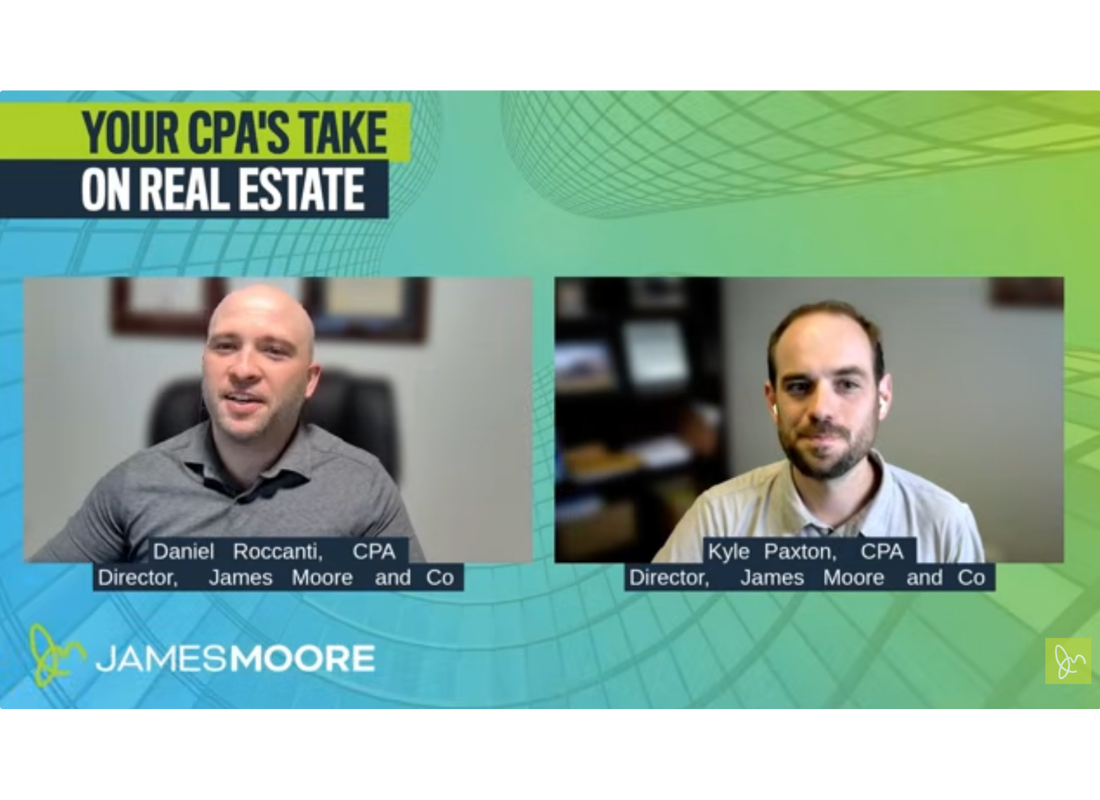
During a recent episode of Your CPA’s Take on Real Estate, Kyle Paxton shared valuable insights on tax planning when rates, legislation and property values are all changing. The discussion highlighted the importance of getting ahead of tax decisions instead of reacting after a deal is done.
Why Reactive Planning Costs More Now
When margins are wide, there is room to absorb a bad decision. When they narrow, that room disappears. An unexpected tax bill or a poorly timed deduction hurts more when cash is already tight.
The gap between well-structured deals and poorly structured ones is getting harder to ignore. Some investors are hitting their expected returns. Others are watching deals fall apart. As Kyle put it, “the margins become so much slimmer and that’s where the proactive planning becomes so much more important.”
Keep Tax in Its Place
Good tax planning doesn’t mean letting tax make the decision. A deal still has to make economic sense on its own. But tax has a big influence on how much of that return you keep, so it belongs in the conversation from the start.
It also helps to tune out the noise. After a major law change, tax sound bites spread quickly on social media, and bonus depreciation is the one everyone repeats right now. It can be a valuable tool, but timing matters. A deduction taken this year at a low tax rate may be worth far less than the same deduction next year at a higher one.
Where Proactive Planning Starts
Before the Deal Closes
Most tax headaches trace back to the same moment. A deal gets rushed across the finish line to secure financing and the front-end planning gets skipped. It is much easier to decide which entity should hold the property, who the investors are and how cash will flow before closing than after. Time-sensitive transactions like a 1031 exchange, with its 180-day window, make that early conversation even more important.
Every Year, Not Just at Tax Time
Your entity structure should get a fresh look at least once a year. That doesn’t require a formal overhaul, just a conversation with your CPA about what changed and what’s coming next. For active investors, quarterly check-ins make even more sense. The sooner you catch a structural problem, the better. One entity set up wrong is much easier to unwind than 15.
With Real Numbers
There’s no reason to make decisions from six-month-old financials anymore. Dashboards and AI tools make current data easy to access, and investors who use them can see how they compare against the market instead of relying on back-of-the-napkin returns. “There is no excuse for you not having today’s data,” Kyle said.
With the End Goal in Mind
Building long-term wealth requires knowing where you’re headed. Are you building for yourself, planning to leave wealth to your children or hoping to support a charity down the line? Answering that question gives direction to every deal decision and connects your investing to transition and estate planning.
Discipline Pays Off in a Tighter Market
“These tighter markets really reward discipline,” Kyle said. The investors doing well right now plan early, stay flexible and surround themselves with the right team. They treat tax as one piece of the pie, not the whole thing.
If your entity structure, depreciation strategy or cash timing hasn’t come up with your CPA this year, now is a good time to start. Watch the full episode of Your CPA’s Take on Real Estate for the complete discussion, and subscribe to the series channel for upcoming episodes.
All content provided in this article is for informational purposes only. Matters discussed in this article are subject to change. For up-to-date information on this subject please contact a James Moore professional. James Moore will not be held responsible for any claim, loss, damage or inconvenience caused as a result of any information within these pages or any information accessed through this site.