CRE Lending Is Back: What Borrowers and Investors Need to Know
Originally published on September 11, 2026
“Office is not one market. There’s two markets in office. One’s doing pretty good. The other one’s doing absolutely horrible, and that’s what’s making the news.” – Daniel Roccanti
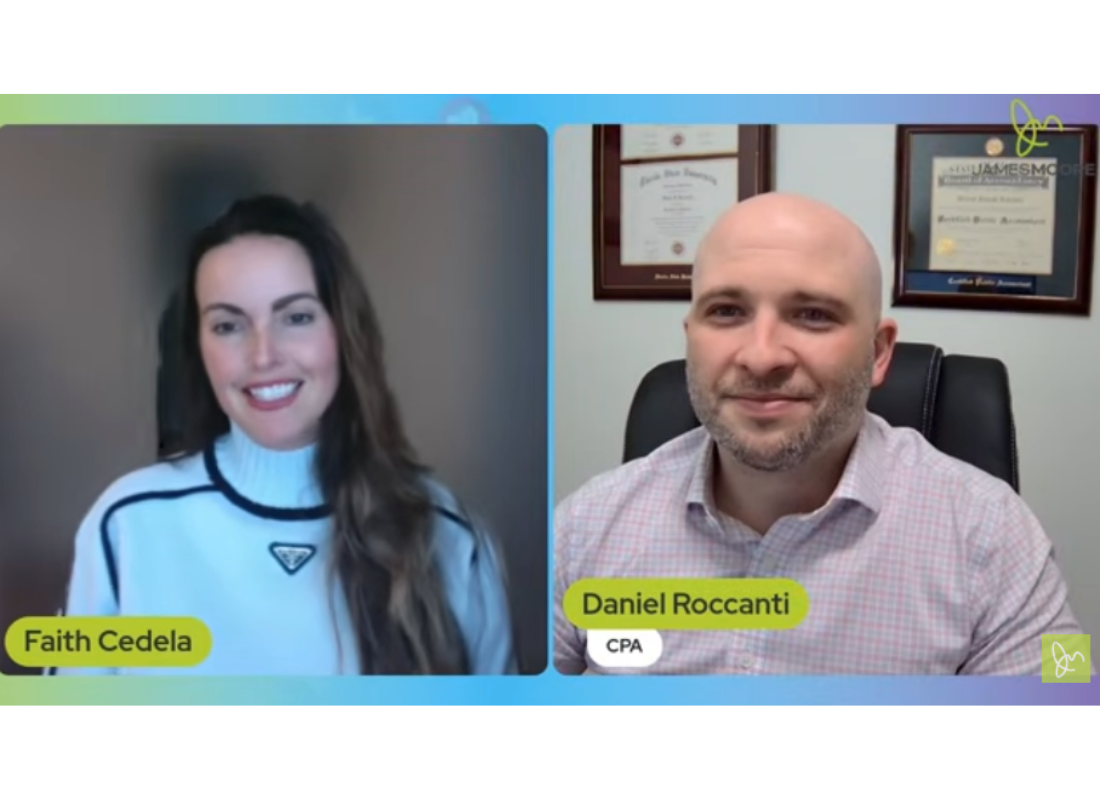
In a recent episode of Your CPA’s Take on Real Estate, host Faith sat down with Daniel Roccanti to talk about commercial real estate lending and what’s changed in the market. The conversation covers price discovery, sector by sector performance, and where Daniel sees opportunity over the next twelve months.
The discussion opens with the Colliers Q2 2026 report and the improving confidence it points to, then moves through industrial, multifamily, necessity-based retail, data centers, and office. Daniel breaks down why looking at a deal on its own merits matters more than picking a sector, and what investors should watch for as loan maturities and refinancing challenges continue to shape the market.
Resources
- Your CPA’s Take on Real Estate
- Your CPA’s Take on Real Estate YouTube Channel
- Watch the Full Episode
Full Transcript
[00:01] Faith: Hi everyone, and welcome to the James Moore channel. Today I am here with Daniel. Hi Daniel, how are you?
Daniel: Hi Faith, glad to be back.
Faith: Good. And we were just chatting in the green room, happy almost longer weekend, but you kind of have mixed feelings about having Monday off just because of things coming up.
[00:18] Daniel: Yeah, unfortunately I don’t get to enjoy Labor Day as much as some other people. It’s still a day off for me though, but when you have the 9:15 deadline around the corner, it’s the final one, so I’ve got some work to do, but I’ll definitely still enjoy some time off Monday.
[00:34] Faith: Yeah, and actually that shows your dedication. So if I was your client, I’d actually be really happy hearing you say that.
Daniel: Yeah, it’s part of the job. You’ve got a few deadlines a year you have to meet, so.
Faith: Yep, absolutely. Okay, so today we’re talking about commercial real estate lending.
[00:54] Faith: And has the game changed? The Colliers Q2 2026 report shows improving confidence and increased transaction activity. What do you think is driving that change in the commercial real estate market?
Daniel: I think the biggest change here is we’re finally seeing more price discovery in the market. Over the last couple of years there’s been a pretty significant disconnect between buyers and sellers on what they think a property is worth.
[01:20] Daniel: Especially with affordability and higher interest rates, that’s been causing a lot of people to sit on the sidelines. In this new environment, people are finally starting to adjust to it. Investors aren’t necessarily waiting for interest rates to go back down. So deals are being done based on the current environment.
[01:40] Daniel: So we’re actually seeing an uptick in activity on the real estate side, simply because there’s more pressure right now to transact. When you’ve been sitting on the sidelines too long, eventually investors get antsy. They want their money. Most real estate deals typically run five to eight years. If you’ve been sitting on the sidelines since COVID, well, guess what, it’s been over five years now.
[02:07] Daniel: Today’s environment isn’t changing anytime soon. Sellers are finally realizing that and pricing their properties accordingly, and buyers are recognizing they need to work with today’s interest rates and today’s prices. Everyone’s getting a little more comfortable moving forward in that environment.
Faith: Yeah.
[02:25] Faith: We’re seeing capital move very differently across property types. Which sectors are attracting the most investor interest right now, and why?
Daniel: This is going to be kind of broad because it’s very much based on location. One sector can be doing great in one location and not in another.
[02:43] Daniel: So we’ll talk broadly here. Industrial has been great ever since COVID. It’s probably the strongest sector we’ve been in, but it’s plateaued right now. That means it’s still very strong, it’s just that demand has finally caught up to it. I’d always say industrial is a great spot to be in if you’re looking right now.
[03:05] Daniel: Multifamily is getting a lot of attention, good and bad, it’s all over the place. It really depends on your location. Sometimes if you read national headlines, they’ll say to stay away from multifamily, but the thing about multifamily is that it’s always a need. People need a place to live.
[03:24] Daniel: There’s been a lot of construction in multifamily, especially here in the South, because of people moving here after COVID. That caught up to us, so we had too much supply and not enough demand. The supply is finally starting to shrink a little, so we’re finally seeing a more natural multifamily market.
[03:44] Daniel: Rents are still somewhat flat, but it’s still a really good market because of the necessity need when it comes to multifamily, wherever you are. It is very location based though. I’m always a big fan of necessity-based retail. So if you’re looking at owning a neighborhood strip mall with a grocery-anchored center, that’s going to be some of the best property you can buy.
[04:11] Daniel: Those are the most resilient properties to anything that happens in the economy, and that’s why they attract the most investors. If I’m advising an investor, I’d say invest in these neighborhood strip malls, they’re almost always doing well. Outside of that, you’ve seen a lot of news about data centers because of AI and the demand it’s creating.
[04:37] Daniel: This is interesting because there’s no question the demand is there. The problem comes more with whether we have the power available. There’s a lot of power needed for these data centers. Can you build the infrastructure, and can you even build it where you want to? There are so many constraints with public opinion and government.
[04:57] Daniel: So this is an interesting one because almost everyone has it as one of their top sectors, but it’s really difficult to get into because there are so many hurdles and challenges. With where AI is going right now, it’s obvious the demand is going to keep growing and this is needed.
[05:16] Daniel: Unfortunately, the government and all of us need to figure out how to meet this demand if we keep constraining supply.
Faith: That’s incredibly interesting, and I think we could do an entire episode on that because everyone is talking about it right now. It can be very confusing because, like you said, there’s the people side of it, the government side of it, and the investor side of it.
[05:40] Faith: So that’s super interesting. You touched on this before, but multifamily and industrial continue to perform differently than office. What should investors be looking at when deciding where to put their capital?
Daniel: We’ve talked a lot about sectors, like these are the best sectors, but really you shouldn’t be looking so much at asset class.
[06:02] Daniel: It really should be about investing in a specific deal in a specific market. You can absolutely invest outside of industrial, multifamily, data centers, and things like that and still be very successful, because it comes down to the deal. Just because it’s industrial doesn’t mean it’s going to be a good deal.
[06:21] Daniel: You really have to understand whether it’s a good deal. With multifamily, if you’re building a great Class A or Class B property with a lot of amenities in a great location, it doesn’t matter what the national headlines say about avoiding multifamily at all costs, that’s probably going to do well if the numbers are right.
[06:44] Daniel: I’ve also seen industrial where people say industrial is great and we need to invest in it, but they find an old property with tenant problems, and the building is old, so is it actually going to be functional within the next ten to fifteen years? These are usually long-term leases.
[07:03] Daniel: Is it meeting the demand of what industrial needs today? Some of these old buildings aren’t up to code and can’t handle the new trucks, new loads, and everything that goes with them. So you really have to look at the specific deal, not just the asset class.
[07:21] Daniel: Asset class can give you a place to start, and maybe you feel more comfortable with it during due diligence, but you need to look at the deal, not the asset class.
Faith: Absolutely. Office continues to face challenges, but we’re also seeing signs of stabilization. How should investors think about opportunities in the office market right now?
Daniel: This kind of goes back to where office people were just saying to stay away from office.
[07:44] Faith: Yeah.
Daniel: And I think that’s a mistake if you’re thinking that way, because office right now is split. Office is not one market. There’s two markets in office. One’s doing pretty good, the other one’s doing absolutely horrible, and that’s what’s making the news.
[08:03] Daniel: If it’s a newer office space, well located, with high amenities, it’s actually doing very well. But compare that to the older buildings with no amenities that require significant capital to compete, those are doing extremely poorly because no one wants to lease them. Yes, remote work plays a role, but a lot of people are coming back to the office.
[08:30] Daniel: If you had your choice, you’re going to choose the better located, better buildings with high amenities. That’s what’s attracting the best tenants. These obsolete buildings are going to continue to struggle. I think this creates opportunity, but you really need to be focused when you’re buying office.
[08:50] Daniel: You need to understand, if I’m going to buy this building, why would my tenants choose this building?
Faith: Yes.
Daniel: And if they wouldn’t, what’s the cost to get this building back up to a place where my tenants will choose it? That needs to be factored in if you’re buying an older building.
[09:09] Faith: Yes, absolutely. So our last question is looking ahead for the next twelve months. I know you’re already there with a lot of your clients. Where do you see the biggest opportunities, and what risks should investors be watching?
Daniel: I think some of the best opportunities are going to come from this price reset and capital structure problems, more than broad market appreciation.
[09:37] Daniel: That’s what we saw during COVID, everyone was getting significant appreciation. This is going to come back down to the basics. Owners are still dealing with loan maturities, refinancing challenges, and properties they purchased under assumptions that no longer work.
[09:56] Daniel: This is going to force some investors to drop their prices, and these are good opportunities for buyers, because these are capital problems, not necessarily real estate problems. Looking ahead, I think there are opportunities coming in this market.
[10:19] Daniel: Again, you need to look at it deal by deal. I see multifamily supply improving a little bit. I’ve always said I love necessity-based retail and strip centers. Data centers, we’ll see what happens there, but if you can get one of those opportunities, that’s probably one of the best returns you can think of.
[10:43] Daniel: On the risk side, I still think we’re dealing with high interest rates, and I don’t think those are coming down anytime soon. Investors need to get comfortable asking, what’s today’s interest rate, and does this deal work at today’s interest rate? You can’t just assume a refinance will save the deal.
[11:04] Daniel: You really need to understand what the operating expenses are. I think one of the biggest mistakes investors are making right now is underwriting their deal on a best-case assumption and assuming they’ll get bailed out.
[11:21] Faith: Yeah, absolutely. Oh, this is such a great conversation, Daniel. Thank you for joining me today. I know things change every day in your world, but we’ll chat again soon. Thanks again.
Daniel: Thanks for having me, Faith.
Watch the Full Conversation
For the complete breakdown on where commercial real estate lending stands today, including industrial, multifamily, retail, data centers, and office, watch the full episode above.
All content provided in this article is for informational purposes only. Matters discussed in this article are subject to change. For up-to-date information on this subject please contact a James Moore professional. James Moore will not be held responsible for any claim, loss, damage or inconvenience caused as a result of any information within these pages or any information accessed through this site.