Building Generational Wealth Through Real Estate
Originally published on September 23, 2026
“Properties create wealth, but planning creates legacy.” — Daniel Roccanti, CPA
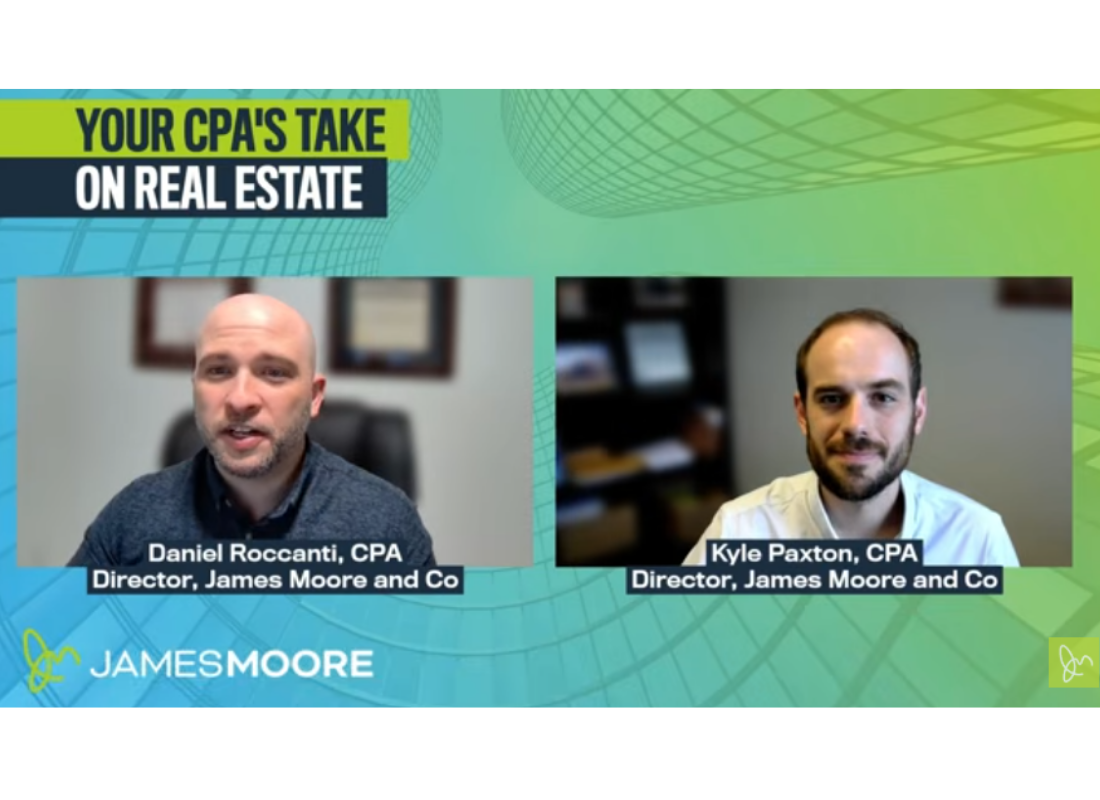
In this episode of Your CPA’s Take on Real Estate, CPA Daniel Roccanti breaks down what it takes to build generational wealth through real estate: how the numbers work, where families go wrong, and how to make sure the next generation is ready to take over.
Daniel walks through why real estate builds wealth in more than one way at once (cash flow, appreciation, debt paydown and depreciation), then gets into the estate planning side: trusts versus LLCs, the mistakes that quietly undo years of planning, and how to prepare heirs to actually run what they inherit instead of just receiving it.
Resources
- Your CPA’s Take on Real Estate
- Your CPA’s Take on Real Estate YouTube Playlist
- Watch the full episode
- Accounting for Real Estate Investors
Full Transcript
[00:02] Faith: Hi everyone, welcome to this episode. Today I’m here with Daniel. Hi Daniel, how are you?
[00:02] Daniel: Hi Faith.
[00:02] Faith: Good. So today we’re going to talk about building generational wealth through real estate. I was mentioning to you before we went live that it seems like a lot of people are talking about this.
[00:25] Faith: A lot of publications and journalists, as you know, are wanting to write about this. So I think this is perfect timing for this episode, to go over some of the trending questions people are asking. The first one is, why is real estate such a powerful vehicle for creating generational wealth?
[00:25] Daniel: I think the reason real estate is so powerful is it can create wealth several different ways.
[00:52] Daniel: When I’m looking at real estate, I’m really breaking this apart into: it generates cash flow, it appreciates over time, and I have other people who pay down my debt basically. So I’m usually looking at a big liquidity event, or paying that debt down.
[01:15] Daniel: Leverage is one of the most important things here. When I buy real estate, I can go out and get qualified non-recourse debt, which I can then pull money out of. So without having to sell my real estate, I can refinance and pull out the equity without selling.
[01:37] Daniel: And if you don’t sell, you don’t actually have a taxable event. Then there’s another layer, taking advantage of depreciation up front. A lot of people say, “I own real estate, I make cash, but I pay no taxes.” That’s pretty common for a lot of people.
[02:00] Daniel: But it can go beyond that if you’re a real estate professional. You can accelerate your depreciation so much that you’re offsetting other sources of income. There’s so many layers to real estate. It can have a high entry barrier because it usually requires a decent amount of money up front, but once you have some wealth, almost all wealthy people eventually go into real estate, even if they created their wealth somewhere else, because it’s one of the best tools to sit your wealth in to create more wealth out of it.
[02:29] Faith: Absolutely. What separates families that successfully transfer wealth from those that don’t?
[02:29] Daniel: It really comes down to intentionality. What is your intention? The best estate planning happens before there’s any kind of actual event.
[03:01] Daniel: When you see people wait too late, it’s because they wait for someone to get sick, or unfortunately die, or there’s a dispute in the family, or some kind of liquidity issue. That’s usually too late. You need to plan before those things happen. That’s the whole point of planning, figuring out what’s going to happen when these issues happen. All of it needs to be coordinated between your documents, your LLCs, your trusts, your wills, your insurance, everything.
[03:24] Daniel: It needs to be working toward the same objective. In estate planning, you’re breaking apart a three-part question that’s usually treated as one: who owns the property, who manages it, and who receives the economic benefit? During my lifetime, it’s usually me, I get all three.
[03:43] Daniel: Estate planning is about answering each one of those individually, because usually it ends up being three different answers to those three questions. The most successful plans are the ones where people get in there and have their intentions set before any issues arise.
[04:03] Daniel: So when it does arise, they already have their planning in place to solve it.
[04:03] Faith: Absolutely. Kind of a side note, since I know some people investing in property. Let’s say you’ve gained some wealth, and you want to buy an investment property that would benefit your family long-term, which goes along the lines of generational wealth. What would you advise? I guess it depends on the investment property you’re looking at, since you said intentional, right? If you’re investing, you can buy land and turn it into a rental, but also have it for your family.
[04:48] Daniel: The great thing about real estate is you can actually do both. I hate giving the answer “it depends,” but it kind of depends on what you want. If you need money to live off today, you can buy a property that cash flows to meet that, while also buying a property that still appreciates and creates long-term wealth.
[05:07] Daniel: You can do both. Some properties will cash flow well and won’t appreciate as much, and vice versa. So it depends on your situation. If you’re really thinking long-term and don’t need the cash flow, you might be better off finding a property in a great location that could turn into a class A asset and really appreciate over time, even if it’s a little tight on the budget. The best thing about real estate is you can succeed in both areas by getting into it.
[05:33] Faith: Absolutely. I think finding a trusted CPA like yourself helps too, since you probably work with people who are questioning where to start. This is something people want to do if they have the means, but they don’t know where to go. I feel like a lot of people are at that point right now. When should investors start thinking about succession planning?
[05:53] Daniel: There’s no good time, honestly, so I’ll just give you what I think someone should start with. You should start thinking about it when you buy your first property, which feels way too soon for most people, and realistically, you’re probably not going to.
[06:13] Daniel: But succession planning isn’t necessarily about, “I bought my first property and I’m not worried about what’s going to happen in 20 years.” You at least need to have an idea of what your planning is for this. If you buy any property with somebody else, then you absolutely need to think about what happens if one of you dies, or one wants to get out and the other doesn’t.
[06:50] Daniel: It’s not necessarily age-based either. People always think about age when they think about succession, but when you start having kids, that’s a big event. Once you bring in that next generation, you need to start thinking about this. So: when you start buying properties, if you have other owners in the properties, and when you start having kids, that’s when you need to start thinking about it. The more you grow, that clock is ticking.
[07:31] Daniel: It doesn’t always feel that way, someone might think, “I’m only 40, I don’t need to think about succession.” But if you’re 40 with four kids and ten properties, you should have already thought about this. It’s sometimes a hard thing to think about, but you have to have these conversations.
[07:47] Faith: How can parents prepare children or heirs to manage real estate assets responsibly?
[07:47] Daniel: I mean, how do you teach kids to do anything responsibly? If you don’t do this part, you can create the best estate plan ever, and it will fail.
[08:06] Daniel: You have to educate the next generation, because you’re not just handing them a business, you’re handing them an asset. If you don’t educate them, you’re basically handing them a failure.
[08:26] Daniel: In the movies, it looks great: everyone meets up after someone dies, and the attorney tells them what they get. In reality, that should never happen. Everyone should already know what it is, because they should have been educated. When you’re raising your kids, you need to gradually and meaningfully give them responsibilities over time. Teach them the real estate, teach them what a financial statement and a rent roll are.
[08:53] Daniel: Have them start examining and analyzing properties with you, looking at proposals, looking at monthly reports with you, participating in the normal operating of the business. This can happen at a pretty young age. There are some pretty young, like ten-year-olds, who love doing this stuff. That doesn’t mean you give them a full-time job, but you can introduce them slowly over time, and you’ll find out if this is something they really want to do.
[09:15] Daniel: A lot of times you’ll find out really quickly that they’re either not good at it, or they don’t want to do it. Then you know you need to change your estate planning, because you shouldn’t write a plan that says “my kid runs the real estate” when they don’t actually want to, since you’d just be setting them up for failure.
[09:41] Faith: And even coming to meetings with you.
[09:41] Daniel: That’s not a horrible idea. Let them sit in and listen, take notes, or just be part of it, because I feel like once they hear things over and over, something is going to click.
[10:00] Daniel: I have a client whose 16-year-old daughter sits in on our meetings sometimes, not all the time, but sometimes, and just hears what’s going on. He’s getting her more involved in the operating of the business, so it’s interesting to have her sit in on meetings with us.
[10:18] Faith: Better than some college courses you’ll take. What role do trusts, LLCs, and other entities play in protecting family wealth?
[10:18] Daniel: The biggest thing with trusts and LLCs is really understanding that they’re solving two different issues. They work together, but LLCs are usually your operating and ownership vehicles, this is what you own the real estate in. I can own real estate in my own name, or I can own it in an LLC. It’s mostly about asset protection, current asset protection, not next-generation asset protection, so no one can come in, sue me, and take all my stuff.
[10:45] Daniel: Trusts are more focused on the estate planning side, on control. I could own the real estate myself, or I could have a trust own it. Trusts have different rules and are usually better at paying out over time, and can have someone who’s young looked after by the trust in terms of the money, the estate, and everything.
[11:21] Daniel: It really is a combination of both. Every good estate plan uses a mixture of trust and LLC. The trust covers more of the estate planning, especially trying to get around inheritance tax, while the LLC protects the current asset from liability, like getting sued.
[11:41] Faith: What are some common mistakes you see real estate investors make when planning for the future?
[11:41] Daniel: I’d say, and I kind of mentioned this already, they’re just waiting until there’s an issue. That’s the most common one. Say I go out and do my estate planning, but I don’t actually change the titles of my properties into my trust, or whatever it is, and I think, “it’s not a big deal.” Then something happens later, and I realize I never changed the title, so all of that work was pointless.
[12:26] Daniel: I see this happen all the time, unfortunately. People go through all the work and never actually close it out, by never getting the titles changed. You see outdated operating agreements, buy-sell terms missing. You own properties with someone, they pass away, and suddenly their children are now your business partners.
[12:47] Daniel: I also see people not truly understand gifting a property. You need to analyze whether it’s the best move, because you have to balance income tax and inheritance tax. People will say, “I’m trying to get out of inheritance tax,” so they gift the property to their kids. But when you gift things, you gift them at your basis. If it’s a very low basis, you’re getting it out of your estate, but now your kids have that low basis.
[13:21] Daniel: So when they turn around and sell it, they get hit by income tax. You’re really just trading one problem for another, and not getting a step-up in basis. Before you gift any valuable property, you truly need to analyze whether you’re avoiding income tax or estate tax, because you might avoid one and trigger the other.
[14:02] Faith: Absolutely. How should investors balance cash flow today with long-term wealth creation?
[14:02] Daniel: I love cash flow, I always feel like every property needs to start with cash flow. When I’m talking to my investors, I have priorities. My first priority is protecting the asset, meaning I’m operating the real estate: paying down debt, paying the properties, maintaining the property, and maintaining realistic operating capital reserves. I’m making sure the real estate functions, is healthy, is operating, and cash flows.
[14:55] Daniel: I’m protecting the asset because if I do everything else first, without creating a self-sustainable asset, none of the rest matters. Once I’ve created a self-sustainable asset, I go to my second priority: what are sustainable distributions to the owners? This is where your long-term goals come in, do you need more money, or do you want to reinvest more? If you have multiple owners, you also have to think about who you’re trying to keep happy.
[15:12] Daniel: The third priority is compounding your wealth through renovations, reducing debt, and future acquisitions. Once the property is operating at a good level and distributions are functioning well, I want to reinvest, because I’m thinking long term. If I renovate the property, its value can go way up. I might start paying down the debt, refinancing, pulling that money out, and eventually buying more properties to really create that long-term wealth.
[16:04] Faith: This is actually really interesting, I’m curious to hear your opinion. Are there current market conditions creating unique opportunities for long-term investors?
[16:25] Daniel: There’s a lot more opportunity out there than people think, they’re just being selective. Right now we’re looking at high interest rates and high costs, but if you’re really holding the property long term, and not thinking about needing immediate cash flow, this might be a pretty good market to find the asset you’ve been wanting, because there aren’t a lot of buyers out there.
[16:56] Daniel: You might not be able to buy it at the greatest price, but if you’re thinking long term and sustainability, you might be able to get that property you never thought you’d be able to buy, the one that becomes the focal point of your real estate portfolio. It might take five or ten years for the economy to turn back around and for that property to start really cash flowing.
[17:37] Daniel: That’s where I see the most unique opportunity right now, there aren’t a lot of buyers out there, so there’s opportunity. It just might not look as good if you’re only looking at the short-term numbers instead of the long-term picture. I’ve seen people go out and buy properties they’ve wanted for years, properties that would become the center point of their whole portfolio, because this is the only time, given how the economy is, that they’d be able to do it. In a different economy, when it’s better, there would be a hundred buyers wanting that same property, and they’d never have had a chance.
[17:56] Faith: And that kind of goes back to what you said earlier, if someone has wealth ready to invest, it’s like the income property is situational, versus the property that’s going to build the generational wealth you’ll have forever.
[18:21] Daniel: And that’s the big difference with truly generationally wealthy people, they’ll buy assets even if it doesn’t cash flow, even if the price isn’t the best, because they believe in that asset. It might take 20 years to get to where they believe it will, but they can buy it now because they know they can, and because they have the wealth to be able to sit on it for five or ten years. Not everyone has that opportunity, but if you do, this might be a great, unique time to do it.
[18:59] Faith: I love that. Okay, so our last question: what’s one action every real estate investor should take this year to strengthen their family’s financial future?
[18:59] Daniel: I would tell everyone to sit down and put a list together of all your properties. Who’s the legal owner? What’s the estimated value? What’s the tax basis? What’s the depreciation history? What’s the debt? Do you have personal guarantees? What’s the insurance? What’s the cash flow? What’s the reserve? Who’s the beneficiary? What are the governing documents? Everything you truly need to know about the life of that property.
[19:30] Daniel: Then ask yourself one question: if something happened to me tomorrow, could anyone else take this over? Would the right person know where to find the records? Would they be able to operate this? Would they have access to the accounts? Would they be able to talk to the lender, pay the bills, and make the right decisions?
[20:00] Daniel: You’re basically answering your estate planning need right now. Everything you know in your head needs to be written down, so someone else has that information, or at least knows where to find it, so they can take over for you. If your answer is no, you need to talk about estate planning, because you never know what tomorrow brings, and if something does happen to you, you’ll leave a huge headache for everyone you leave behind.
[20:28] Faith: I think that’s such a solid point. I think sometimes we underestimate how little people talk about these things, and actually sit down and discuss them.
[20:51] Daniel: And really good estate planning comes down to this: properties create wealth, but planning creates legacy.
[20:51] Faith: I love that. This was such a great conversation, Daniel. I appreciate it, and we’ll be back again to talk with Daniel about this more, especially since this topic is trending everywhere. People are really interested right now, because like you said, it’s a buyer’s market if you have the means, and this might be the time. So, Daniel, we’ll talk to you again soon.
[21:13] Daniel: Thank you. Take care, Faith.
Watch the Full Conversation
For the complete breakdown of how to build and protect generational wealth through real estate, watch the full episode above, and reach out to a James Moore professional if you’d like to talk through what this looks like for your own family.
All content provided in this article is for informational purposes only. Matters discussed in this article are subject to change. For up-to-date information on this subject please contact a James Moore professional. James Moore will not be held responsible for any claim, loss, damage or inconvenience caused as a result of any information within these pages or any information accessed through this site.