Manufacturing Financial Blind Spots: What Mike Sibley Sees That Most Leaders Miss
Originally published on April 9, 2026
“You often see you walk in and you have all these KPIs and accountability mechanisms, yet they’re not actually tied to a financial outcome. You think they are, but they might not be.”
— Mike Sibley, Partner, James Moore
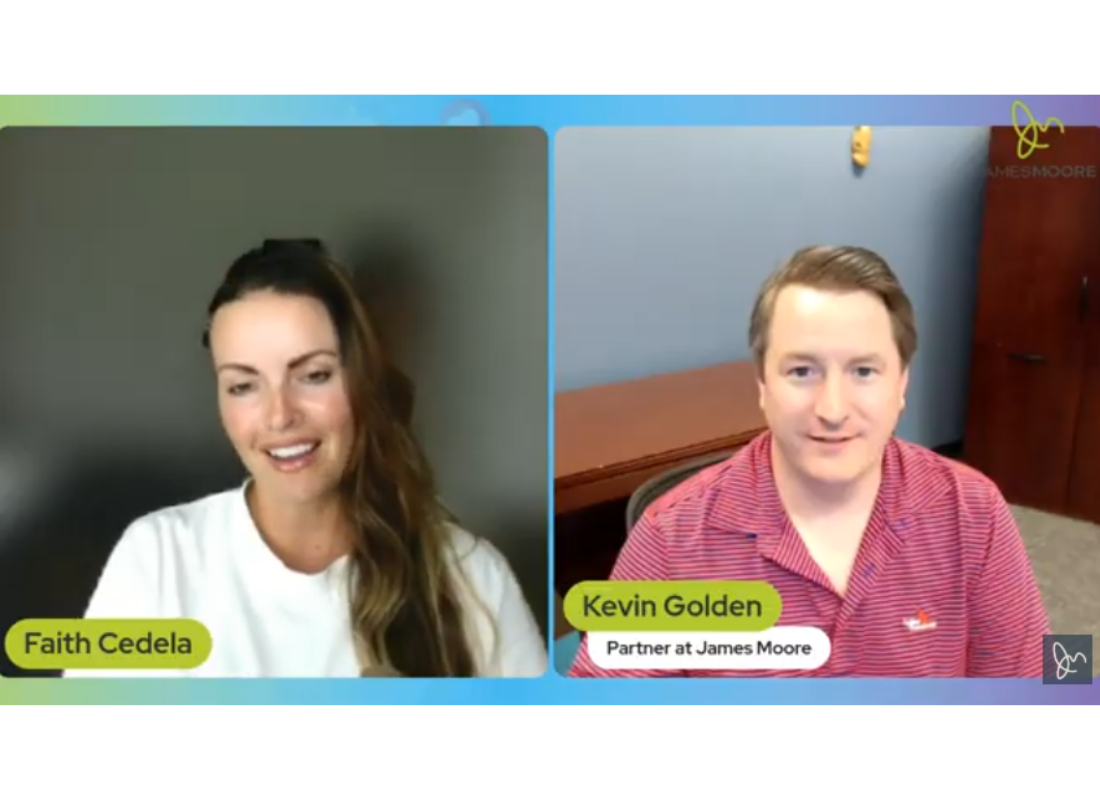
Over the course of this interview, Mike Sibley shares what he notices the moment he walks into a business, why manufacturers so often do not know their true margins, and what it actually costs to wait too long to act on pricing. He also digs into what strong leaders do differently, how often key business data should be reviewed, and what manufacturers should start planning for now.
Whether you are running a $5 million shop or managing a complex multi-site operation, the patterns Mike describes are consistent across the industry, and the fixes are more straightforward than most leaders expect.
Resources
- James Moore Manufacturing Industry Page
- Moore on Manufacturing YouTube Playlist
- Watch This Episode on YouTube
Full Transcript
[00:00] Host: Hi everyone and welcome to the JMCO channel. Today I am here with Mike Sibley, partner at James Moore and a manufacturing CPA genius. I am so happy to be speaking with you today, Mike.
[00:14] Mike Sibley: Great to be here as part of this. Thank you.
[00:16] Host: Yeah, absolutely. Well, we have a lot of questions to get through, so if you don’t mind, we’re just going to jump right into it.
[00:21] Mike Sibley: Sounds great. Let’s go.
[00:22] Host: Okay, so the first question is, “What kind of problems do people usually come to you for?”
[00:30] Mike Sibley: Yeah, that’s a good one. It usually starts off as, “Hey, I’ve got accounting issues. I don’t trust my financial statements. I can’t get financial statements. I don’t understand why I don’t have any cash. My margins don’t make any sense.” A lot of these things — I’m growing and I’m struggling. And what’s really funny is those are things that are bread and butter for us to get into, but often what happens is we start digging into, well, what’s happening operationally? What are those problems? What information are you not getting? Because that’s where all the meat of the problems are. We can fix some of the accounting issues, but it’s really funny because I had a client one time tell me, “I thought you were just going to hang out in the accounting department the whole time, but you’re hanging out on the plant floor in operations more than anything else.” And he said, “I’m glad because it’s really helped us identify issues I didn’t even think were there.”
[01:38] Host: Yeah, I love that. So the second one is, when you first look at a business, what do you notice right away?
[01:46] Mike Sibley: When we get in and we start talking to people, we start to notice right away what do they know, what do they know about their impact on the business, how are they communicating with each other, is the owner making all the decisions, is the CEO making all the decisions, does everything have to run through them. Of course we get financial statements and I can look at a set of financial statements and identify problems right away. So there’s a lot of things just about how people interact, what information is given, what do they have for KPIs and other tracking mechanisms, what do their financials look like. There’s a lot that really hits you fast. As we’re going through this, we’re taking notes of all this mentally and literally, and figuring out, okay, we’re already starting to put a priority list of things in our heat map, so to speak, of where we want to spend time as we get down the road.Acac
[02:52] Host: Yeah. And this actually that’s a perfect lead into this question. What is one early warning sign that tells you something might be off?
[03:00] Mike Sibley: One of the first things I always ask as part of the process is, “Hey, what are your margins on your products?” And it’s not uncommon for somebody to say, “Hey, I’ve got a margin report right here by product and it shows X.” Well, I’ll have the financials and they’ll show Y, and have very big differences. And that’s an early warning sign that they don’t actually know what their margins are, which then tells you there could be pricing problems, there could be efficiency problems, there could be all sorts of problems operationally once you don’t know those two things. And oftentimes, because financial statements can be hard to understand and read, they didn’t know there was a disconnect there.
[03:40] Host: Right. And this is a great question, too. What are the most common things leaders overlook?
[03:49] Mike Sibley: I think one of the big things that leaders tend to overlook is actually the educational side of helping their people understand what impact they have on the financials. You often see you walk in and you have all these KPIs and you have these accountability mechanisms, yet they’re not actually tied to a financial outcome. You think they are, but they might not be. And I think one of the things that really is overlooked is transparency, or a level of transparency. Some owners are reluctant to share all the way down to the bottom line, but there’s components that can be shared, and then of course there’s the educational piece to help people understand. Because I think most people want to contribute, they want to add value, but sometimes they think they are and it may not have an impact, and so they overlook that piece of the training and guidance.
[04:50] Host: Yeah. And then how quickly can you tell when something isn’t working?
[04:56] Mike Sibley: Pretty quick. It depends on what it is. When you start trying to look at something and say does this work, does that not work, you want to put in some very immediate measure points. You can’t manage what you don’t measure. And you say, okay, is this working? Is this doing what I thought it was going to do? And if it’s not, it could be a sign of deeper problems that you have to dig into.
[05:21] Host: Right. And what patterns or mistakes do you see over and over again?
[05:26] Mike Sibley: I think the first mistake is people making assumptions. They assume this is what’s happening. And I think the other piece that comes along with that is they’re not even sure how to dig in a little bit further to get past that assumption. It’s just a matter of, “Well, I’ve always been doing it this way, so we’re going to keep continuing to do it this way.” And that’s obviously kind of that definition of insanity. So they fall into the same old same old — “Hey, I’ve been doing it this way for 50 years and it worked.” Well, great. You’re a different company now because you’ve grown, and so now you might have to take some different actions based on the environment you’re in now.
[06:10] Host: Right. Where do you see leaders tend to get stuck in decision making?
[06:17] Mike Sibley: You could probably write a book on this, but maybe an easy example is deciding do I buy a new piece of equipment or not, and is it going to give me the ROI. How do you even measure ROI on that? Is it going to help? Is there going to be more throughput? So you almost get into a little bit of paralysis by analysis in some ways, and they get worried about moving the dial because they’re not planning for the future. Another area is pricing their products. They get stuck on this all the time because they don’t trust the underlying cost data. And so they get stuck on do I do a price increase? Well, maybe if I do a small one. And so they get stuck there a lot.
[07:08] Host: And what’s the real cost of waiting too long to act?
[07:10] Mike Sibley: Let’s take pricing, right. I actually just had a conversation with somebody about this the other day who didn’t understand their costing correctly, and because of it they made a bad decision about pricing, and they went months and months and months at the wrong price and they lost six figures of actual dollars, and it would have just gone straight to the bottom line. So the cost can be very significant. And the other way to look at it too is if you have too much inventory, carrying cost on inventory is 20 to 30%. So think about whatever that too much inventory is, times 20 to 30%. That’s a significant cost.
[07:55] Host: How do you turn insight or data into real business decisions?
[08:01] Mike Sibley: I think that’s where having an expertise or a mindset of taking data — and going back to the paralysis by analysis — manufacturing has so many data points, but it’s really kind of sifting through that and saying, what are the important ones, what are the ones that actually move the dial, and then taking all of that data and summarizing it so you can do something with it. That’s probably one of the most important things we do as advisors, is actually sift through all that, summarize it, and say, “Okay, this is what this is telling us.” Or it could be a situation where I’m not even sure what it’s telling me, but I’m going to go find the people in operations and say, “Look what I’m looking at right now. Why is this happening?” I just had this happen as we were looking at salary rates, and they’re expecting one thing, I’m seeing another. And I’m saying, “Help me understand this delta here. Why are we much lower? I think you’re overcosting this and it’s impacting your pricing models too.”
[09:09] Host: Yeah. When does context matter more than the numbers?
[09:14] Mike Sibley: The numbers kind of tell you what’s happening. Context tells you why it’s happening. Let’s just say one particular month you take a margin hit. Well, you could immediately fly off the handle and say, “We’ve got to raise all our prices.” Well, it could be you had one bad situation happen. It’s never happened before. It’s isolated. You took a big material scrap hit. That’s context, right? Context is telling you why it’s happening. It’s really important to take data and then understand what the data is telling you, why it’s telling you this, what it means.
[09:45] Host: What should leaders be paying closer attention to right now?
[09:53] Mike Sibley: One particular area is workforce. We’re spending a lot of time helping leaders understand workforce compensation rates, what ranges they should be, because we’re trying to help them retain and avoid turnover. Turnover is very, very expensive. Another area is automation, and of course AI is one of those areas. AI is a huge tool right now. And I say it’s a tool, and who knows, maybe someday down the road robots are doing everything for us, but right now it’s a tool. People are important, and upskilling people is really, really important. Using these tools to help build capacity, to help get rid of some of the mundane stuff that they’re doing, to help speed them up so they can focus on the important things.
[11:06] Host: What habits separate high-performing leaders from the rest?
[11:11] Mike Sibley: I think when I think of a really strong leader, it’s a leader that’s willing to admit they don’t know everything, and they go and they ask questions. I think that’s a really important habit — going out and asking questions and understanding. Another habit is understanding accountability and being willing to hold people accountable. I heard one time at a conference that holding people accountable actually shows that you care about them. It’s not a bad thing. You’re helping them develop. If they miss a target or they’re not on pace to hit a target, that’s your opportunity to get with them and say, “Okay, what can I do to help you? What’s getting in your way? How can we get you to hit on this target?” And so now you’re building that trust with them, because they know the accountability isn’t just, hey, you want to cut my bonus or fire me. No, it’s really something that — I care about you, I want to see you successful. And so we’re going to build this system of accountability, because when you have a lack of accountability, people are just going off doing their own thing, which then leads to all sorts of problems operationally. When all those problems happen operationally, the financials suffer.
[12:57] Host: How often should leaders be reviewing key business inputs?
[13:00] Mike Sibley: Gone are the days where you get your financial statements once a month, you look at them, okay, we’re doing okay, and you move on. Really, you should be looking at dashboards no less than weekly. There are some things that might be important daily. We sometimes set up what we call a daily flash — it has very important key information on it. Then there are weekly items. It might be backlog reports, it might be sales, it might be 13-week cash flows. We’re big fans of that. We’ve now developed a manufacturing dashboard that we’re going to be making available for manufacturers. It has production data, accounts receivable data, sales data — key things that you need to know, connected to your system so it’s updating and you can look at it frequently. You can’t manage what you don’t measure. What are important things you need to know about? Cash — super important. Collection processes, collections from your customers — very, very important. Supply chain issues — very, very important. And of course there are tools like S&OP, so it’s looking at your supplies, your inventory, and your operations, making sure you’re planning and forecasting. Looking at that at least weekly would be really, really important.
[15:04] Host: Yeah, absolutely. And you actually just answered the next question, which was what questions do strong leaders ask on a regular basis?
[15:13] Mike Sibley: The questions they ask on a regular basis are: What happened? Why? How can we do this better? What happens if this happens? They really dig down into the operations of the business. One of the things I think they should be asking frequently is how it’s going with their customers. What is the feedback from their customers? I know a lot of companies do surveys and they get scores that tell them how they’re doing, but get real feedback — go talk to them and say, “What could we do better?” as opposed to just looking at your net promoter score. Go to them and say, “What could we do better?” and get that information from them, because if you start hearing a theme, okay, there’s something there. The other thing you can ask them is, “What could we do more of that we’re not doing?” Maybe that’s a new service option, a new product offering, something else that can broaden your revenue even more. And how do you get each of your customers even stickier? One of the things we talk about a lot on our podcasts and in our writing and with our clients is, how do you increase the value of your business? There are a few drivers that drive value, and I would be asking, how do I continue to drive value in my business? Because if you’re continuously improving the value of your business and doing the things to improve the value, you’re going to make your business a stronger, more sustainable business, and it should create more profitability. I always say the people doing the work are your subject matter experts. So if they’re your subject matter experts and they’re doing the work, what can they do better? In the Toyota Production System, they call it going to the gemba — go down to where manufacturing is happening and just hang out there and see what’s happening, good, bad, and different. Then ask questions. Why are we doing it this way? That’s not the way I thought we were doing it. Then you learn that somebody thought they came up with a better way to do it. Maybe it was. Maybe everybody should do it that way. On the other hand, it could be a worse situation. So go out on the floor and just see what’s happening. Get to know your people.
[18:19] Host: I love that. What trends are you seeing in businesses right now?
[18:22] Mike Sibley: That’s a very big question. I think right now a lot of businesses, I see a lot of optimism, a lot of cautious optimism. There’s a lot of turbulence in the economy and in the world and in politics, and so that creates a little bit of uncertainty. There’s caution around should we spend that money, should we invest in some new capital expenditures, where are things going. Businesses need consistency. They like consistency regardless of what that consistency is, because it helps them predict what their models need to look like and what they can think about for the future. When you have inconsistency in the world, it makes it really difficult to plan, which then creates somewhat of a pullback. Other trends — workforce is a big trend. How to compensate for that, how to deal with labor costs, how to keep retention high. Is it culture? Is it pay? Is it both? There are some interesting trends around workforce. And then when you break down into different subsegments of manufacturing, it’s going to be a little different. For some companies, dealing with tariffs is completely in their way right now. So the trends are all over the place, except I will say there’s some cautious optimism. I’m not seeing anybody coming out and saying, “Hey, we’re going to grow 40% next year.” I think we’re seeing some moderate growth. The other thing that is still lingering in a lot of ways is M&A. You’re seeing a lot of business owners who are in their late 50s, early 60s who are kind of ready to reduce their risk and the demands of owning a business. So you are starting to see younger owners thinking about selling. Private equity is still strong and going out and making acquisitions. But there are some good solid businesses out there too.
[21:13] Host: So for our last question, it’s a two-parter. What should leaders start preparing for for next year, and what’s one thing leaders could rethink this year?
[21:28] Mike Sibley: In terms of preparing for next year, I just mentioned a whole bunch of volatility-type things, so I think preparing for that. I’m a big fan of forecasting. I think every business should have a budget, and I think measuring to a budget, but beyond that I think businesses should be thinking about doing a forecast and maybe even a multi-year forecast. I like the idea of a two, three, or five-year forecast. If nothing else, it helps focus you on, okay, what direction are we going, how are we actually going to get there. If I’m at $10 million today and I want to be at $20 million in five years, what are the steps I have to take to get there? But I think the other thing you have to do is actually scenario plan — maybe an upside and a downside scenario. So if you’ve got your worst-case scenario, this is what happens. How would you react? You already have plans in place. Then you have your base case, and then you have the scenario where things really take off. The reason that’s important is it helps you think about infrastructure and getting prepared. What if I actually went from $10 million to $15 million in one year rather than $10 to $12 million? What is that going to do to my infrastructure? Can we handle the throughput? Who would I have to hire? What does it mean for my supply chain? Do I have the capacity? And by thinking about a five-year plan, can my manufacturing facility actually handle the throughput necessary to get there? If not, do I need to start thinking about renting a new space, building a place? Going to the second part — what do leaders need to rethink this year? First and foremost, I’m going back to my margins and my pricing and saying, “Okay, have I got that right? Am I in the right ballpark? Am I thinking about those things correctly? How is my working capital? Am I measuring that right?” I would actually go back to my KPIs and all the things that I’m measuring, and ask, “Do I have the right things here? Is this helping my business? Is this helping me make decisions or not?” And if they’re not, I would rethink what you’re using and say, “What if I change this up? What things matter? What if I had this information, how would it change my thinking?” I would really question what I’m looking at and whether or not it’s truly useful.
[24:10] Host: I love it. I think you need to do a leadership course so you can go in and help people grow their businesses.
[24:17] Mike Sibley: That is kind of what we do, and it’s a fun part of it. In fact, we do have what I call a “Connecting Operations with Finance” program where we spend a few hours with operational personnel. It’s not finance people — well, they can come because it’s great, they can help interpret some of this later, but really what we do is put on this course for operations people to help them connect the dots. We do a Lego exercise, which they’re used to probably because they’ve done lean six sigma stuff, and we connect the Lego exercise back to cost savings and what it means for margins. That leadership and education we talked about early on is so important, and it goes beyond just figuring out how to make what you make — how can we improve on it, and how can we affect the bottom line. What you end up seeing when you do that is the light bulbs going on. I did this a few months back for one company, and one of the attendees sent back an email that was a mile long with all his thoughts and things we could do. Some of it wasn’t necessarily practical, but it doesn’t matter. I always like when people come up with off-the-wall ideas, because it gets you to think. You may not go with the off-the-wall idea, but you might land somewhere between where you are and the off-the-wall idea only because somebody brought it up.
[25:54] Host: Yeah, and at least you’re thinking — that’s the first step. I love that. Well, it was so great to talk to you today, Mike. We had such a great conversation. And you’re actually coming back April 23rd and the topic is supply chain reset. So that should be interesting with everything going on.
[26:11] Mike Sibley: Yes, absolutely.
[26:13] Host: Can’t wait to talk to you again, Mike.
[26:16] Mike Sibley: All right. Thank you, Faith.
Ready to go deeper on what Mike covered? Watch the full episode above for his complete take on manufacturing financial strategy, leadership habits and what to prepare for in the year ahead.
All content provided in this article is for informational purposes only. Matters discussed in this article are subject to change. For up-to-date information on this subject please contact a James Moore professional. James Moore will not be held responsible for any claim, loss, damage or inconvenience caused as a result of any information within these pages or any information accessed through this site.