Protecting Manufacturing Margins in a Volatile Market
Originally published on April 16, 2026
“Being busy or selling a lot doesn’t always mean you’re doing better. You could work yourself literally out of business.” — Kevin Golden, CPA
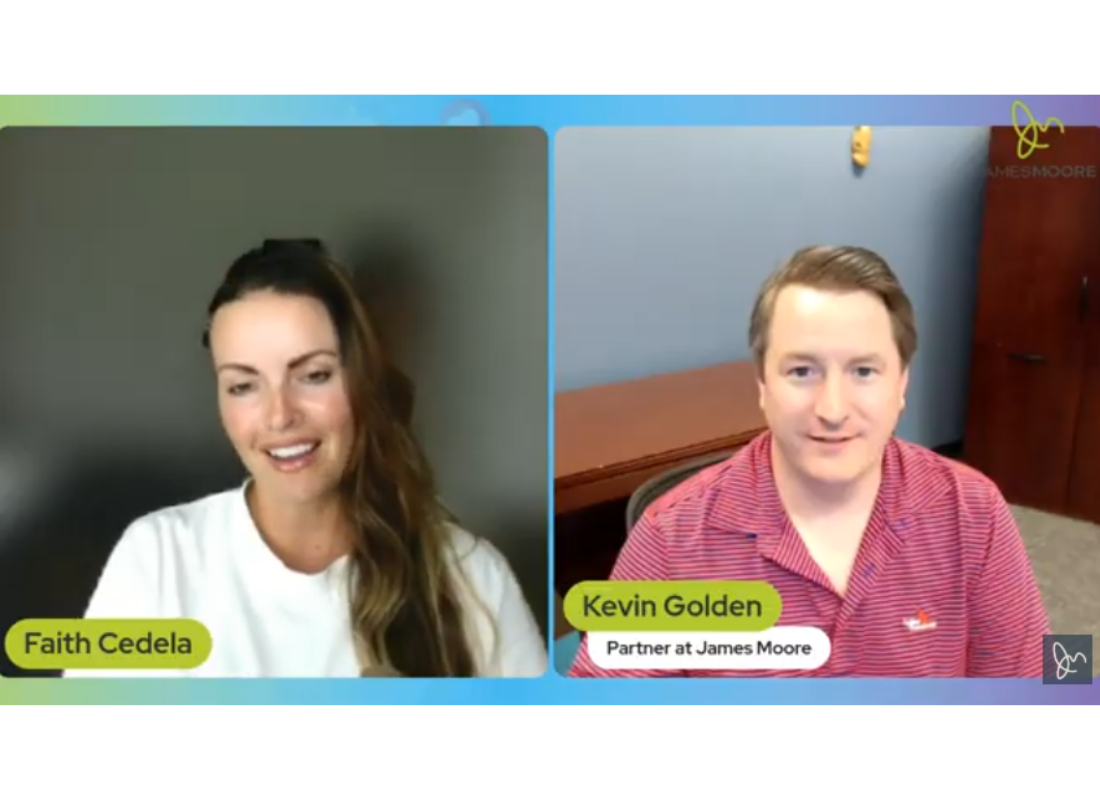
With tariffs, rising labor costs and supply chain pressures all hitting at once, manufacturers are facing real questions about whether their margins can hold up. In this episode, Kevin Golden, CPA, breaks down the financial blind spots that catch manufacturers off guard and shares practical strategies for staying profitable in an unpredictable market.
Manufacturers often mistake high demand for financial health, but as Kevin explains, busyness alone doesn’t guarantee profitability. From outdated costing systems to overlooked tax strategies, this conversation covers what manufacturing leaders need to watch, measure and act on right now.
Resources
- James Moore Manufacturing Industry Page
- Moore on Manufacturing Playlist
- LIVE With Kevin Golden: Protecting Manufacturing Margins in a Volatile Market
Full Transcript
[00:02] Faith: Hi everyone and welcome to episode two with Kevin Golden, the JMCO channel. How are you doing, Kevin? I know this is a busy time for you.
[00:12] Kevin Golden: It’s a great time. I mean there’s always a lot going on this time of year between the seasons changing over, kids and all are busy with spring breaks and things like that, tax season, but it’s all good.
[00:27] Faith: Good. Good. I’m glad. Okay, so we’re just going to kind of go through the questions. We have a lot to cover today, but a lot of really interesting things that I’m actually interested to hear your opinion on, your expertise. So Kevin, with tariffs, supply chain shifts and rising labor costs in the headlines, what’s the biggest financial risk manufacturers are facing right now?
[00:48] Kevin Golden: I honestly think for a lot of that is just not being in tune with what your costs are, right? Tariffs are an example of an additional cost now that were thrust upon companies and so forth. But even then, the thing you see is a lot of manufacturers just get really, really busy, which is great. We want to grow our business. We want people interested in our products. We want to sell them. But then you get so busy and you’re in this ramp up, ramp up, ramp up but you don’t notice those rising labor costs. You don’t notice that even the smallest changes in your supply chain can then add substantial cost because you’re just not in tune with it. You’re really good at making your product, but you’re not in tune with that.
[01:28] Kevin Golden: So your infrastructure and being in tune with how much does it actually cost me to make my widget has got to be in line with how well can I make that widget. Those two have to be in sync. So really not being in tune with that has huge cost implications but also cash flow implications, things like that that can really bring you to a halt at your company if you’re just not in tune with it. So to me it’s being busy and then not keeping up with running the business in addition to how to make your widget, how to make your item.
[02:05] Faith: Where do you think manufacturers underestimate the true cost impact of these shifts?
[02:13] Kevin Golden: I think a lot of times they underestimate what those true margins are. A lot of times I will talk to a manufacturer and they’ll say, “Oh, I’m making X, Y, or Z product.” Great. How much do you make on that? “Oh, I probably make X percentage or dollar amount here or there on these products.” And then when you actually go and look at it, it’s totally different. So a lot of times they have more of a gut feel for it. Don’t get me wrong, gut’s not bad, but gut and gut alone is not substantiation enough.
[02:50] Kevin Golden: I think people underestimate the power of not only being in tune with it, but of getting your data to speak as to what you’re seeing happening day to day on the floor. Day to day in your market and so forth. And just relying on kind of the way we’ve done things of “Hey, I run my gut and this is about how much we should be selling. This is what our price point should be. This is what our costs are.” And backing that up with a little more substantiation as all these things are constantly in flux.
[03:18] Kevin Golden: I mean that’s the other thing. Yesterday’s costs, even literally just a year ago, six months ago are not today’s. That’s an ever-changing environment that’s growing and speeding up, slowing down dramatically. And we saw that in 2008, come to a screeching halt, during COVID a lot of things came to a screeching halt, a lot of costs inflated dramatically. Those are extreme examples, but again things are changing pretty quickly. So don’t underestimate that what worked yesterday, literally sometimes even yesterday, is going to work today.
[03:51] Faith: Why do outdated costing systems create blind spots for manufacturers?
[03:56] Kevin Golden: I think being busy or selling a lot doesn’t always mean you’re doing better. You could work yourself literally out of business. So I think the blind spot is the thinking of “Well, we’re busy. I mean look how stuff is flying off the shelves. We can’t get it in quick enough. We can’t get materials in to make our product quick enough.” That’s great and all, but it creates that false sense of security. So the blind spot there is maybe that false sense of security that “I’m busy, I must be doing well.”
[04:29] Kevin Golden: Well, that’s great to be busy, but again, being in tune with those costs, making sure that you’re staying on top of that, can cause even just the slightest change in your pricing to have a ripple effect that’s greater. You’re not going to feel it today, but six months from now, nine months from now, a year from now, you’re going to feel it wondering what happened and now you’re doing a post-mortem instead of being proactive and staying in front of that.
[04:53] Faith: Can you explain the difference between contribution margin and gross margin and why does that matter?
[05:00] Kevin Golden: So really think of this on kind of a more of a micro versus macro scale. Contribution margin is usually used whenever you have multiple products. So you want to look at, “Hey, after I make that product, the direct costs that go into that product, how much do I have left over to pay for all my other costs?” All my other fixed costs and not just my variable costs, all my other overhead, things like that. That could really tell you how much is product X versus Y really contributing to help cover all the other costs that maybe all your products share together, that overhead and so forth.
[05:39] Kevin Golden: Whereas gross margin is kind of a higher level picture of the general health of a company. Okay, in general, mix all that together, all those products together. Here’s how much margin we have left over now to take care of all of our overhead. So I think it’s just more of a micro contribution that’s going to give you more insight. How am I doing product by product? Versus a more macro approach of what you may see on a set of financials or something like that as your gross margin.
[06:05] Faith: And how should manufacturers think about adjusting pricing in today’s environment?
[06:10] Kevin Golden: I think you should think about that really in two ways. One, are my prices staying up to date? We all probably have a certain goal we want to hit as far as margins or revenues, things like that. But are we keeping up to date with that? Are we keeping up to date with the market and so forth? But here’s the other thing. Sometimes I think the knee-jerk reaction is “We’re not making as much as we thought, let’s increase prices.” And then sometimes that will work. Think of COVID. Everything decreased dramatically. Every single product you bought out there increased.
[06:42] Kevin Golden: But sometimes the market won’t tolerate that. You could easily price yourself out and now while that may give you mathematically the answer you want, now the demand’s not there for your product. So I think there’s also got to be a look for efficiency. Well, what else can we be doing about this? Again being in tune with “I’m not making maybe the margin I thought I would this month. Why not?” There may be other things underlying that, maybe we’re not as efficient about, or maybe things that are just getting covered up that we’re not really thinking about.
[07:10] Kevin Golden: But if we are constantly looking at those, then it can overall dictate of “Yeah, we have a pricing issue” or “Do we just have an execution or an efficiency issue?” And usually sometimes it can be a combination of both.
[07:22] Faith: What’s one financial metric manufacturers should be watching weekly right now?
[07:27] Kevin Golden: It’s hard to boil it down to one, but I would say working capital. That’s going to affect cash flow. That’s just how much do I have available that I can then expand, invest, do something else with. So it’s not cash being tied up somewhere else. I think that’s kind of more of a generalist. Obviously, if you are a company that’s struggling with cash, then working up your cash flows regularly, make sure you have the foundation that gives you those cash flow numbers. If you’re having an issue with billing and so forth, your turnover is there. Inventory obviously very important, but if we had to kind of generalize it, I’d probably say working capital.
[08:15] Faith: How should manufacturers approach inventory management in uncertain markets? I feel like this might be like the golden ticket question because this is everything. This is a make or break kind of question.
[08:30] Kevin Golden: Yeah. I mean I think for every manufacturer the biggest problem, you tell them “Well, what problems do you have?” They’ll always say inventory and labor. Can’t find the people to work or enough of them, or I can’t get out of them what I need to. And I don’t have clarity into my inventory.
[08:50] Kevin Golden: So here’s one thing I’ll say about the approach to inventory. You can’t just, there is no secret sauce or secret software or something that I can just slap on there and all of a sudden inventory is just fixed. If it was, everyone would pay for that. They could charge as much as they wanted for that and everyone would use the same one. But instead, it’s more of making sure you understand not only your cost, everything that goes into inventory. That’s important. But how does your inventory go through the system?
[09:18] Kevin Golden: That sounds kind of silly, especially when you talk to an owner of a manufacturing company. “Well, of course I know how we make our widget or whatever it is we’re making.” But have you really walked it through right now? Can you mirror that in your inventory, in your numbers you’re seeing and the financial metrics you’re looking at? Because if you can’t do that basic feature of just walking inventory from the point we get it in the door to it goes out the door to a customer, then how are you going to know if there’s any problem or something broken with that? And then how can we replicate that now inside of a software?
[09:50] Kevin Golden: So kind of take it back down to the studs. Let’s take a foundational approach to inventory. Make sure, are we even tracking it? How do we understand how it’s running through our company? Right or wrong doesn’t matter. Do we understand that? Then is it correct? And then when it’s correct, now can we replicate this or speed this up by adding software and AI and other tools that then can give us more clarity in real time into what our inventory is. But if the foundation’s broken, you can slap whatever software or anything you want on top of that. You’re going to have inaccurate data that’s not going to give you either bad insight or false insight.
[10:25] Faith: What role does debt structure play with today’s interest rate pressure?
[10:30] Kevin Golden: So one, that’s not a bad thing. It can be a bad thing, I should say. It can also be a very good thing. And I think with rates not drastically changing and so forth right now, but also I mean they’re not the best because we’re used to COVID rates, but also it’s not terrible. Look at the 90s and so forth when rates were through the roof. And everyone was happy. So I think it’s just being wise about how do you use this. And this gets back to cash flow planning. This gets back to operational planning and what is it really doing for us.
[11:06] Kevin Golden: So again, not a bad idea for that, but it’s also kind of looking at what’s that other opportunity cost that exists out there. What does that allow me to do? Am I able to now meet more demand that, hey, it kind of pays for itself? Or am I just simply have a cash flow issue that I’m trying to use debt to solve? So just being very purposeful with what the debt’s for and what it allows me to do. And of course having a relationship with the banker never hurt you.
[11:49] Faith: How can tax strategy help offset policy and cost pressures?
[11:55] Kevin Golden: I think so. First of all, I want to make it very clear. You really shouldn’t let any tax decision or anything change what you do day to day. That should not be the primary driver. Your primary driver should be your vision for whatever that may be for your company. Being more operationally efficient, more profitable should be your vision because I guarantee you, most manufacturers I talk to them and say “Great, you’re going to double your profit,” they’re happy to pay the little bit of tax that comes along with that.
[12:30] Kevin Golden: But it also doesn’t mean that we have to be blind to that and that we can’t be more tax efficient as well. So again, I think strategies that come into play are things that maybe you’re already doing and it’s just making that more tax efficient. R&D is a big thing that comes up. Why? Because recent tax laws have made that more favorable again, because it used to be and then it wasn’t for a while. Now it’s more favorable again. But also it’s nothing that you’re going out and probably doing that’s new. It’s something that you’re probably already doing. It exists. It’s just a matter of do we have a structure set in place to identify it, track it, and then capitalize upon it.
[13:10] Kevin Golden: So it’s nothing new. Most likely it’s probably already something you’re doing but it’s getting mixed up, there’s no clarity around it. Looking for opportunities such as that, staying ahead of the cash flow game about income taxes and things like that. That’s as much cash flow planning as how much inventory to buy and so forth. Those all come into play in your cash flow planning. So again, tax strategies can help with obviously minimizing that and increasing your cash flow, but then also being aware of what cash outlays may exist that may impact what you do operationally. Is it time to ramp up or not? Or is this a time to maybe invest elsewhere? Help make decisions like that on a daily basis.
[13:55] Faith: And I think you kind of just answered the next question, but what tax strategies are too many manufacturers leaving on the table?
[14:02] Kevin Golden: Yeah. Again, you’d be surprised because as long as R&D has been around, it’s nothing new. It feels new because tax law changed to more favorable again. So some people feel like it’s a little newer, but it’s really not. In some way, it may have looked different over the years, but in some way, shape, or form, it’s always existed. And I think the reason why that one hits number one on the list is because too many people in their mind, they hear R&D and they think “I have to be some sort of really savvy technology-based company” or “I have to be doing some sort of scientific laboratory experiment kind of thing.”
[14:38] Kevin Golden: And it’s just not that. It could be an efficiency in how you produce what you’re producing. It could be creating new products, solving problems that exist in your niche of manufacturing. Things like that qualify for R&D. They just, people don’t take the time to say, “Well, let’s talk about it,” much less identify it to be able to capitalize upon that.
[15:05] Kevin Golden: The other one that’s probably more recent, and there’s still clarifying rules coming out, there’s been some clarification but more to come, is on using the qualifying space within your manufacturing plant that can now qualify for expedited deductions. Things that normally you wouldn’t get to deduct but over 39 years, now you can deduct all in a year if you meet certain criteria. And that’s brand new. That’s with the law that was signed into place last summer. So I think that one’s just really, really new and there’s still things to be clarified. So again, there probably aren’t a lot of people who have capitalized on that yet, but will do so, especially with expansion. But then going back to good old R&D, research and development, just because many people think, “Oh, that doesn’t apply to me.” You’d be surprised. It’s a pretty wide net.
[16:00] Faith: We have two questions left. What’s one mistake to avoid heading into 2026? I mean there’s probably a few, but if you could just boil it down to maybe the highest priority.
[16:10] Kevin Golden: I think this, what I’m about to say, I think spells the kind of time and age we’re in. But do not assume what worked yesterday is going to work today. I know I’ve said that more than once in different instances, but I can’t say enough. Things in our day and age, in the world and the economy, are changing more and more rapidly, and it’s not going to slow down.
[16:35] Kevin Golden: Now this doesn’t mean you have to go and recreate the wheel every day, but what it does mean is you’ve got to be changing at least a little bit with it. Because I’ve heard it said of a CEO that if the change outside your organization is greater than the change inside your organization, you’re dying. So we don’t want that. But at the same time, you also don’t have to recreate the wheel. Don’t just assume whether it’s on pricing, on structure, on people, or on how your manufacturing looks today versus manufacturing of old, it’s all the same.
[17:05] Kevin Golden: So constantly revisiting that. Constantly be revisiting your vision and making sure you’re on track. So I think that’s the best one I can give is don’t assume, “Well that’s how we’ve always made XYZ product, that’s how we’ve always done things.” No, there’s always changes and more to come that probably frankly can make your life not only easier but more profitable.
[17:25] Faith: Yeah, I think that’s the best advice for everyone and every business. You can’t always assume that what worked last year is going to work this year. I love that. Okay, so last question. What’s your final bit of advice, kind of building off of the last question, for manufacturers looking to build more resilient operations?
[17:45] Kevin Golden: One, I think to the leaders of those organizations, I would say surround yourself with the right people. That could be internally, people you’ve hired, and listen to them. A lot of times you’d be surprised if you just talk to those key employees or people on your shop floor, for example, who can give a lot of insight into what’s going right, what’s going wrong, at least in their world they live, maybe with their job and what they do every day.
[18:12] Kevin Golden: But also recognize what you don’t know, and recognize that pretty quickly. I think signs of great leaders are not what they know but who they surround themselves with, who they listen to. Could be an attorney, could be a banker, could be an accountant, could be another manufacturer, could be honestly competition and so forth, to some extent. But understanding where your weaknesses are, maybe where you’re not quite as good at. Maybe you’re really good at making your product, but you’re not good at running operations or the financial side. Surround yourself with somebody who is good on that financial end because at the end of the day, those are all connected. And if they’re not connected and speaking to one another, someone’s going to get short-changed at some point in time.
[19:05] Faith: I love that. All right. Well I think we had a great episode today. Lots of things covered, lots of questions answered. It’s always nice to talk to you, Kevin. And we’re going to be doing an episode, we’re looking at the end of April for your episode three. And we’re going to be going over from cost pressure to competitive edge, how smart manufacturers win in 2026. So I’ll be excited to talk to you about that too. All righty. Well we will see you in a few weeks. It was good to talk to you. All right. Bye.
Watch the full episode to hear Kevin Golden’s complete breakdown of the financial risks, tax strategies and operational insights every manufacturer should know heading into 2026.
All content provided in this article is for informational purposes only. Matters discussed in this article are subject to change. For up-to-date information on this subject please contact a James Moore professional. James Moore will not be held responsible for any claim, loss, damage or inconvenience caused as a result of any information within these pages or any information accessed through this site.