Year-Round Tax Planning for Real Estate Owners: What to Do After April
Originally published on June 4, 2026
Most real estate owners treat taxes like a once-a-year obligation. File the return, move on, and think about it again next spring. According to Daniel Roccanti, CPA at James Moore, that mindset is one of the most expensive mistakes investors make, and year-round tax planning for real estate owners is how the most successful investors stay ahead.
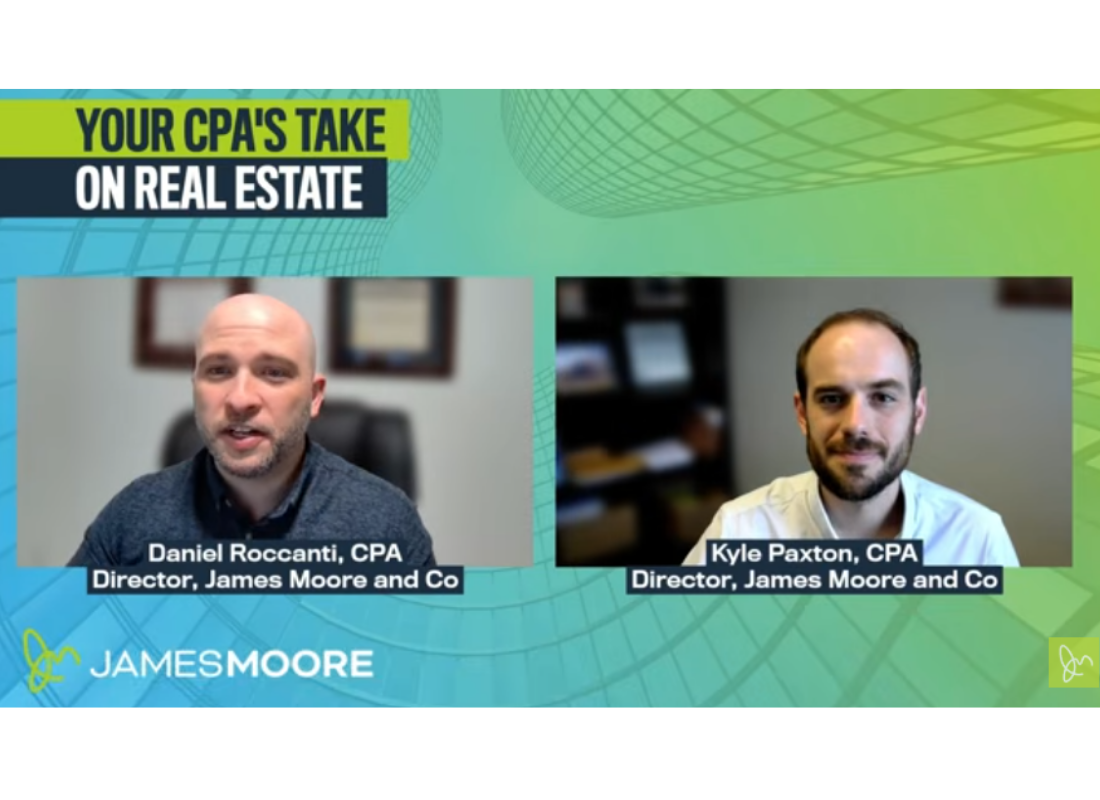
During a recent Your CPA’s Take on Real Estate episode, Daniel Roccanti shared why the window between tax seasons is actually prime planning time, and what owners should be doing right now.
The Real Cost of Waiting Until April
The loss most investors don’t see isn’t on their tax return. It’s the opportunity they never took.
“Most high-value decisions have to be made before the end of the year,” Daniel explained. “If you’re only thinking about taxes after the year’s already done, you’ve probably missed out on a significant amount of opportunities and you don’t even know it.”
That last part matters. You can’t measure what you never planned for. Investors who approach taxes reactively aren’t just paying more, they often have no idea how much more.
Mid-Year Is When the Real Work Happens
Once tax season wraps up, most investors shift their attention elsewhere. Daniel argues that’s exactly backwards.
Mid-year is when CPAs have the clearest view of your situation. Last year is fully closed, and there’s still enough time to act on what’s ahead. Strategies like real estate professional status, cost segregation studies and bonus depreciation elections can’t be applied retroactively. They require documentation, time and often a change in how you’re operating.
“A lot of tax strategies, you can’t just all of a sudden do something,” Daniel said. “It takes time.”
Real estate professional status is a good example. Daniel regularly sees investors who’ve heard about the tax benefits and want to claim the status without understanding what it requires. Qualifying means tracking hours, maintaining detailed logs and meeting IRS thresholds every single year.
“I know someone on TikTok said you could. Unfortunately, you can’t.”
The Alternatives to the 1031 Exchange Most Investors Overlook
The 1031 exchange is the default exit strategy for most real estate investors. Daniel says it’s powerful, but it’s not always the right answer, and there are several alternatives worth knowing.
Delaware Statutory Trusts (DSTs): Technically still a 1031 exchange, a DST lets you swap out of active property management and into passive ownership. Daniel noted this is especially useful for investors who are thinking about the next generation and don’t want to pass on the burden of managing properties.
Installment Sales: Rather than recognizing the full gain at once, an installment sale spreads payments over time. It won’t defer taxes forever, but it avoids a large single-year tax hit.
Qualified Opportunity Zones: With opportunity zones 2.0 set to launch in 2027 under the new tax bill, Daniel flagged this as an area investors should be watching closely. The program brings familiar benefits with some new additions.
Section 721 / UPREIT Contributions: One of the most overlooked options. You can contribute property into a partnership tax-free in exchange for ownership in a real estate fund or syndication, without triggering a sale.
Why Bookkeeping Is a Tax Strategy
This is where Daniel made one of the sharpest points in the conversation.
Clean books aren’t just an accounting preference, they’re a direct driver of tax savings, audit protection and legal risk reduction. Messy books create red flags. They lead to missed deductions. And when an audit happens, they make everything worse.
“Bookkeeping is the biggest difference between people saving a lot of taxes and people paying a lot of taxes, and they don’t know it.”
The reason investors miss this is that good bookkeeping is invisible. You never see the savings you protected because the problems never materialized. Daniel put it plainly: “Messy books feels like you’re saving a dollar today for potentially spending lots more money down the road.”
Tax Planning Reduces Risk, Not Just Taxes
Most investors focus on one number: how much they owe. Daniel pushes clients to think broader.
Audit risk is real and expensive. An experienced preparer knows what a return should look like, which deductions raise flags and how to document everything correctly. That knowledge doesn’t just lower your bill, it protects your time and reduces legal exposure.
What to Do Before Year-End
Daniel’s advice for year-end is straightforward: review every property you own and ask whether you’d buy it today.
“The best investors have an exit strategy before they’ve ever purchased the property.”
That annual review is where deeper tax conversations belong, bonus depreciation, cost segregation, 1031 planning and more complex strategies like historic rehabilitation credits. But those conversations only make sense once you know which properties you’re keeping, which you’re exiting and what your income picture looks like for the year.
And when evaluating strategies, Daniel offers a useful filter: “Return on investment is great, but sometimes return on hassle is even better.”
Daniel covers more ground in this conversation, including how SALT limitations affect investors in high-tax states, the details of real estate professional status and why some of the most valuable tax moves are also the least glamorous.
Watch the full episode on YouTube for the complete conversation.
All content provided in this article is for informational purposes only. Matters discussed in this article are subject to change. For up-to-date information on this subject please contact a James Moore professional. James Moore will not be held responsible for any claim, loss, damage or inconvenience caused as a result of any information within these pages or any information accessed through this site.