The Silent Margin Killers in Manufacturing
Originally published on April 15, 2026
“I’ve got my margin by product, and I think I’m X percent. And then I go to their financial statements and their financials show substantially lower margins, and that tells me you don’t know what your margins are.” — Mike Sibley
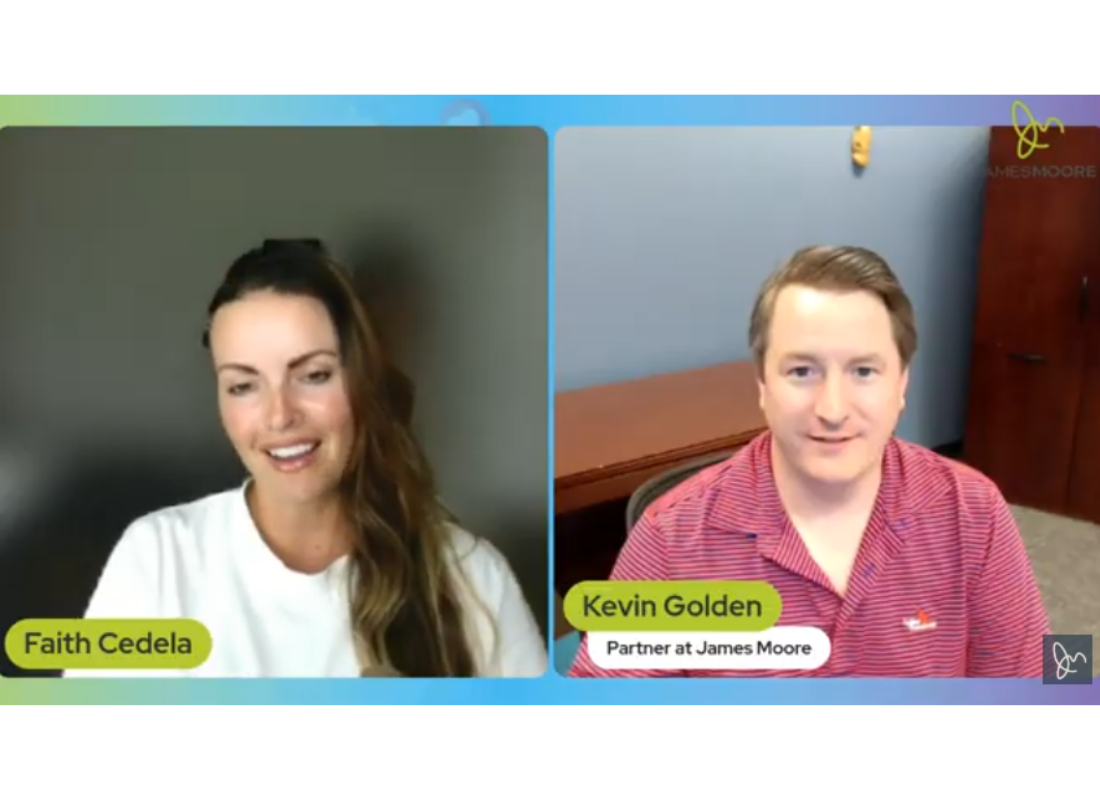
In this episode of Moore on Manufacturing, Mike Sibley and Kevin Golden continue their discussion on the financial pressures manufacturers face during growth. Building on their previous conversation about operational stress points, this episode focuses on job costing, margin visibility, hiring structure, overhead allocation and the practical steps manufacturers can take to protect profitability.
The discussion covers how hidden cost drivers erode margins, why price increases alone don’t solve the problem and how building financial clarity from the ground up gives manufacturers the tools to make better decisions as they scale.
Resources
- James Moore Manufacturing Industry Services
- Moore on Manufacturing YouTube Playlist
- Watch This Episode on YouTube
Full Transcript
[00:03] Mike Sibley: Hi, I’m Mike Sibley, partner and leader of the James Moore manufacturing team. I’m joined by Kevin Golden, partner and also a member of the manufacturing team. Today we are continuing discussion from our last session, podcast. In part one we covered operational stress points that show up early in rapid growth, cash tightening, inventory strain and systems that don’t scale very well. So today we’re actually going to keep that conversation moving along, and we’re going to expand on it. Today we’re going to talk about job costing, margins, hiring structure, overhead, steps that manufacturers can take now to regain clarity, but also get ahead of the curve. So Kevin, as always, glad to have you. Have another good conversation.
[00:57] Kevin Golden: Yeah. I think on this one, like you said, we kind of hit more of the “I’m starting to ramp up, I’m growing,” kind of the more foundational issues that you run into and so forth that you feel, and then now I’m excited to take that maybe a little bit step further today.
[01:14] Mike Sibley: Right, yeah, and just kind of a little bit of a maybe a small recap on some of that tightening. You might feel, “Hey, I’m profitable, but where’s my cash? I see my inventory increasing a lot. Our efficiency might be down.” We might see things, quality issues, scrap issues. You might even be hearing from your suppliers that, “Hey, you’ve hit your credit maxes. You need to pay us even though you have 30-day terms, you’ve already hit. You need to pay us before we’re going to ship anymore.” So you’ve got supply chain questions, you got working capital strains, yet you might be profitable or you may not be profitable. You might actually be seeing, “Gosh, I’m growing a lot, how come my profits aren’t growing?” So there’s a lot of early telltale signs that say something else is going wrong, and so one of the areas that we want to jump into, so you get these signs, and of course we always talk about job costing or your inventory costing, your finished goods, how are you doing that? All of a sudden you see your margins getting worse. And one of the things that I’m a big fan of is making sure you have margins by product. Get that data.
[02:41] Mike Sibley: Create that data because it helps. But one of the things that I often see is, “Hey, I’ve got my margin by product, and I think I’m X percent.” And then I go to their financial statements and their financials show substantially lower margins, and that tells me you don’t know what your margins are because there’s costs out there somewhere that you’re not identifying and capturing as part of that.
[03:09] Mike Sibley: Oftentimes that’s overhead and labor, but I also see pricing, material costs that creep up and nobody’s tracking that. So the big thing here is jumping off into having really good cost visibility, having an understanding of what it takes from a material, tracking your material cost changes, your labor. Your labor costs increase. You may have turnover and you hire people in at a little bit higher rate than they were before, or you might have raises that you do periodically, and a lot of times those get missed in restructuring the pricing. And so what ends up happening is you see this margin deterioration over time, this profit leaking. You’re not exactly sure why.
[04:02] Mike Sibley: The other side of it is, and I had a client years ago where they had basically two, a high volume line and a low volume line, and when I helped them do the analysis, they were always break even as a company. And when I did the analysis, their high volume stuff was losing money and their low volume stuff was making a ton of money, in fact, just enough money to offset the loss from the high volume items. And they didn’t know, they didn’t realize that it was basically the low volume subsidizing the high volume by just enough. There was just enough volume to look at that. So it’s really, really critical, Kevin, that manufacturers have really good insight in the costing.
[04:50] Kevin Golden: Yeah. And I think too, one trap that’s easy to follow is, “Hey, I’ve been successful to this point in doing X. Well, if I just do more of X, I’m just going to be that much better, right?” I mean, just like you can’t, you need more people, you need more things, those things are constantly changing. So again, what got you here, it’s going to change. So maybe to your point, Mike, maybe you knew those margins, but you don’t know what they are today.
[05:18] Kevin Golden: You know what they were yesterday, but that’s not the same as today. That’s constantly changing, so you can’t constantly look at things the same way. So I love that, “Hey, here’s where I think they are.” Well, where are they actually?
[05:33] Kevin Golden: And then why are they different, right? So it gives that clarity, and when people understand that, right, then have some of those epiphanies. “Oh my gosh, well, I’m not making anywhere near as much as I thought on that product line.” Or can make strategic decisions. Should we get rid of that line, right?
[05:49] Kevin Golden: Or if there’s a strategic reason we need that, maybe we could improve that to where it’s not as big of a loss, right? I think another thing it does is, we talk about price adjustments. The knee-jerk reaction is if you’re not making enough, just increase your pricing. Well, maybe that’s part of the solution, but that’s not always the solution. We’d all be out of jobs if all we did was cover up all our inefficiency and mistakes with price increases, right? Doesn’t matter what line you’re in, right?
[06:07] Kevin Golden: So I think that could be part of it, but really understanding the clarity of all those moving parts and what those costs are help you understand this is an appropriate price increase because of X, Y or Z. Even conversations, whether it’s with your vendors, whether it’s with your customers, things like that. When you have that clarity, you can have a better conversation with them, and then a lot of times when they can understand, they may not like it, but they can at least understand because most likely, especially your vendors, they’re in business as well, they can work with you, right? And that’s where you want to get to a point is work with you on those pricing adjustments, right? But again, is it just a pricing adjustment needed, or are there other things, other… What’d you call the last one, Mike? I think, profit leaks. I like that a lot.
[06:51] Kevin Golden: Yes. Right? Are there other… So maybe there’s profit leaks that, again, weren’t a problem yesterday, but now a problem today simply because we have clarity, right? Simply because we’re looking at that and we’re tweaking it and we have a lot more visibility into what those true costs are.
[07:10] Mike Sibley: Yeah, I think I’d like to share maybe a couple of interesting stories if I could to demonstrate how this can go. Because we’ve just, hey, price increase, you might have to increase your price. And sometimes you get the pushback and say, “Listen, Mike, I can’t increase our prices anymore. We are at market. Maybe we’re ahead of the market.”
[07:32] Mike Sibley: Okay, so your margins are deteriorating. You’ve already priced out as much as you can go, so where else do we go? So let’s talk about that. I had a client years ago who, over a course of a couple months, we saw some margin deterioration. And at first it didn’t really hit because it was kind of small, then it got a little bit bigger, and so I dug into it.
[08:03] Mike Sibley: And as I started digging into some of where the costs were changing, I happened to notice that our trash bill was going up, and the trash was based on weight. So I pulled the trash bills and I got all the weights, and I trended out the weight in the trash for a 12-month period and noticed a sharp increase over a month or two.
[08:24] Mike Sibley: And so went to the CEO and said, “Hey, what’s going on here? We’re throwing away a lot of stuff now.” And so he went down on the floor. Turns out that without any good communication, there was a problem in the production side of things. They had bad product, and they were taking these things, these were kind of large molds, and throwing them away.
[08:49] Mike Sibley: And that created more scrap waste. But it was caught in the… because they didn’t have a good mechanism, so of course that went to a continuous improvement initiative, and they fixed whatever was happening. And it was a, I think it was by and large a training issue.
[09:09] Mike Sibley: And made sure that they couldn’t have that kind of scrap without a mechanism to identify it. Right. Well, soon as that was fixed, noticed material costs decreasing again. Had another client who, kind of same scenario. They thought they were in the, their margins were in 54, 55%. They were actually in the mid-30s.
[09:31] Mike Sibley: And so there was a couple problems there. One, when I got into their financial statements, they weren’t accounting for overhead correctly. They commingled direct labor and indirect labor. So we had to pull all of that apart and really look at it individually, get everything in the right buckets, and then start fixing the costing problems.
[09:54] Mike Sibley: And one of the things that we learned is people weren’t putting their time to work orders the way they were supposed to, and so we had to get the discipline built in around that. And then with the overhead and all that, we started really being able to track our costs, and we saw our margins increase because they were able to manage it better.
[10:12] Mike Sibley: They were able to manage the labor better. We also now can manage our capacity better because we know what labor is not being used at that, and maybe there’s some downtime. We’re tracking that better. So it gave us much better insights into our job costing and our capacity and our ability to bring on more work because we could see things measured better from that standpoint. So those situations didn’t in and of themselves require price increases. They just required better discipline and understanding, so we could manage the cost drivers better, and that’s what we did, is we managed those cost drivers better.
[10:55] Mike Sibley: Now, it doesn’t mean that they still didn’t need increases, because over time, no matter where you’re at, over time material costs are generally going to increase, labor’s going to increase, overhead is going to increase. We started talking about overhead. Electrical rates go up. Your rent might go up every year. Insurance goes up every year. Salaries tend to at least go up a little bit every year, usually 2 to 4%, something like that. So those costs change over time, and you have to have a process to be able to understand those cost drivers and make sure you’re adjusting accordingly. Because if you can’t get your price up and you want your margin to be the same, then somewhere else there’s got to be some improvement to reduce that cost.
[11:34] Kevin Golden: And I think an important takeaway here is, I mean, you talk about some great examples and how those specific companies dove into certain areas. Wherever you’re at now, just take that next step to have that a little bit better visualization of that. Because why? That’s going to lead to the next question that says, “Well, why is this? Well, why is that?” Next thing you know, you lead to something like trash is out of control, right? Or something like that, that you realize, “Oh my gosh, I didn’t realize that was going on.” It didn’t start from an epiphany from a number somebody got.
[12:06] Kevin Golden: It started with a little more clarity that then someone asked a question about. And then that led to more questions, which led to more questions, and you uncovering, Mike, oh my gosh, it’s an issue, right? So I think the important thing is just wherever you’re at today, take it that next step further to have a little bit more clarity, a little bit more, whether that’s timely or just what you’re looking at, and then that’ll start leading to questions. And as you can’t answer those, you’ll start digging a little bit more, and next thing you know, here’s a problem, now how do I fix it and then make sure I track that moving forward.
[12:30] Mike Sibley: Right. Yep. So Kevin, let’s jump away from job costing and talk about hiring, organizational structure. One of the things that tends to happen specifically in high-growth, fast-growth environments is they throw people at it. More people, more people. Hire more people. And I remember going back to when we were jumping into 2007 to 2009, that timeframe where we started seeing that recession hit, and companies realizing I threw people at problems. I didn’t solve problems with efficiency.
[13:24] Mike Sibley: I just, we were growing so fast, we were hiring. And then the recession hits, and next thing you know, people are being let go, and everyone’s using the thought process, “Well, we got to do more with less,” or, “We got to do the same with less.” And so you started seeing some efficiencies try to be built in. And you saw that stick for a while, and then of course, as we, after COVID, there was still a lot of growth in a lot of industries, and you kind of see that, you know, let’s throw more people at it. And I actually do a Lego exercise. So I often do a training, a connecting operations to finance training to help non-finance people learn what financials mean, EBITDA, overhead costing, how inventory. It really helps operational people understand what their impact is.
[14:15] Kevin Golden: Yeah.
[14:15] Mike Sibley: And I do a Lego exercise as part of that, to help understand what happens. And it starts from a bad process to a really good process. And from the bad process, a lot of times people are like, “Well, we need to hire, we need more people in order to…” And I’m like, “Well, what if we use less people but we level load, we do these various things?” And the next thing you know, they can put out five times the amount of work, or sometimes more, in the same timeframe. And it just goes to show the infrastructure differences and the efficiencies and the improvements that you can take first before you need to start saying, “Hey, let’s just hire and hire and hire.”
[14:44] Kevin Golden: Yeah. And I think, I want to make it very clear, we’re not saying that you don’t need to hire folks, right?
[14:50] Mike Sibley: Right.
[14:50] Kevin Golden: We’re saying be smarter about what, who you’re hiring, what they’re doing, right? What is their role? How do we know they’re doing? It gets into accountability and so forth, right? So having that kind of oversight and knowing what any person on any given day, their job, their role, what are they contributing? And I think that’s important for the owners to know, but also them to have an understanding, at least at some level, to understand what their contribution is. Again, we need people, and I know today in this environment, it’s hard to find folks, right, and good workers.
[15:26] Kevin Golden: Yeah. But at the same time, I agree. Mike, you can’t just throw people at a problem. No different than, like we said earlier, you can’t just increase prices all over the place without any clarity. Same thing here, but on the people side. We can’t blindly just throw more and more people at that, right? Otherwise, yeah, all these other problems we’re talking about are going to surface even more. Not to mention your overhead and your labor and all that’s just going to grow out of control.
[15:59] Kevin Golden: And so I think too, as you get into, I mean, manufacturing’s hard on its own, but people have the uniqueness about them, but also that makes it challenging, right? And so that’s why I think there’s a lot of oversight that’s needed in there, not only just from a dollars and cents, but leadership’s standpoint, right? So if you think about it, let’s take a manufacturer, a good size, decent size maybe, growing manufacturer, let’s say around $10 million, right? And now they scale to $30 million.
[16:31] Kevin Golden: I will say, Mike, one thing I find in conversations and talking to manufacturers they struggle with is, oh my gosh, trying to do a lot of things at once. How much oversight do I need over all my people, right? So I don’t get into I’m just throwing people at the problem. I know what they’re doing. And a lot of those conversations I usually direct them towards is you’ve got to have some sort of cadence, right? There’s a financial cadence. Okay, I’m getting numbers, I’m getting all sorts of data that I can track. But then there’s also some sort of cadence with my leadership team and when we’re talking and so forth, what people are doing, what kind of investment, both dollars and responsibilities, we’re making into our middle management, right? And there’s a clear structure on there.
[17:12] Kevin Golden: So what are your thoughts on that as far as, as you scale, again, 10 to 30, I gave as example, that’s three times the size there, how do you kind of keep a lid on having that cadence, having that oversight into it without just using up your day having meetings all the time and never really getting anything done?
[17:30] Mike Sibley: Yeah. And I’m not a big fan of meetings unless there’s some action to come out of it, something that can’t be communicated via email, you need collaboration on. So very, very specific reasons for meetings, and I think they should be kept short, to the point, because I think they can. But at the same time, I’ve seen a lot of really best-in-class manufacturers that have a daily quick meeting with their leadership team. But I think you hit on a really good point before I go back into that, is leadership development, role clarity and accountability.
[18:09] Mike Sibley: And even in small organizations, 5 to $10 million companies and up, leadership development can happen. And in certain states, in Florida and others, there’s even like training grants available for upskilling and things like that. But oftentimes we see the CEO, the owner, who everything falls on their plate, and they just keep on taking on.
[18:36] Mike Sibley: And I think, when you’re a real small company that can work, but as you grow, that’s going to get more and more difficult. And what you’re going to find as an executive is you’re going to find burnout. You’re going to burn out. Everything has to go through you. You can’t take a couple days to go off without feeling like you’ve got to stay in touch the whole time. So that comes from the leadership development side. Teach people how to do those things, how to make decisions, and don’t crucify them if they make a bad decision every once in a while.
[19:07] Mike Sibley: Have enough involvement that you can stop the critical disaster from happening, but allow them to make those decisions. And then have accountability. So you talk about these cadence of meetings and things like that. Well, build some KPIs. Build some key things that you have to go talk about. Hit what matters.
[19:27] Mike Sibley: Hit on the action items for the day that need to be dealt with. And then move on and keep that going. And I think what you’ll find is if you give people the ability to make decisions to go tackle these problems, they’ll learn how to do it. They’ll make better decisions in the future. And of course, hold them accountable. If they say they’re going to do something, make sure they’re doing that. Don’t let them get away with, “Oh, it’s just too busy,” or whatever. And look at what they’re doing, what’s keeping them busy all day. If they should be doing something, they should be accountable. Maybe they’re doing things they shouldn’t be doing.
[20:00] Mike Sibley: Or maybe they’re just not sure what to do, and they need a little bit more training. But I think you can do that even in the smallest of settings, is just find those key people that are really critical to your business. Now, as you grow, and this is where I think things tend to fall apart, and I’ve said this a lot, and there’s no science behind this, just my own thing.
[20:22] Mike Sibley: But a $5 million company is very different from a $10 million company, which is very different from a $20 million. So every $5 million, it feels like you’re a different company. So start thinking about that next, what that company looks like. If you become a $10 million company still operating like a $2 million company, you’re going to start really seeing those strains.
[20:42] Mike Sibley: And if you go to a $20 million company, and I’ve seen it, I’ve seen $20 million companies operating like they’re $5 million, and they struggle hard. Turnover, stress, bogged down processes, paperwork nightmares, you name it. They got all sorts of problems because they didn’t create scale in their systems.
[21:02] Mike Sibley: And so as part of this, going back to don’t just hire to hire, is think about where you want to go and create the system. And it may feel uncomfortable. It may feel like, “Oh, I’ve always done it this way.” Well, always doing it that way probably isn’t going to allow you to always continue to do it that same way as you go forward, if you want to build in some scalability into what you do.
[21:31] Mike Sibley: And so think about, okay, I’m five million now, but at 10 million, this throughput, we’re going to struggle here, here and here. Let’s make our structure now, so that way we know we’re as efficient as we can be, and then when we need to hire, we can bring them in, and because we have the structure, we should be able to insert them in easier than into chaos. So we’ll have clarity around our infrastructure.
[21:55] Mike Sibley: That’ll buy us time that as we continue to grow, we can do CI, continuous improvement, always trying to improve on those things. But it’s easier to do it when you’re small than when you’re behind the eight ball, you’ve doubled or tripled in size, and you’re trying to fix this stuff.
[22:05] Kevin Golden: Well, and I think one important thing you said there is having that vision that’s clear. I mean, there’s a reason why a lot of those vision statements and things like that don’t go beyond probably about five years, maybe 10 on the high side, but probably lower than that, and that’s because, like you said, by that many years, things have changed so dramatically both inside your company and outside, and things have changed. And it helps you answer those questions. Do we want to be that $30 million or whatever million company, or are we in a good space where we’re at, and we want to maintain and improve, right?
[22:32] Kevin Golden: I think it answers those types of questions because you’re right, if you’re not trying to be one, and then you find yourself in being one, either the vision’s wrong, or it needs updating, you really wanted to be there, or you don’t want to be. What can we do to scale back to get back where our sweet spot is? But that difference for a lot of people, not everyone wants to be that bigger, better version. At the same time, people find themselves thinking that, and the next thing you know, they look up, and they are the bigger version.
[23:13] Kevin Golden: And so I think revisiting that constantly and making sure your key members and all that are all on the same page with that because they’re the ones that are going to help you grow it, your future leadership going to help you grow that to get to that point. It’s not just going to be all on your lonesome. I agree. I think that having that vision that’s clear, and other people bought into that, and revisiting that regularly will help make sure you’re pointing the ship in the right direction.
[23:47] Mike Sibley: Right. Yeah, and so I think as we continue along this process, we’ve talked about here’s some of the signs we’re seeing. Now we’ve got margin pressures, job costing, we’re dealing with people and hiring. So we’re growing. How do we maintain margins? What do we do to be proactive to make sure that we can keep these margins? And part of it is obviously some of the things we just talked about. Know your job costing. Build your infrastructure, build efficiency into your infrastructure, build scalability into your infrastructure. And that’s a good starting point.
[24:30] Mike Sibley: But like we said earlier on, just because you have higher revenues doesn’t mean you’re going to have higher profit because other costs may increase, and we want to make sure that you’re not giving that away. Because higher revenue could be, yes, we have more products coming through here, but our costs are higher, so our profits are going down. We didn’t increase our prices maybe enough.
[24:50] Mike Sibley: Or we may have gotten ourselves into a product that we shouldn’t be making because it’s not a very profitable product. And without having the clarity, so it’s understanding our products. And not just gross margin, but also understanding your contribution margin. Understanding your contribution margin versus your gross margin is really important when you start thinking about the differences in overhead. What are they bringing to the table? If the contribution margin’s really, really low, then you got no chance once you add overhead into that. So your contribution margin is generally after labor and materials. So what does that look like versus your gross profit?
[25:36] Mike Sibley: But the key thing in my mind in order to maintain is to do a really good job with budgeting and forecasting and put that into place to see where are my costs going. Because if I see where my costs are going, I can build that in. And it doesn’t need to be super complex. It can be really, really easy. But see where your costs are going. If you can see where your costs are going, then it gives you an opportunity to make some decisions about labor, pricing, trying to do CI initiatives, things of that nature.
[26:05] Kevin Golden: You know, I think it’s one of those things that, going back to, you’ve got to do everything you can do to protect margins, and one of the ways is through visibility.
[26:12] Mike Sibley: Right. Yeah.
[26:12] Kevin Golden: Well, and even being able to answer with budgets and forecasting, even being able to answer, okay, X tweak, like if I find an efficiency and now my contribution margin went up by X percentage, what does that mean to my bottom line? What does that mean to me six months, 12 months from now? Even just a quarter from now, right? Being able to answer those types of questions to know, is that a good… am I really making a difference here, or is it just drops in the bucket, right? Is this really solving other problems I may have, or not, right?
[26:50] Kevin Golden: And I think with that, variance analysis. What I mean by that is here’s what I expected with that budget, here’s what actually came out. Now, tackle looking at that. Why is there a variance? There’s always variances, but here’s the ones that stick out. Why? And again, there may be several of them, right? So start with what I’ll call the lowest hanging fruit maybe, right? Okay, hey, where did my… Let me start with my raw materials. Maybe, did that change a lot if my margins aren’t where I thought they would be?
[27:17] Kevin Golden: And constantly looking at that. Obviously, it’s got to be timely as well. But I think looking at those variances and continuing to ask that why, why, why. You’re not going to be able to tackle everything at once. So again, think about where your struggles are. If it’s with cash, great. Be looking at the budgeting on the cash and that constantly, right?
[27:36] Kevin Golden: But there’s going to be items there that if you’re not looking at those regularly and asking that question why, they’re just going to get covered up in everything else. You’re going to, you could almost be busy and put yourself out of business with being busy, because you’re just doing as opposed to kind of forward-looking and then asking, okay, look back, here’s where we expected to be, here’s where we are, why is there a difference here?
[28:00] Mike Sibley: Well, and I think one of the things is having a good monthly financial review with key leadership. In smaller companies, sometimes that might just be your plant manager. It might just be you, depending on the size of the company. But if you can share some of that with key people to help them understand, because without seeing numbers, sometimes it’s really hard to know that you’re going the right direction on things. So a monthly financial review is a really good way to do it. Now, what’s the problem with a monthly financial review? Well, you’re not getting information until maybe, hopefully, 10 to 15 days after month end at the most.
[28:45] Mike Sibley: Yeah. So what do you do? Well, come up with key KPIs that really matter in your business, and review them, and have them super clear and with a lot of clarity, but have them reviewed. Do a weekly KPI meeting, and go through those, and make sure whoever’s responsible for those has visibility into it, and comes with, “Hey, this is the problem. This is what we’re working on.” You don’t wait until you see it, but see the problem and say, “Hey,” or, “Hey, I need help with this. I’m not sure what’s going on. I don’t know how to fix it,” whatever the case might be. But having good KPIs with a weekly KPI meeting.
[29:19] Mike Sibley: And it doesn’t need to be long. Look at them, okay, these are all good. This one seems to be trending lower, or this one’s in trouble. Deal with that one. Come with, don’t spend the whole meeting trying to go and workshop that thing. Go to the floor and workshop that thing.
[29:43] Mike Sibley: And see what’s happening. I know with my clients, a lot of times what I do is, whenever I can, I get out onto the floor and I walk around and just see what’s going on and ask questions. And that’s great for leadership to just go out and go to the gemba, right, and see, are things operationally happening the way you expect them to.
[30:05] Mike Sibley: So you can get those insights as the day progresses, as the week progresses. And then what’s happening by, hopefully by the time you get to month end, it’s just confirming what you already know. And if it’s not, there may be some things that stick out. Say, “Okay, we didn’t catch this. Let’s look into this so we don’t repeat these problems.” Or how do we build off, we’re having a great, how do we continue to build this? What’s working for us? And really look at it from that standpoint, ask those questions. And I think having that clarity, having that thought process with people and communicating is going to get their insights and help you make sure that you’re building and maintaining those margins.
[30:46] Kevin Golden: Yeah. No, I agree. Well, and let’s say, Mike, now that we’ve, okay, let’s say we do all that, right? And now, hey, as we’re trying to stabilize our margins maybe, maybe stabilizing our entire organization, our entire manufacturing company. You talked about some of these things, reliable, timely reporting, right, having accountability structure, KPI dashboards, so forth. Again, I usually find that with a lot of people that maybe don’t have that in place, or they have some version of that in place, but not where they need to be for the type of company they’ve grown into, a more mature manufacturing company. Even as we talk, I think, “Oh my gosh, if I’m an owner, there’s just a whole lot there,” right?
[31:38] Kevin Golden: What do you say to that person who just says, “Oh my gosh, Mike, I like what you’re saying. I agree should be doing all that, but that’s 100 different ideas you just put in my mind,” right? Where do we start, right? What do you say to them in those cases?
[31:58] Mike Sibley: You know, I think it’s definitely, it can be overwhelming, and you’ve got to start a little bit. Let’s take one thing at a time. And one of the places I would start is, first, let’s get our team structure going. Let’s figure out our accountability and who’s doing what and responsible, and just create some KPIs, some basic KPIs, and start building some cadence around that.
[32:18] Mike Sibley: And I think you can do that with your operations team. And then meanwhile, you go over and you say, “Okay, can I trust my financial reporting or not? Do I feel good about it?” And the way you’re going to know is, do you have weird variances every month that you can’t explain? Do you have no net income and don’t know why? Or are you even getting financial statements within a couple weeks after month end? Those kind of things. If you’re not, then obviously you know that’s an area you’ve got to work on. And of course, you can always bring in me or Kevin and our team could help and things like that, because that part is sometimes the part people are really unclear about, because accounting is just a different way of thinking, right? But I would start with building that, get your team.
[33:08] Mike Sibley: Get that, and then put some KPIs together. Get their input, put some KPIs, and start tracking it daily, weekly, monthly, whatever the KPI cadence calls for, and see what you see. And at the same time, start putting that financial, just making sure you got some good clarity around your financial reporting.
[33:27] Mike Sibley: And if you don’t have that, find help to get the clarity around that financial reporting. Because then that’ll start telling us where we need to focus on our operational processes. Now, intuitively, you may say, “Oh, well, I already know this process is broken, this process, we need to fix that, we need to fix that.”
[33:44] Mike Sibley: And that may be the case. Sometimes I get really nervous about somebody going into a middle process and fixing it, because there’s a good chance you’re going to create problems on either side or whatever. I like to start at the beginning and kind of work my way through and say, “Okay, what is this process? How do we fix things?” And then downstream you’ll start finding things.
[34:01] Mike Sibley: So even getting somebody to flowchart out your key operational processes. Get some information so you can make good, sound decisions. We’ve, I did one of those LinkedIn things lately, a live where we talked and talked about gut. Your gut is good. Your gut can tell you things, but then your gut will tell you where you need to focus. But get some information to support what that is, so you’re not making an assumption. So that’s what I’m talking about here is get some data and some information, and then start making improvements.
[34:43] Kevin Golden: Well, and what I like there is some of the stuff is getting back to basics. We talk about all these nice KPIs, these higher level things. Some of it’s getting back to basics. Know your people, know who your teammates are, right? Know what they’re doing, right? Know how your product makes it from point A to point B or C, D, E and F and so forth to the end, right? Make sure you just have those laid out, right? Make sure you have basic financial reporting, right? I mean, there’s a lot of fancy stuff and cool stuff we can do on top of that, but if you don’t have that foundation, it’s all going to come crumbling down, it’s all for naught, right?
[35:17] Kevin Golden: Like you said, how do you know that when you go into that process, that that’s not only not creating other problems, but what about it’s going to have the impact you think it will? Are we just wasting our time on something that it would be nice, but it’s not going to really move the needle, right? You don’t know.
[35:34] Kevin Golden: So I think sometimes we almost, manufacturers and all, almost overthink it to say, “Oh, I’ve got to have all this, this, this, that, or the latest reporting or software that can help me out with that.” And sure, maybe some of those can help, but if you don’t have those kind of basics in place and understand them, especially the new you, the growth and the expanding manufacturing company, then you’re just going to build, for lack of a better word, trash on top of trash. It’s just going to continue to give you invalid information. I mean, good luck if you throw a dart at a dartboard, hope you’re hitting in the right spot, right?
[36:08] Kevin Golden: So I kind of like that idea of, okay, there’s a lot you could do, but take a step back. Make sure you got kind of these basics in place. Now you know that’s a solid foundation. Let’s build on it over there. And that may happen more than once. As you grow, you may say, “Hey, we’ve got to go back and rethink how that product made it through our process, because now we’re $10 million instead of $5 million or whatnot. We’ve grown more.” Or technologies. I mean, a lot of different variables in there, but kind of go back to that or revisit that at least and make sure those are sound before you start layering all these other things on top.
[36:31] Mike Sibley: Yeah, I think I can share stories of companies that we’ve started working with where inaccurate or bad data led to unfortunate decisions. And that’s why one of the first things we do when we step in in our CFO advisory roles is we do a health assessment. And what we’re doing is just trying to understand what data, what reporting, what KPIs, what’s going on in the business. And try to make sure that if we’re going to help a company strategically grow, become more valuable, maybe sell, whatever it is that we’re working on, we’ve got to feel that the data that’s coming to us is useful, it’s accurate and something that we can rely on. And if we can’t, we have to go back and build those systems first.
[37:30] Mike Sibley: And you can still move the business forward without being 100% done. Don’t let perfect get in the way of good or making some decisions and moving the business forward.
[37:48] Mike Sibley: And a lot of times it’s simple things that you can do to make sure that you’re getting the data reliable. And people have ERP systems, or they’ve got this or that. Garbage in, garbage out, right? So let’s make sure that the data going in, the information coming in is reliable and useful and accurate, and then the information coming out will be much better.
[38:09] Mike Sibley: And then we can use automations, we can use AI, we can use a number of things to help get that in a summarized way that we can make decisions on. And I think that’s how you can build to get your business stable, improving margins and reducing risk of the future. There’s always risk in the future, but at least if you know what’s going on and you’re proactive, you might see something coming down the road before it even comes and can adjust before it gets there. And so that’s the goal of all this.
[38:39] Kevin Golden: Yeah. Well, and like you said, you may have the greatest softwares, you may have the greatest all that, but if it’s not being used properly, if you don’t have a good infrastructure and sound foundation to go with it, again, to just build on what we were saying a second ago, then it doesn’t really matter how great that is, right? I give the example of you go to like a NASCAR driver. If I get behind the track, I’m one of those, first of all, I’m probably going to crash. But me driving that car versus them driving that car is going to be a lot different. They understand how all one little bit of drafting or all these little things add up to make a big change in the end result, right?
[39:22] Kevin Golden: Whereas I don’t, because I’m not the right person in that right spot. So again, going back to the people, make sure I have the right people, the right team members, the right accountability. All those things are kind of foundational in nature to build upon one another to then say, “Yeah, now layer all the cool, the tools on top of that that then just make us more efficient doing that foundation, that sound infrastructure.”
[39:41] Mike Sibley: Sure. All right, Kevin. So this has been really super informative, I think. I think a good discussion. I think something for manufacturers to think about if they’re not already. Growth is a, can be a good problem to have, but it’s got to be managed well. We don’t want to let growth outrun discipline. Build that infrastructure ahead of the demand, be thinking about that. And I think that’ll make your business more profitable, it’ll make it more valuable, it’ll make your employees happier, easier to retain. There’s a lot of benefits with that. So keep that in mind as you’re growing. As always, thank you for joining us. Thanks for listening. If you have feedback, other episodes you’d love to do, please reach out, send us a note, and we can take a look at including that in a future episode. Once again, thank you. I hope you all have a great day.
Want to hear the full conversation? Watch the complete episode on YouTube and subscribe to Moore on Manufacturing for new episodes on the financial and operational issues that matter most to manufacturers.
All content provided in this article is for informational purposes only. Matters discussed in this article are subject to change. For up-to-date information on this subject please contact a James Moore professional. James Moore will not be held responsible for any claim, loss, damage or inconvenience caused as a result of any information within these pages or any information accessed through this site.