Why Your “Profitable” Real Estate Projects Still Lose Money
Originally published on April 14, 2026
“Cash flow is the difference between a good business owner and a bad business owner.” — Daniel Roccanti, CPA
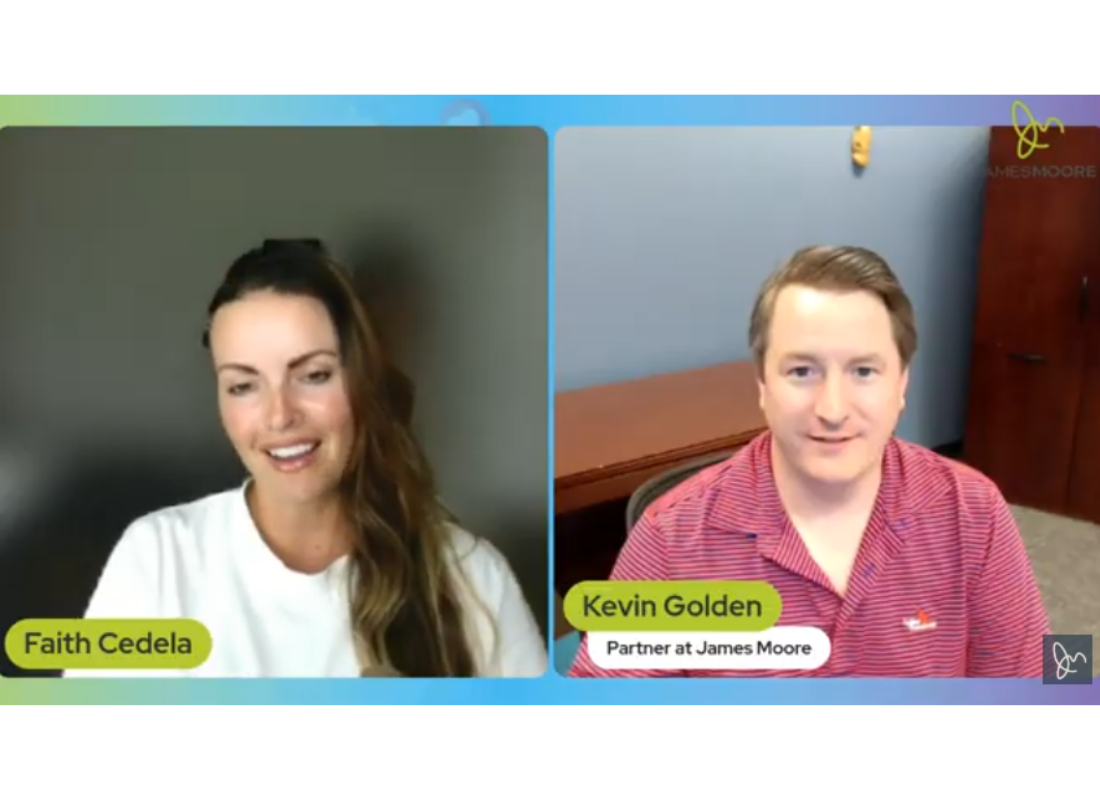
In this episode, Daniel Roccanti, CPA, breaks down why so many real estate and construction projects look profitable on paper but leave businesses struggling with cash flow. From the working capital gap to hidden costs and debt service coverage, this conversation is essential for any owner who wants to turn projects into real profit.
The discussion covers some of the most common financial blind spots in real estate and construction. Roccanti explains how accrual-based accounting can mask cash shortfalls, why rapid growth often weakens a company rather than strengthening it, and what owners need to understand about debt service coverage in today’s market. Whether you are managing a single project or scaling a portfolio, these insights can help you make better financial decisions.
Resources
Full Transcript
[00:02] Faith: Hi everyone and welcome to the James Moore channel. Today I am here with Daniel Roccanti. Hi Daniel, how are you?
[00:08] Daniel Roccanti: Hey, it’s good to be here again.
[00:10] Faith: Good, good. Welcome back. So today we’re talking about real estate, turning projects into profit, and we’re going to go through some big questions and get your advice.
[00:22] Daniel Roccanti: Sounds good. Let’s go.
[00:24] Faith: All right, let’s go. Okay. So the first question is, why do so many projects look profitable on paper but the business is still struggling financially?
[00:32] Daniel Roccanti: I think this really comes between the difference of what is accounting and what business owners allow as their cash, their true financials. How accounting is done can be done in many different ways, but usually for businesses it’s on the accrual basis. So that just means when things are earned, okay, not when cash hits the bank. And so you can look very profitable on paper, but actually have no cash in your business. I see it sometimes with some of my owners. They’ll be like, “Hey, I had a great year. Looks like you made a million dollars.” And they’re like, “What? How? Where is that?” And then we have to be like, “All right, so let’s really see.” And I think that’s a big difference a lot of times. The business looked profitable on paper, but did it actually prove profitable in the business when I’m looking at my cash and everything that’s going through it? So it can definitely be a difference between strength on paper and strength of an actual company.
[01:37] Faith: Oh my goodness. I bet that’s such a big conversation to have. What’s the biggest disconnect you see between job level profitability and overall business health?
[01:47] Daniel Roccanti: People got to realize that a job level, like a project, and the overall business are two different things. You can have profitable or unprofitable jobs and still have a healthy business or unhealthy business. So when you look at the job level, you got to realize, was that job actually making the whole business better? And there’s a lot of moving parts in a business. So that one job could look profitable, but when I start adding overhead in and I start adding in what’s the real economic value this had and contribution to this company, because there’s a true opportunity loss when you’re dealing with projects. I’ll see this sometimes where a client will take on a huge project and be like, “Oh, this is going to be very profitable.” It’s like great, but is it consuming all your resources now? You can’t do any other projects. It ends up taking a lot longer. The profits are less than you think. Or maybe profits are huge but realization is low. And so then when you truly add that project into your company, it didn’t make it healthier. It actually weakened your company. But that one project looks great on your books.
[03:05] Faith: Where do you see real estate and construction owners confuse growth and actual financial strength?
[03:14] Daniel Roccanti: Size is where all the confusion comes from. Size is not strength. Everyone wants to be on that fastest growing company’s list, and that’s not always a good thing. It can be a good sign that you have a well-run company. The public wants it. You’re bringing true value to the economy. It could. But it also could just mean you’re not ready yet to be taking on all this stuff. And so when people are doubling their revenue, doubling the size of their projects, it looks great. It might even be a fun thing to brag to your friends about and colleagues. But at the end of the day, if you really can’t actually perform at the same level that you were currently, then you’re not growing your company at all. You’re actually weakening your company. So really a lot of growth is more contained. We do want to always keep pushing ourselves. We want to take on larger projects. But you got to keep it within somewhat of a range. The stories you hear on the news of how this company blew up, did a great thing, then you hear that same story on that same news five years later, how it crashed and burned because they weren’t ready for that kind of growth. So it’s not always the sexy thing to say, but true, slow, steady growth really is the true test of a great company. A lot of times, significant growth in a short amount of time is luck. And luck can turn bad sometimes.
[04:43] Faith: Isn’t it the saying, trust the process?
[04:46] Daniel Roccanti: But it’s not always easy. It’s like when you’re training for a marathon or a big competition and your trainer or your friends are always like, “Yeah, trust the process.” You’re like, “But this sucks.”
[04:57] Faith: It’s true. And if I take it out of business context, let’s talk about weight loss. You talked about training and everything. People always want to lose a ton of weight. The healthiest way to lose weight is actually to slowly lose weight over time. If you lose a bunch of weight in a short amount of time, that’s great, but you’re going to gain it all back quickly the moment you let go of the gas. And so you got to think whether it’s business, whether it’s life, whether it’s losing weight, they all have one thing that’s the same, and that is slow and steady wins the race.
[05:28] Daniel Roccanti: Yeah, like you said, it’s not always the sexiest thing, but it works in the end.
[05:34] Faith: What are some of the hidden costs like overhead or financing that quietly eat away at margins?
[05:42] Daniel Roccanti: I think when we’re talking about hidden costs here, people are wanting to think that it’s something special, like something I’ve never thought of. And it’s like no, these are normal costs. But why it’s hidden is because you didn’t realize how much you didn’t do a good job estimating the cost. You didn’t realize it’s indirect, more overhead. It’s not always like, all right, what is the cost for that supervisor who is supervising multiple jobs? You’re not including what the potential worst case scenario of the market happens and now every job takes much longer. Every job takes twice as long. That’s a huge hidden cost because everyone knows carrying cost can ruin a whole entire project. And so you got to truly understand your hidden cost. What’s best case scenario? What’s worst case scenario? Does my job still work worst case scenario? Does my job still work if all my costs rise by 20%? Because that’s actually what happened over the last five years. If people don’t always know this, I know people have heard about inflation and how bad it’s been, but truly I just read a report the other day that our five-year inflation is about 20%. So a dollar five years ago is worth about 80 cents right now. And that’s just overall inflation. Some things market to market could be a lot higher than that. So you just got to realize that time is always going to eat into your deal and lessen your profit margins.
[07:19] Faith: What’s the most common cash flow surprise you see catch owners off guard? This is actually a pretty interesting question.
[07:25] Daniel Roccanti: Cash flow is the difference between a good business owner and a bad business owner. The ones that understand truly how cash flow works, how to manage it, is the difference because there’s a gap. There’s a gap between when cash goes out and when cash comes in. When revenue is earned, when revenue is actually received. And so the most common surprise is that timing, that working capital gap right there of when it goes out, when it comes back in. They just assume, “Oh, I got revenue on the books, I must have cash,” right? No, that’s not how this works. I get a job, I send the bill, that takes time for my accounting department to send the invoice. Then the client receives the invoice, takes time for them to go through their system. Then if it’s a good client, maybe they pay it in 30 days. But we all know that’s not the case. Cash flow, clients don’t pay on time. Sometimes you’re having to keep following up. So a really good business owner, it’s not just about doing a good job on my job. It’s about all the aspects of how to get cash in your business. You got to really understand. Am I getting paid? Am I getting paid within my 30 days? Getting paid on average 30 days over an average of 90 days is a huge difference. And then understanding when that cash flow will come in. Seasons happen in every business. Usually there’s some point in the season where your company is going to make more money than other parts of the seasons, but you’re going to still have the same overhead cost. Payroll still hits every week or every month or whatever it is. And so you got to understand, all right, I’m going to get a lot of money in a short amount of time. I, the owner, probably want to take some profits out of that, take some distributions. How am I going to make my cash flow work in months where my costs are more than the revenue I’m bringing in?
[09:14] Faith: Do you see a trend of the down period or is it pretty sporadic for every business? Is it different for every business?
[09:21] Daniel Roccanti: Every business is different. So let’s take accounting. That’s what I do, right? Probably to no one’s surprise, the most cash comes in around tax season. We do plenty of work around the whole year, but majority of it is going to come in around tax season or right after tax season because that’s when a lot of business is done. But we still have to pay the same salaries in June, July, August. And so you just got to realize, okay, I got a huge flow of cash here. All right, what can I hold on to? What do I need in those other months? Seasons happen everywhere in construction. Usually that will go up in the summer months. And it’s not always seasonal jobs. People think it’s like Christmas trees, but really any job I’ve been to, there’s usually going to be a season where they just have the most revenue. Some though, it’s different for every industry.
[10:12] Faith: Yeah. And I definitely think that’s why people should have a good relationship with their CPA, with their business, because you would advise them on all these things. I feel like some people get surprised and then they get upset, and then you can give them solid advice and guidance.
[10:29] Daniel Roccanti: Absolutely.
[10:30] Faith: You’re in the business of making people successful. So I think, trust your CPA guys. Okay, so for the final question, and I feel like we ask this question every single episode, but I absolutely think it’s the most important. If there’s one financial metric every real estate or construction operator should be watching closely right now, what is it and why?
[10:57] Daniel Roccanti: Okay, I’m going to change up my answer because we want to make sure we’re adding to it. It’s still the same answer. My answer is always cash. Always cash flow. At the end of the day, you got to understand what your true cash is going out. But to take that one step higher, especially in real estate, you got to know your debt service coverage. You have to understand, when my cash is coming in, can I service my debt? This is what gets a lot of people in trouble because debt’s a normal part of real estate or any other business like construction. You got to have debt coming in. So where is it that my true profits are coming in that I can pay my debt? A lot of times that debt is a constant. It’s every month. But nowadays with how debt is being done, it can be a huge variable because debt is always coming up and I have to refinance. I think I read a report the other day, like 20% of commercial real estate is going to come due this year just alone. So you’re talking about every commercial real estate deal you see, one in five is going to have to figure out, all right, what are we doing, we got to refinance.
[11:58] Faith: Well the market changes, everything changes, what you get changes. So your debt payment’s going to change. And so understanding what your options are, again, always worst case scenario.
[12:10] Daniel Roccanti: A really good business owner understands, all right, this is a good deal whether it goes really well and smooth or it’s really rough and it’s a worst case deal. If it only works when it’s a good deal and everything runs smoothly, then you’re just a big optimist and you’re going to hope everything works out. But if we live enough in the real world, sometimes it does, but eventually if you do it enough times, it always goes bad. And when it goes bad, sometimes that can be a lot worse than all the good deals you’ve ever done.
[12:45] Faith: Yeah. Wow. Well, it was great talking to you today, Daniel. And you’re going to be back April 30th and we are going to talk about tax planning beyond April because I know tax day is next week, right?
[12:58] Daniel Roccanti: Yeah. We’re six days away. April 15th.
[13:03] Faith: So this is the time. We’re going to talk about a year-round strategy for real estate owners. So I think this is going to be a really great episode. April 30th everyone. Daniel, it’s great talking to you today and I can’t wait to talk to you again.
[13:18] Daniel Roccanti: You too. Thanks.
[13:20] Faith: Thanks. Bye.
Watch the full episode to hear Daniel Roccanti’s complete breakdown of how real estate and construction owners can close the gap between paper profits and real financial strength.
All content provided in this article is for informational purposes only. Matters discussed in this article are subject to change. For up-to-date information on this subject please contact a James Moore professional. James Moore will not be held responsible for any claim, loss, damage or inconvenience caused as a result of any information within these pages or any information accessed through this site.