L3Harris Completes Spacecraft Manufacturing Facility in Palm Bay Florida
Originally published on January 14, 2026
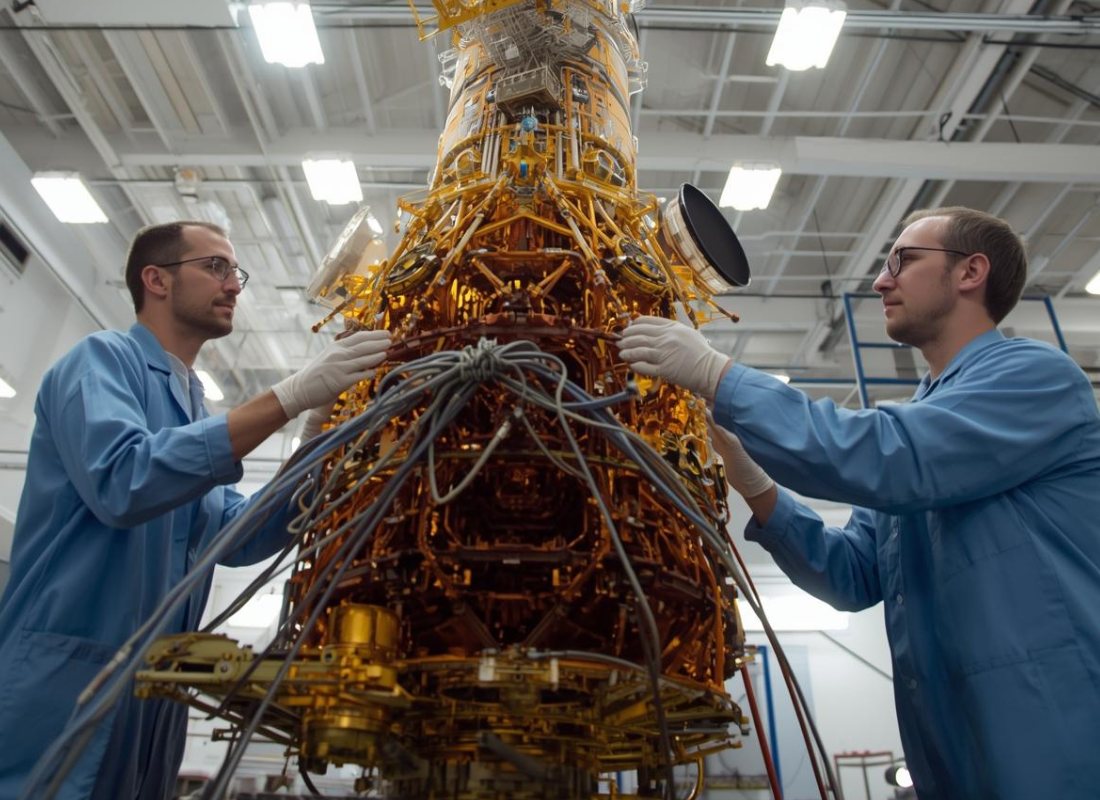
L3Harris Technologies has completed construction of a 92,000-square-foot spacecraft manufacturing facility in Palm Bay, Florida, marking a significant expansion of the company’s Space Coast manufacturing operations. The state-of-the-art facility will support the production of next-generation satellites designed to identify, track, and defend against hypersonic and advanced missile threats.
The Austin Company served as design-build partner for the project, delivering planning, architecture, engineering, preconstruction, and construction management services. The facility, known internally as Project LEO, features three expansive high bays equipped with large-capacity overhead cranes for spacecraft assembly and integration.
Advanced Manufacturing Infrastructure Supports Defense Space Systems
The Palm Bay facility includes specialized infrastructure for spacecraft manufacturing, including enhanced security features, expanded utilities, and support spaces configured for clean-room production. These specifications reflect the exacting requirements of satellite manufacturing, where precision assembly and contamination control are critical to system performance.
Florida’s Space Coast has remained a center for aerospace manufacturing and launch operations. The U.S. Bureau of Labor Statistics reported that aerospace product and parts manufacturing employment in the Cape Canaveral metropolitan area increased 3.2 percent year-over-year through August 2025, reflecting continued investment in space systems production.
L3Harris Technologies ranks among Florida’s largest aerospace employers, with multiple facilities supporting defense electronics, space systems, and communications technologies. The company’s investment in Palm Bay manufacturing capacity aligns with growing federal spending on space-based defense systems and satellite constellations.
Satellite Production Addresses Emerging Defense Requirements
The satellites manufactured at the Palm Bay facility will support the Golden Dome for America program, a defense initiative focused on detecting and tracking advanced missile threats. Hypersonic weapons, which travel at speeds exceeding Mach 5, present detection and monitoring challenges for existing defense systems due to their speed and maneuverability.
According to the Congressional Research Service, the U.S. Department of Defense allocated $4.7 billion for hypersonic weapons development and related defense systems in fiscal year 2025. This funding includes investments in sensor technologies and satellite systems to track fast-moving threats.
Space-based sensors offer advantages for detecting hypersonic weapons because they can monitor large geographic areas continuously and track objects during flight phases when ground-based systems have limited visibility. Manufacturing facilities like L3Harris’s Palm Bay operation produce the hardware enabling these capabilities.
Space Manufacturing Requires Specialized Facilities and Workforce
Spacecraft manufacturing demands facilities designed for precision assembly in controlled environments. The Palm Bay facility’s high bays provide vertical clearance for satellite integration, while overhead cranes enable movement of large components during assembly. Security requirements reflect the sensitive nature of defense technologies produced at the site.
Aerospace manufacturing requires specialized workforce skills, including systems integration, precision machining, electronics assembly, and quality control. Florida’s technical colleges and universities have developed aerospace-focused training programs to support the industry’s workforce needs.
The National Association of Manufacturers reported that aerospace and defense manufacturing faces particular workforce challenges as experienced workers retire and technology advances create demand for new skill sets. Companies investing in manufacturing capacity must simultaneously invest in workforce development and retention.
Florida Aerospace Manufacturing Sector Continues Growth Trajectory
L3Harris’s Palm Bay expansion reflects broader investment trends in Florida’s aerospace sector. The state hosts major operations for defense contractors, commercial space companies, and launch service providers. According to Space Florida, the state’s aerospace industry generated $7.2 billion in economic impact during 2024, supporting more than 65,000 direct jobs.
Florida’s aerospace sector benefits from proximity to launch facilities, established supplier networks, a favorable business climate, and an available technical workforce. These factors have attracted companies ranging from established defense contractors to emerging commercial space ventures.
The Federal Reserve Bank of Atlanta noted in recent economic reports that defense spending remains a stable component of Southeast manufacturing activity, providing consistent demand even during periods of economic uncertainty. Aerospace and defense manufacturing operations often involve multi-year contracts that create predictable production schedules and employment levels.
Manufacturing Investment Decisions Require Comprehensive Financial Planning
For aerospace and defense manufacturers, facility investments involve significant capital commitments, specialized infrastructure requirements, and complex regulatory compliance obligations. Companies must assess workforce availability, supply chain logistics, security requirements, and long-term operational costs when planning manufacturing expansions.
Federal contracts often include specific accounting requirements, cost reporting standards, and audit provisions that affect financial management and reporting systems. Manufacturers serving defense markets benefit from financial advisory support that addresses both commercial operations and government contract compliance.
Our advisors help aerospace and defense manufacturers manage complex accounting requirements, assess capital investment opportunities, and develop financial strategies supporting sustainable growth. We work with companies to understand regulatory obligations while maintaining operational efficiency and profitability.
Together, we help manufacturing leaders do Moore. Explore how our accounting, assurance, and advisory services support the financial strength of manufacturers at our Manufacturing Services page.
All content provided in this article is for informational purposes only. Matters discussed in this article are subject to change. For up-to-date information on this subject please contact a James Moore professional. James Moore will not be held responsible for any claim, loss, damage or inconvenience caused as a result of any information within these pages or any information accessed through this site.