Why Real-Time Dashboards Beat Monthly Reports for Real Estate Decision-Making
Originally published on January 16, 2026
“A 60 to 90-day lag is kind of like driving with your eyes closed.” — Daniel Roccanti
Subscribe to the Real Estate Industry Update Series
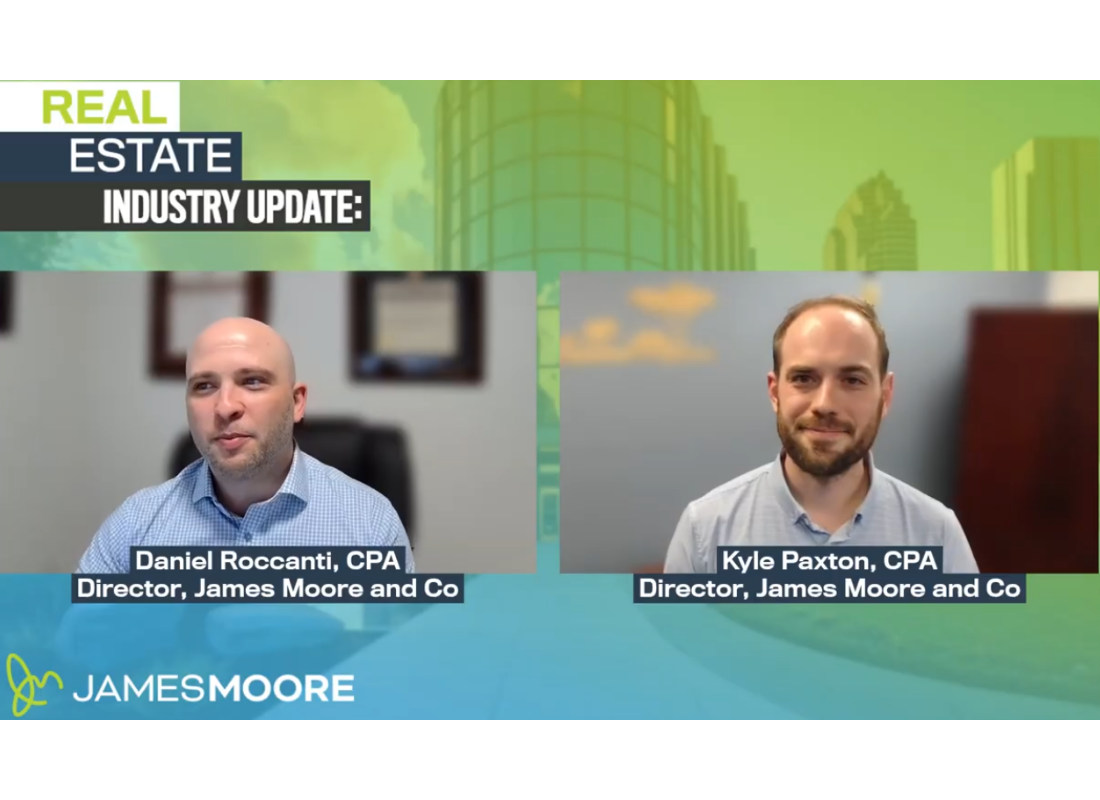
In this episode of the Real Estate Industry Update, Daniel Roccanti and Kyle Paxton discuss how real-time data and modern reporting systems are helping real estate managers make faster and smarter decisions. They explore why traditional 60-90 day reporting cycles create operational blind spots and how integrated platforms can provide the daily and weekly visibility that drives better outcomes for owners, operators and investors.
Resources
Full Transcript
[00:02] Daniel Roccanti: Welcome to another Real Estate Industry Update. I’m your host, Daniel Roccanti. I’m here back with Kyle Paxton. And today’s topic, we’re going to talk about real-time data and how a better reporting system can help you make better decisions. Kyle, how do you feel about this subject today?
[00:22] Kyle Paxton: Oh, I love it, Daniel. This is good stuff right here. It’s January, tax season’s on the horizon. We’re talking about year-end reporting. How quickly can we get visibility into our year-end performance for both internally and for our clients? And what does that reporting look like? How quickly can we turn around tax returns, K1s, all the things? Not only does real-time reporting help with the compliance side, but it just helps you make sound business decisions. This is a conversation we have frequently. It’s a software-heavy conversation because there’s so many ways to automate reporting these days. So I’m excited to get into this.
[00:53] Daniel Roccanti: I am too. It’s a little bit different than what you maybe expect like taxes and everything. It’s a little bit more operational based, but the books and what we’re going to talk about, it’s really important to your business and how you make decisions. So a lot of this conversation is going to be directed towards fund managers, asset managers, real estate managers. So if you’ve had any of your LPs ever ask you, “How are your collections trending this week?” and things like that, and the best you can do is basically provide them with like the last quarter’s information, that’s a problem.
[01:33] Daniel Roccanti: But it’s not necessarily a reporting problem. It’s an operational problem. Because you can’t see your collections, you’re not seeing your cash, you’re not seeing your delinquency or your payables until weeks later instead of getting that information sooner. 30, 60, 90 days is too late for you to be making some decisions. So in a world that we live in now that is always changing—rates are moving, refinancing windows are tightening, expenses become volatile, tenants are getting more cost sensitive—a 60 to 90-day lag is kind of like driving with your eyes closed and then explaining the curve because you can’t see it, right?
[02:18] Kyle Paxton: Didn’t know it was coming. Look out. Watch out for Daniel on the road is what I heard.
[02:22] Daniel Roccanti: No, like I’ll jump in here. So a lot of times we see real estate financial statements are lagging 60, 90 days. This is a pretty frequent occurrence. We see it all the time. And really what it comes back to, like Daniel said, it’s operations, it’s manual processes, how your workflow is built.
[02:40] Kyle Paxton: We still, I find, as a society, are stuck in that month-end close manual reconciliations. You have offline spreadsheets where you’re tracking all of your rent rolls, debt schedules, everything else. You’ve got seven different systems you’re trying to integrate together. Different people have different visibility into different systems. And then ultimately the different stakeholders in your business use different sources of truth and areas what they’re looking at. So are they looking at how the asset’s managed? Are they looking at accounting? Are they looking at some KPIs?
[03:06] Kyle Paxton: There’s a lot of different stakeholders who are looking at different things. This can create a really convoluted, disjointed process that slows down your whole operational system. So a lot of what we do, and it tends to come up around year-end time, right? That’s always when January rolls around and our emails blow up with tax time and everything else. We have a lot of conversations around this and timely reporting and things of that nature.
[03:28] Daniel Roccanti: Yeah, I see a lot of times some of these real estate teams, they’ll have really nice quarterly packages. But they’re completely blind on the next 30 days of cash. They know what their net operating income is, but they couldn’t tell me if their tenants are slipping on their payments right now. These are all indicators of issue. You need this information timely. So Kyle, why does 60-90 day lag happen in the first place? And what does real-time actually mean in real estate?
[04:13] Kyle Paxton: Yeah. So real-time is really around do you have daily visibility into your cash, your collections, occupancy, payables, things like that. On a weekly basis, are you looking at capex progress, any covenant headrooms? And then monthly, you’re closing the books for the month and accruing entries. So it takes that monthly process and pulls it much more into a daily focus.
[04:34] Kyle Paxton: A lot of times we see this come through in different software packages and operational systems through a dashboard. Daniel and I at James Moore, we use dashboards every day that pull in real-time data from the 17 different systems we use depending on what area of our business we’re in. Aggregate it together so that there is one spot you can go to and get data that is at most 24 hours old on where we’re at on our projects, what we need to do to get done, and really help kind of reorient our teams on a real-time basis.
[05:20] Kyle Paxton: So that’s really what we’re talking about in real-time: do you have visibility on your operations within 24 hours? In terms of what changes operationally, I’ve touched on this some already, but it’s really pivoting from a reactive approach, as Daniel said, a lot of these things come through if you have LP investors and they bring questions to the table, and really converting to the proactive. How do we create these processes to really have real-time systems there?
[05:55] Daniel Roccanti: And so what I see here a lot of times is why are you lagging? Why is it? And I think one of the easiest ways to explain is a simple what I call the two-clock method. So when you think of a clock, there’s two types. There’s two hands, right? Think of one as the accounting hand and one is the operations hand. They move simultaneously, but one moves a little slower and one moves a little quicker.
[06:14] Daniel Roccanti: Your operation one is the second hand. It’s moving quicker. Your accounting one is more monthly, so it’s going to be moving slowly. And so those two need to work together to get you the information. And a lot of times you’re only using one of the clocks. You’re only using the accounting one and you’re using that information to support your operations, which isn’t terrible, but it’s not quick enough for you to make decisions.
[06:43] Kyle Paxton: It’s reactive in nature.
[06:45] Daniel Roccanti: It’s not enough. So when we have to do the accounting part, it’s all about closing and doing the bank recs and getting all the accruals and the CAM reconciliations and everything. That’s necessary, but that’s work that has to get done at the end of the month, end of the quarter, things like that, that’s going to take a much longer time. Or if you’re starting to use spreadsheets outside of your accounting software, that’s going to slow your process. If you’re having to export, re-import, re-key in, redo all the data all over again, that’s going to slow you up. Things like that. If you have multiple different sources, you have one view for one team, another view for a different team, and then another one for your accounting department. And if you have multiple entities, now you’re even more complex.
[07:26] Daniel Roccanti: So here at James Moore, when we’re working with our real estate companies, we really want to make sure that you’re using property management software that does the accounting part, also gives you a big boost on the operational side. There’s a lot of software out there. We usually recommend and work with Yardi just because I think Kyle would probably agree with us. It’s probably one of the premier property management software solutions. There’s other ones that are similar that are going to work just like it.
[08:00] Daniel Roccanti: But there’s all different kinds of property management software from smaller, doesn’t have as many things, to a much larger one like Yardi where it’s kind of all-inclusive and it does the accounting side at the property level, multi-entity level, but also is going to provide all these additional KPIs and operational indicators that is going to help you make your decisions more timely.
[08:14] Kyle Paxton: Yeah, absolutely, Daniel. And again, this is something we deal with a lot and really what we come back to is what information do you need to see in a snapshot and how can we best present that? As Daniel said, Yardi is a great tool to kind of help springboard into this, right? It’s a comprehensive system for our real estate professionals that can bring everything in-house. You got it in one system.
[08:48] Kyle Paxton: And they have opportunities to connect to different dashboard reporting tools and things like that to really streamline that real-time data process. And that’s where I’m kind of referring to what we do internally here. We have all of our systems that can connect into—we use Power BI for our kind of real-time dashboard reporting, right? And so we’re able to get real-time data from several different systems, feed them into one snapshot. You open it up and see everything you need on that front page.
[09:14] Kyle Paxton: Obviously there’s a significant investment on the front end getting the software in place and getting your teams to develop these dashboards, or you outsource that piece, just to help really optimize your systems. But then having the ability then to in real-time see those KPIs from an operation perspective, or what one of your investors might want to know, is extremely helpful.
[09:41] Kyle Paxton: And we talk about all these things and a lot of our Real Estate Industry Update videos come back to how do you look good to your investors. And if you’re a sole real estate investor and you don’t have outside investors, a lot of times goals are to scale there. So how can you get the systems in place now that when you’re ready to take on investors, you look like you know what you’re doing and have it together?
[09:55] Kyle Paxton: Of course, the overarching theme in all of this is that you have a good understanding of your business operations and what is working, what is not. And having those KPIs in the snapshot—talking NOI, same-store growth, NAV, IRR, all the real estate lingo at a snapshot—really helps drive decision-making. And so we’re seeing that become more and more prevalent as timelines and AI and everything speed up all kinds of systems. And so being able to keep up with that is important.
[10:22] Daniel Roccanti: Yeah. And what we’re doing is we’re shifting from this 60-90 day financials to these real-time dashboards. It’s less reporting heavy and periodical and it’s more just this is the information today. And it’s not that we’re trying to chase perfection here, but what we’re doing is we’re shortening time between something changed and we notice.
[10:48] Daniel Roccanti: Because not all information needs to always be so timely, but like your cash balances, your collection, your delinquencies, your occupancies—this is all stuff that we should have this information more daily. Then there’s more weekly stuff like leasing pipeline, renewal risk, capex. And then we can deal with more monthly stuff like the final closes and the accruals and if you’re doing true GAAP and things like that and some investor packaging.
[11:10] Daniel Roccanti: So you’re kind of saying, “All right, I need some of this information. It doesn’t have to be perfect, but time is money. Everyone knows that. And so if I have this information more timely, then I can make better decisions which turns around makes me hopefully make better decisions that make me more money.” So you’re going from this old model of quarterly reporting, maybe monthly at best, to a more real-time, I kind of work together.
[11:31] Daniel Roccanti: So you still have the old system because you have to have it, especially when we’re dealing—Kyle knows—when we’re dealing with the tax side and the accounting side and the investor reporting side. But it’s not the best for making timely decisions in your operations.
[12:02] Kyle Paxton: Absolutely. And the other thing in this space that I really want to jump in a little bit is a lot of what we talk about, these tools—we’ve mentioned Yardi, Power BI—these are all cloud-based systems, right? And the cloud-based systems are really designed to improve accuracy and transparency around your reporting and the timeline, right?
[12:20] Kyle Paxton: And so with this, with any of these cloud-based systems, you have different user permissions, multiple logins, you can give accountants access and a lot of these things. So we can see what’s going on without having to bother you. We can make adjustments, help you with that real-time reporting. And with all of that, there’s an audit trail within your system. So you can see who changed what, when. You set the permissions differently between the different logins.
[12:48] Kyle Paxton: And so just having that visibility, real-time update makes it so Daniel and I don’t have to pass back and forth a spreadsheet version 9 that we’ve updated 17 times in the course of our back and forth. And just really improves that the streamlined being able to be in a system at the same time, make updates accordingly. All that stuff is huge. And so we see those benefits across the board in our realm, specifically as it pertains to real estate investors.
[13:28] Daniel Roccanti: So let’s talk a little bit about KPIs, key performance indicators. So if you’re looking at building a dashboard here, what matters? Because you can get really into cluttering your dashboard and have 100 KPIs and then none of them mean anything. So it’s actually better to have less here, but you do need to have ones that matter. And what matters to you and what matters to your investors.
[13:52] Daniel Roccanti: What really matters to investors is going to be performance, risk and the king of all, cash. Every investor cares about cash. So when I’m looking at my KPIs, especially if I know I’m going to have investor questions or make good decisions, I want to see something that’s telling me one of those three things.
[14:12] Daniel Roccanti: So let’s kind of go into what would be like a performance KPI. This is going to be your net operating income and your net operating income margin. I want to see actual versus budget and I want to see the trailing three months. Why does that matter? Because this gives me the warning signs of an operational drift.
[14:33] Daniel Roccanti: I like three months because a single month to me is just not enough information, right? It doesn’t give me the soothing. One month is an anomaly, but three months gives me usually a season and I can kind of see what’s going on. So why is my actual different from my budget or why is there a big change from what I was expecting?
[14:56] Daniel Roccanti: Another one is same-store growth. That’s basically just comparables. You’re comparing your net operating income. Again, these are your rents, these are your expenses. You’re looking at each actual asset of real estate. Why is this improving? Is this asset actually improving or am I just benefiting from the market or is it because I’m adding more assets? That’s like how is this specific asset doing compared to everything else?
[15:27] Daniel Roccanti: A lot of times people will get lost because they’re always buying new assets and they’re not actually looking, is that single asset actually improving? Is it performing well or is it just my portfolio as a whole because I keep adding new stuff to it? You’re not looking at what your winners and your losers are so you can make more timely decisions on that.
[15:49] Daniel Roccanti: You also want to look at your net asset value, your fair market value movement, those kind of drivers, cap rates, leasing, capex progress, market comps. These are just really where the value is being created. And then also you always want to look at your fund-level metrics. IRR, your equity multiples. This is what’s really letting you know from a higher end how is the performance of my portfolio doing so that I can have a better business plan and is this repeatable or am I getting lucky?
[16:24] Daniel Roccanti: Because in real estate, it is becoming, especially in the current market today, it’s becoming more and more of a skill, less luck. Before, I would say two years ago, we had a good 10-year period where the market was so good you could just be in it and get really lucky. It’s getting less likely that you’re going to get lucky. You need to really be looking at your performance to realize where can I make my changes. Because it’s less and less likely you’re just getting lucky by just being in the market these days.
[17:00] Kyle Paxton: I have a lot of conversations with LPs who have that one financial adviser who pushed them into a real estate investment. They’ve never done this before. They don’t know how real estate works. They don’t know any of those terms you just threw out and the KPIs and what they mean to them, right? And so what those people want is just cash, right?
[17:17] Kyle Paxton: So when we’re looking at LPs and reporting to your investors, they just want to know is the business plan working and whether results are repeatable. And we’ve talked in some of these Industry Update videos before just on clear, consistent communication with your investors. And secondly, cash drives anxiety, right? That’s the source of all this stuff.
[17:35] Kyle Paxton: So when you’re working with your LPs, the LP problems come from are there conversations around cash that are unexpected? Do you have capital calls coming? Are we going to pause the distributions due to cash flow constraints? Is there a refinance coming that’s going to create issues for us? All of those things come into play and create a perfect storm of anxiety and distrust and impact your ability to raise capital going forward.
[17:51] Kyle Paxton: So I said that these people really just like to gravitate towards cash often, but having those KPIs at the ready in real-time really helps you drive that conversation and mitigate surprises. And so that really lends the importance of getting this data quickly and having it ready.
[18:12] Daniel Roccanti: Oh yeah. And like Kyle was saying, we were talking about performance and then the next one is going to be your KPIs on cash, liquidity, cash visibility. You want to know how many days of cash are on hand. This helps prevent panic decisions. You see people do this. They see the cash. They make a panic decision and they shouldn’t have.
[18:30] Daniel Roccanti: What’s your 30, 60, 90-day cash forecast? Do you know it? Your investors want to know. Are you going to do a capital call? Anyone who’s ever dealt with investors, that’s the last thing you want to do. No one’s happy with a capital call, especially if it’s unexpected.
[18:50] Daniel Roccanti: What’s your AR and your AP aging? And then Kyle mentioned this earlier, what’s your distribution coverage? Do I have cash? Am I able to make my planned distributions or am I going to have to deviate from that? The promises that I made to my investors. We want to make sure that we have this information so that we can get out in front of it and make a better decision instead of waiting to the very end. And unfortunately, the decision is made for us.
[19:28] Kyle Paxton: Yeah. And some of the other performance indicators and data you might want available in kind of a dashboard real-time setting. I’m going to go through these pretty quickly for the sake of time here, but just looking through like your leverage and debt risk. You look at all sorts of indicators in that space—DSCR, your debt yield, LTV, your covenant headroom, refinance timelines. Being able to track all of that information just helps you sleep better at night.
[19:51] Kyle Paxton: And then looking at operations as leading indicators here and what is predicting the next quarter, pulling the operations piece into this. We’ve kind of touched on a lot of accounting stuff, but then getting back to looking at occupancy, leasing velocity, bad debts, work order backlog, controllable expenses, and then having the triggers to signal warning signs before there’s an actual accounting problem really can help drive performance and operations there.
[20:21] Daniel Roccanti: I agree with Kyle here. So those are the next important ones. The debt one, you really want to know what your leverage is and be out in front of it because a good property can turn into a bad property really fast with debt. So make sure that you’re understanding that. And the operational ones that Kyle was mentioning, this is the early warning signs. If you have this information, this is the one that you can jump on things quickly, make changes, make decisions before it’s too late.
[20:58] Daniel Roccanti: So these are all really great KPIs. And what this is just going to do is basically that anxiety around your LPs that you have, this is going to reduce their anxiety, increase their confidence, and then reduce your storytelling that you’re going to have to basically do. And at the end of the day, it’s really all about making sure your investors feel comfortable, get what they’re expecting. We want a win-win-win situation out of everyone. So we want our fund managers winning, we want our LPs winning, and then we want to make sure that we’re just doing more deals because we just keep winning.
[21:35] Kyle Paxton: Absolutely. And Daniel, I kind of touched before on the accuracy and transparency and how all that feeds into the, we get better visibility into those KPIs with the real-time of all the access here. So let’s take a couple minutes and jump to how do we implement this thing? What does this look like from an implementation standpoint?
[21:53] Kyle Paxton: And so in looking at implementation, it really comes down to like Daniel has mentioned, what KPIs are actually important for us and what KPIs do we need to have at the ready that we can use to make better business decisions and help with our investor relations.
[22:08] Kyle Paxton: And so in doing that, you’re defining those KPIs, understanding how you can get the data positioned in a way that you can calculate them quickly and frequently, and then pulling them into one kind of main dashboard where you can view all of this in real-time. We’ve talked about Yardi. Yardi has data connect systems that feed into these different dashboards and allows you a lot of flexibility to connect with other systems to create the visuals that make sense.
[22:34] Kyle Paxton: And then having tight controls around those, the mappings of the dashboards and who has access, this gets back to visibility and audit trail, is very important. And obviously making sure your data is legit, up to date and reliable.
[22:50] Kyle Paxton: And so the three pain points we see all the time—we see it in our business and we see it in our clients’ business—is your cash position, your collections, and do you have variances in your budget whether that’s on the revenue side or expense side. And so really framing the visibility around some of these main pain points can really help you create a good system for real-time reporting.
[23:06] Daniel Roccanti: Yeah. And here’s some things to watch out for. Little common pitfalls here. Watch out for too many KPIs. Like I said, the clutter. If everything’s important, then nothing is important.
[23:20] Kyle Paxton: We threw out several terms. Probably too many already.
[23:24] Daniel Roccanti: If everything is important, then nothing is important. Make sure you do that. Got to make sure that you have some ownership. Everyone wants these dashboards, but no one wants to own the metrics. So making sure people are owning the metrics really matters.
[23:40] Daniel Roccanti: And then also, this does not replace your close. It does not replace your accounting reporting. This is to support it. It supports your close and it supports you on the operation side. You still need to have good books. So making sure that you use a system like that can do both or has the ability to do both is key so that they’re working together so that you have the best information so that you can make the best decisions for you, your business and your real estate.
[24:10] Kyle Paxton: Yeah, absolutely. And Daniel, we turned this into a Yardi ad a little bit. I want to caveat. It’s just our internal preference for software in this space. So we don’t have any paid agreements or anything like that. That’s just kind of the do-all system. Like Daniel said, there’s plenty of systems out here that do that. That’s just what we tend to fall back to.
[24:24] Kyle Paxton: So to wrap us up here, like we’ve talked about, real-time doesn’t mean perfect. It’s just faster and clearer decisions and having that data accessible to you. And making sure that your system is built around that is really important, a really important step. And that can happen at any point in the year.
[24:46] Kyle Paxton: So it doesn’t have to happen at year end. A lot of times it’s a natural transition with a new year to kind of implement new systems, but this can happen at any time. We can have the conversations at any time. So something certainly to keep on your radar as you notice pain points arise around any of these areas.
[25:04] Daniel Roccanti: That’s right. The real-time dashboard just makes fewer surprises and helps you better meet your expectations for you and your investors. So I hope this topic was helpful. Kyle and I will wish you a good rest of your day. Appreciate y’all as always. Have a good one.
[25:20] Kyle Paxton: To learn more about James Moore & Company’s real estate accounting and business solutions, go to jmco.com. And don’t forget to subscribe to our Real Estate Industry Update series to receive updates when new videos are released. If you’d like to be a guest or if there’s a topic you’d like to see covered on a future episode, contact us through our website or email us at info@jmco.com. You can also follow us on social media for more news as the landscape of real estate continues to evolve.
Want to discuss how real-time reporting can improve your real estate operations? Contact us today to start the conversation.